


EN
We Wouldn't Be Too Quick To Buy NLI Holdings, Inc. (NYSE:NL) Before It Goes Ex-Dividend
NLI Holdings, Inc. (NYSE:NL) is about to trade ex-dividend in the next 4 days. The ex-dividend date is one business day before a company's record date, which is the date on which the company determines which shareholders are entitled to receive a dividend. The ex-dividend date is of consequence because whenever a stock is bought or sold, the trade takes at least one business day to settle. This means that investors who purchase NLI Holdings' shares on or after the 19th of November will not receive the dividend, which will be paid on the 15th of December.
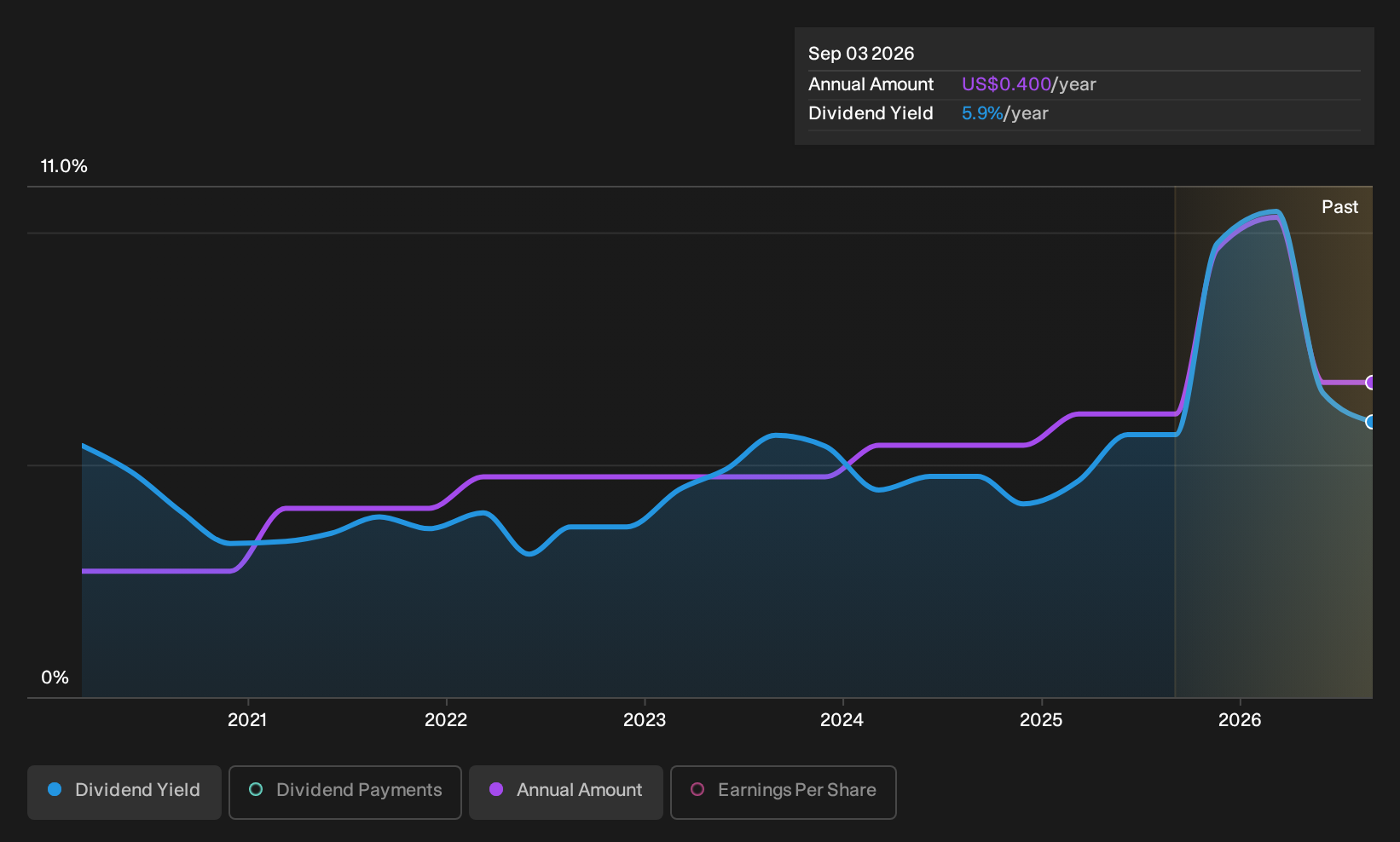
The company's next dividend payment will be US$0.10 per share. Last year, in total, the company distributed US$0.40 to shareholders. Based on the last year's worth of payments, NLI Holdings has a trailing yield of 5.7% on the current stock price of US$7.07. Dividends are an important source of income to many shareholders, but the health of the business is crucial to maintaining those dividends. So we need to investigate whether NLI Holdings can afford its dividend, and if the dividend could grow.
Dividends are usually paid out of company profits, so if a company pays out more than it earned then its dividend is usually at greater risk of being cut. NLI Holdings lost money last year, so the fact that it's paying a dividend is certainly disconcerting. There might be a good reason for this, but we'd want to look into it further before getting comfortable. With the recent loss, it's important to check if the business generated enough cash to pay its dividend. If NLI Holdings didn't generate enough cash to pay the dividend, then it must have either paid from cash in the bank or by borrowing money, neither of which is sustainable in the long term. Over the past year it paid out 199% of its free cash flow as dividends, which is uncomfortably high. It's hard to consistently pay out more cash than you generate without either borrowing or using company cash, so we'd wonder how the company justifies this payout level.
NLI Holdings does have a large net cash position on the balance sheet, which could fund large dividends for a time, if the company so chose. Still, smart investors know that it is better to assess dividends relative to the cash and profit generated by the business. Paying dividends out of cash on the balance sheet is not long-term sustainable.
View our latest analysis for NLI Holdings
Click here to see how much of its profit NLI Holdings paid out over the last 12 months.
Have Earnings And Dividends Been Growing?
Companies with falling earnings are riskier for dividend shareholders. If earnings fall far enough, the company could be forced to cut its dividend. NLI Holdings reported a loss last year, and the general trend suggests its earnings have also been declining in recent years, making us wonder if the dividend is at risk.
Another key way to measure a company's dividend prospects is by measuring its historical rate of dividend growth. In the last seven years, NLI Holdings has lifted its dividend by approximately 14% a year on average.
We update our analysis on NLI Holdings every 24 hours, so you can always get the latest insights on its financial health, here.
The Bottom Line
Is NLI Holdings an attractive dividend stock, or better left on the shelf? First, it's not great to see the company paying a dividend despite being loss-making over the last year. Second, the dividend was not well covered by cash flow." Bottom line: NLI Holdings has some unfortunate characteristics that we think could lead to sub-optimal outcomes for dividend investors.
With that in mind though, if the poor dividend characteristics of NLI Holdings don't faze you, it's worth being mindful of the risks involved with this business. To help with this, we've discovered 2 warning signs for NLI Holdings that you should be aware of before investing in their shares.
A common investing mistake is buying the first interesting stock you see. Here you can find a full list of high-yield dividend stocks.
Have feedback on this article? Concerned about the content? Get in touch with us directly. Alternatively, email editorial-team (at) simplywallst.com.