


EN
Is Flooding Disruption Altering The Investment Case For Integra LifeSciences Holdings (IART)?
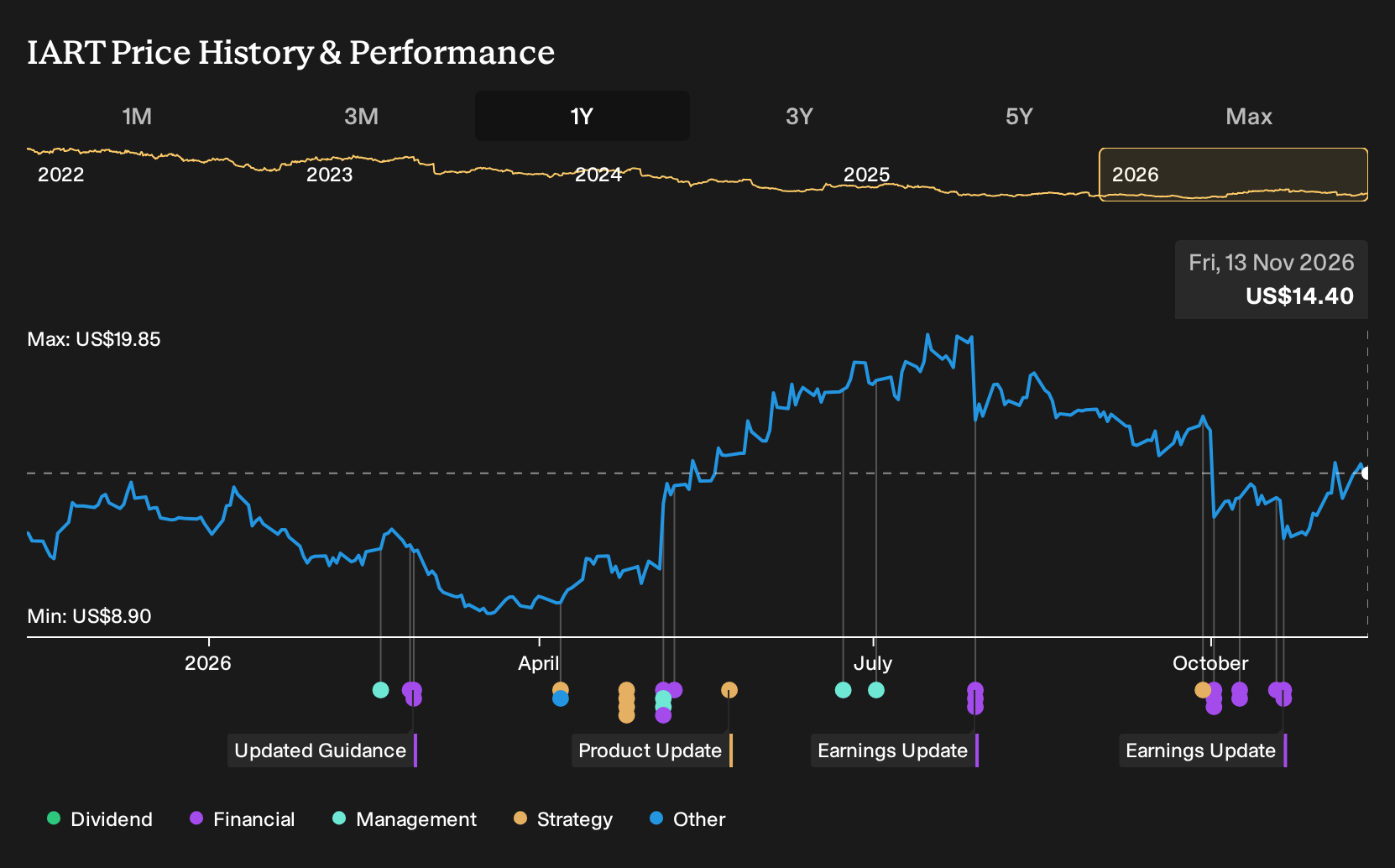
- Integra LifeSciences Holdings reported operational disruption after severe flooding at its Cincinnati facility, which contributed to weaker third quarter 2026 revenue, a cut to full year 2026 guidance, and a subsequent securities law investigation by Pomerantz LLP into potential securities fraud or unlawful business practices.
- The combination of flood related manufacturing disruption, execution pressure, and competitive headwinds in Tissue Reconstruction highlights how concentrated production, quality systems, and product mix can influence Integra LifeSciences Holdings' revenue resilience and cost structure when an unexpected shock hits a key site.
- We will look at how Integra LifeSciences Holdings' investment narrative holds up now that flooding at Cincinnati has disrupted operations and guidance.
Integra LifeSciences Holdings Investment Narrative Recap
For Integra LifeSciences Holdings to make sense in a portfolio, an investor needs to believe the quality and supply issues of the past few years can be contained so that neurosurgery and tissue reconstruction run more smoothly. The analyst consensus narrative on Simply Wall St leans heavily on cleaner execution and fewer one off disruptions. Flood damage in Cincinnati directly challenges that assumption.
The most important near term swing factor is whether Integra can stabilise manufacturing and keep key relaunches on track while managing high leverage and interest costs. The biggest current risk is that further compliance or operational setbacks, combined with refinancing at higher rates, keep margins and cash generation under pressure.
The upcoming Integra LifeSciences Holdings slot at the UBS Global Healthcare Conference on 9 November 2026 matters because it gives management a platform to frame the Cincinnati impact and remediation progress directly for investors. Lea Daniels Knight, the CFO, is scheduled to speak, which puts balance sheet, cash flow and capital allocation squarely in focus.
Given net debt of about US$1.6b and interest payments that are not well covered by earnings, investors will likely listen closely for detail on operating cash flow improvement, flood related costs and any update on refinancing plans in the second half of 2026. That context helps you judge whether the current thesis around debt reduction, product relaunches and margin repair still holds.
Integra LifeSciences Holdings' current set of analyst expectations points to about US$1.8b in revenue and US$136.1m in earnings by 2029, based on 2.0% yearly revenue growth and an increase in profit from US$13.0m today to that US$136.1m level, which would be roughly a 10x step up in earnings if the forecast plays out.
Uncover how Integra LifeSciences Holdings' fair value indicates a 14% potential upside to its current price, which could narrow quickly if sentiment shifts.
Exploring Other Perspectives
Some of the most optimistic analysts framed Integra LifeSciences Holdings as a recovery story driven by smoother plant operations, with forecasts before the flood calling for US$1.8b of revenue and about US$152.5m of earnings by 2029. You now need to ask whether that more upbeat view still fits after the Cincinnati shock and the upcoming UBS conference update.
Explore 2 other Integra LifeSciences Holdings fair value estimates, including one that suggests there may be as much as 60% potential upside from the current price.
Reach Your Own Conclusion
Don't just follow the ticker. Dig into the data and build a conviction that's truly your own.
- A great starting point for your Integra LifeSciences Holdings research is our analysis highlighting 3 key rewards and 2 important warning signs that could impact your investment decision.
- See our latest analysis for Integra LifeSciences Holdings. The report includes a comprehensive fundamental analysis summarized in a single visual, the Snowflake, making it easy to evaluate Integra LifeSciences Holdings' overall financial health at a glance.
Looking for more investment ideas beyond Integra LifeSciences Holdings?
If Integra LifeSciences Holdings has you rethinking concentration risk or balance sheet pressure, use that as a cue to widen your watchlist with businesses that line up better with your own risk and return preferences.
- For investors who want strong fundamentals to carry most of the weight, start with a curated list of solid balance sheet and fundamentals (24 results) that can help you focus on sturdier financial profiles.
- If value is your main filter, use the hand picked 32 high quality undervalued stocks to spot companies where pricing and fundamentals look out of sync.
- For readers who prefer income on top of potential price moves, sort through a targeted 6 dividend fortresses and see which payouts align with your goals.
Have feedback on this article? Concerned about the content? Get in touch with us directly. Alternatively, email editorial-team@simplywallst.com