


EN
What PayPoint Doubters Missed
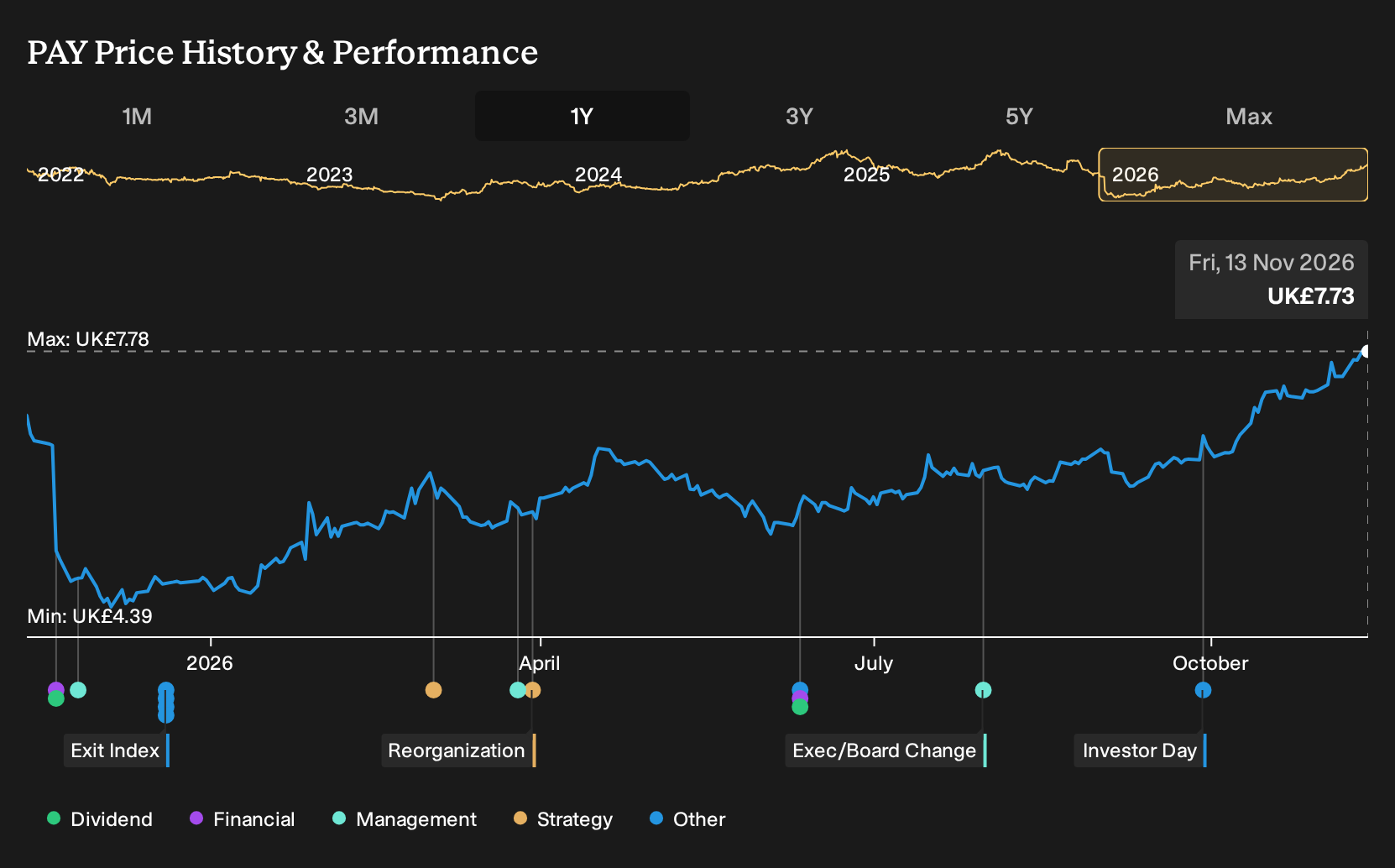
If PayPoint sat on your watchlist instead of in your portfolio, the last 12 months may feel like a missed call. Investors who held PayPoint over the past year are up 26.5%, including dividends. That outcome naturally raises a harder question. Back on 13 November 2025, when analysts were arguing over whether legacy cash services would shrink faster than new digital and Collect Plus income could scale, what evidence could have helped you judge that business mix more clearly?
On Simply Wall St, a Narrative is an investor's thesis written down: the reasoning, plus the numbers it rests on. Run those numbers and you get an estimated Fair Value.
PayPoint has already moved. See which of 15 high quality undervalued stocks still trade below our estimates.
The Two Stories Investors Were Weighing On PayPoint
The shares cost £6.65 at the start of the period, and you faced two very different stories about what PayPoint might become.
On the bullish side, analysts saw Fair Value at £8.85, or 33% above the start price. That view leaned on digital payments, open banking and Collect Plus parcel volumes supporting higher earnings, with assumed profit margins rising from 6.4% to 36.7% by 2028.
The bearish Narrative pinned Fair Value at £6, or 10% below the start price. This case focused on a heavy tilt to legacy cash services and a shrinking retail network, with analysts assuming revenue would decline 11.2% a year over three years even as margins were expected to widen.
What PayPoint’s Results Did To The Two Stories
PayPoint’s H2 2026 figures gave investors something concrete to test. Total revenue moved from £171.682m to £189.373m, while net income shifted from £1.886m to £24.745m. Net margin changed from 1.1% to 13.1%. That profitability jump supported the bullish narrative on margins, although the shorter window still left longer term expectations unproven.
The useful takeaway is simple. When a thesis leans on margin expansion, track net income and net margin in each report and ask whether the direction matches the original story you wrote down.
What PayPoint’s Current Price Already Assumes
PayPoint now trades at £7.73, after a 26.5% gain over the past year from £6.65. The analyst consensus Narrative on Simply Wall St places its Fair Value above that level, framed around how the mix of digital payments, open banking and parcels evolves.
The same Narrative leans on execution of the reorganisation, automation plans and buybacks, and argues that today’s price still does not fully credit PayPoint successfully converting those plans into sustained net revenue growth and higher profit per store.
"Accelerated expansion into digital payments and open banking is now supported by double digit digital revenue growth in Payments & Banking and the expectation that these digital streams will soon exceed declining legacy cash bill payments. This could shift PayPoint’s revenue mix toward higher margin, higher growth activities and support earnings over time."
That disagreement has a full argument behind it. → Uncover the higher Fair Value this Narrative argues for
Which Company Could Surprise You Next?
What if your next investment idea came before the headlines? Go straight to the companies whose prices and our estimates still disagree. Three places to start, with the names waiting behind the link.
- Company 1 - 29% below our estimate - targets fee-based investing by rolling advisory tools, custody and trading into one platform.
- Company 2 - 24% below our estimate - expands recurring software income by layering compliance and testing tools onto existing HR systems.
- Company 3 - 33% below our estimate - channels new capital into renewable and social infrastructure projects through specialist asset management vehicles.
Three companies from the same screener. Open all 9 companies with the balance sheet to back it up →
Have feedback on this article? Concerned about the content? Get in touch with us directly. Alternatively, email editorial-team@simplywallst.com