


EN
Is Iran Tension Altering The Investment Case For Shell Shares?
- Shell has been active across its portfolio, including ongoing share buybacks, progress on the Jackdaw North Sea gas field and investment decisions in LNG Canada Phase 2, while broader energy stocks reacted to firmer Brent crude following renewed US Iran friction.
- The same period has highlighted how Shell's trading and LNG operations intersect with geopolitical risk, as tighter supply perceptions and construction of hydrogen refueling infrastructure worldwide keep the business model tied to both traditional hydrocarbons and lower carbon fuels.
- The focus now is on how Shell's LNG scale and trading engine interact with higher Brent prices linked to US Iran risk as the investment narrative evolves.
Scan energy peers that combine hydrocarbons with future fuels by reviewing the curated 17 nuclear energy infrastructure stocks for companies investing in infrastructure tied to long term energy security themes.
Shell Investment Narrative Recap
To own Shell, an investor needs to be comfortable with a business that leans on LNG trading strength and large integrated gas projects while still being exposed to shorter term swings in oil and refining markets. According to Composite_Research, an investor in the Simply Wall St Community, the core idea is that LNG scale and optimization can turn price volatility into an earnings engine.
The latest moves, from Jackdaw coming online to US Iran risks lifting Brent, speak most directly to Shell's near term cash generation rather than changing that longer term thesis. The key short term swing factor appears to be margins in Q4, with the CFO already flagging softer refining and higher freight as pressure points.
The ongoing share buyback programme, including the recent on and off market purchases for cancellation, is the announcement that really matters for this catalyst discussion. It ties directly into Composite_Research's view that Shell leans on a value over volume mindset and uses excess cash to shrink the share count.
For you as a shareholder, the operational question is whether LNG Canada Phase 2, growing hydrogen refueling exposure and Jackdaw's ramp can offset softer refining economics while still funding that planned $5b repurchase. Execution risk sits in project delivery, trading performance and the pace at which hydrogen infrastructure can scale into a material line of business.
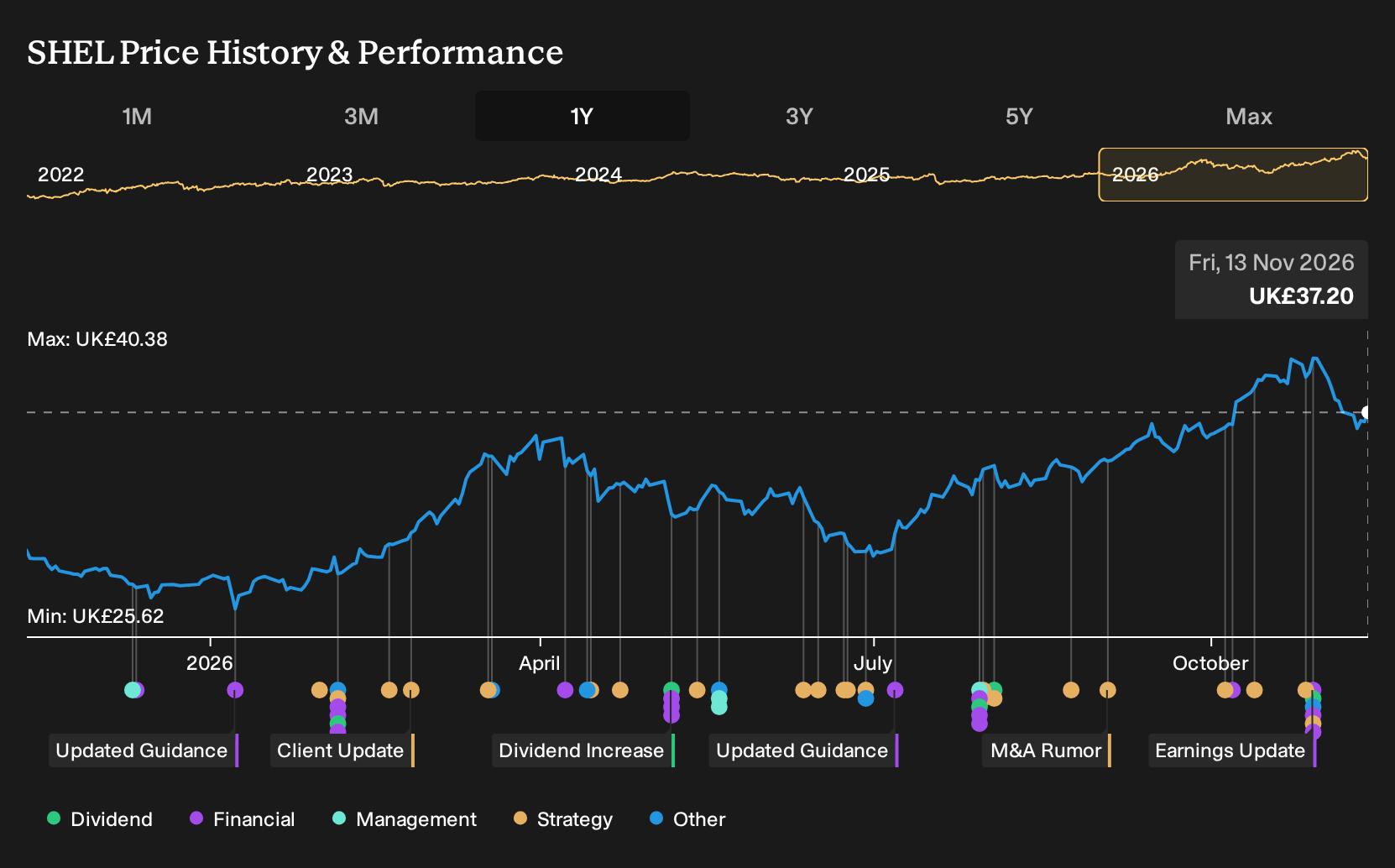
On Composite_Research's numbers, the narrative lands on a £42.15 fair value by pairing 3.8% yearly revenue growth with a 9.2% future profit margin for Shell, then applying those projected earnings to a valuation framework that reflects its LNG scale and capital return policy.
Uncover why Shell's fair value indicates a 13% potential upside to its current price that could narrow quickly.
Exploring Other Perspectives
Some of the most optimistic analysts frame the hydrogen build out as the real swing factor for Shell, rather than the latest Brent move. You see that in their pre news forecasts that called for revenue of about $336.2b and earnings near $31.8b by 2029. Those projections may look very different once recent events are fully digested.
Explore 6 other Shell fair value estimates, including one that suggests as much as 109% potential upside from the current price.
Form Your Own Verdict
Disagree with existing narratives? Extraordinary investment returns rarely come from following the herd, so consider your own analysis.
- A great starting point for your Shell research is our analysis highlighting 3 key rewards and 2 important warning signs that could impact your investment decision.
- See our latest analysis for Shell. The report includes a comprehensive fundamental analysis summarized in a single visual, the Snowflake, making it easy to evaluate Shell's overall financial health at a glance.
Looking for more Shell-sized investment ideas?
If Shell's mix of cash returns, LNG exposure and energy transition themes has your attention, you can broaden your watchlist with stocks that align with your own risk level and income goals using the Simply Wall St Screener.
- For investors who want financial resilience front and centre, you can start with companies on the list of solid balance sheet and fundamentals (9 results) that pair healthier leverage profiles with consistent fundamentals.
- If lower volatility and capital preservation matter more than pursuing maximum upside, you can consider businesses filtered through the 5 resilient stocks with low risk scores to see which candidates score well on risk metrics.
- Those seeking quality that is not widely followed can review the 6 high quality undiscovered gems to identify lesser known stocks with stronger underlying financials.
Have feedback on this article? Concerned about the content? Get in touch with us directly. Alternatively, email editorial-team@simplywallst.com