


EN
KO Stock Alert: Coca-Cola Just Hit a New All-Time High
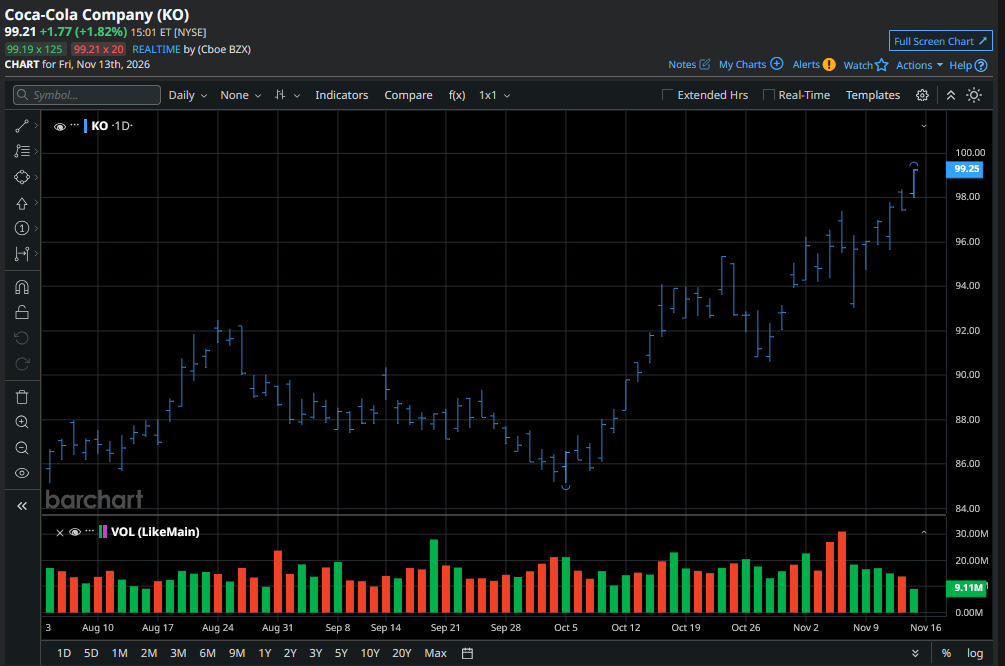
Coca-Cola (KO) is finding fresh fizz as investors rethink their risk appetite. Shares of the beverage giant gained another 2% on Nov. 13, printing a new all-time high of $99.28, as investors continued to diversify away from artificial intelligence (AI) and interest rate-sensitive stocks.
At the time of writing, KO sits a remarkable 40% above its price at the start of this year.
What’s Driven Coca-Cola Stock Higher?
KO shares’ rally fits a market increasingly willing to pay for dependable businesses. On Friday, the company helped support the Dow ($DOWI) as a continued tech rout weighed rather significantly on the S&P 500 Index ($SPX). That divergence suggests investors are seeking shelter in established consumer franchises.
Coca-Cola’s recent earnings substantiate that defensive appeal. Q3 revenue increased 7% year-over-year to $13.4 billion, while global unit case volume came in up 5%. Volume growth matters because it shows the business is attracting demand beyond price increases.
In Q3, KO expanded its comparable operating margin as well despite higher marketing spending, strengthening the argument that its earnings can withstand a more uncertain economic backdrop.
A healthy 2.14% dividend yield makes Coca-Cola shares even more attractive to own heading into 2027.
Is It Too Late to Invest in KO Shares?
Despite its huge year-to-date gains, options traders seem to believe that KO stock is not out of steam just yet.
According to Barchart, the put-to-call ratio on contracts expiring Nov. 27 sits at 0.91x as of this writing, indicating a bullish skew. A reading below 1.00x is typically characterized as in favor of the buyers.
Data also pegs the upper price on those options contracts at nearly $102, signaling potential for a 2.54% rally through the end of November.
That said, Coca-Cola is currently trading at about 29x forward earnings, which makes it significantly more expensive to own than peer PepsiCo (PEP) at about 17x.
What’s the Consensus Rating on Coca-Cola?
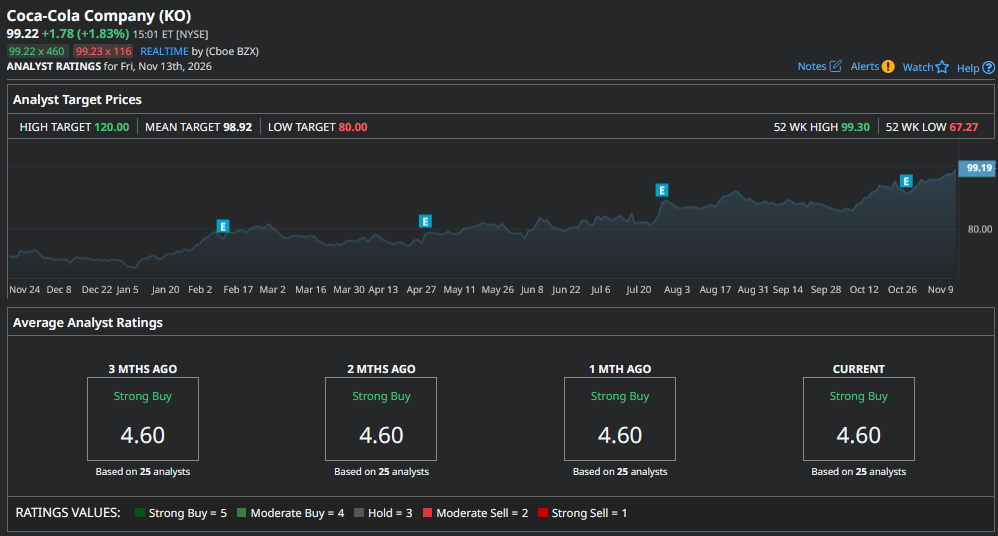
Some Wall Street analysts also remain convinced that KO shares will rip higher from here in 2027.
The consensus rating on Coca-Cola sits at “Strong Buy,” with price targets as high as $120, indicating potential upside of another 22% from here.
On the date of publication, Wajeeh Khan did not directly have a position in any of the securities mentioned in this article. All information and data in this article is solely for informational purposes. For more information please view the Barchart Disclosure Policy here.