


EN
Nvidia Loses Jensen Huang. That Just Put Evercore’s Bullish Call to the Greatest Test.
On Sept. 10, Nvidia (NVDA) founder Jensen Huang walked onto a Goldman Sachs stage looking like a man who had been proven right. A year earlier, he had predicted $3 trillion to $4 trillion in artificial intelligence (AI) infrastructure spending by 2030. Investors were quite wary of these lofty estimates, but they seem achievable today.
Huang also joked that he was there to pitch investors on NVDA stock. He said Wall Street still misunderstands the chip behemoth, and he called it both a growth stock and a value stock.
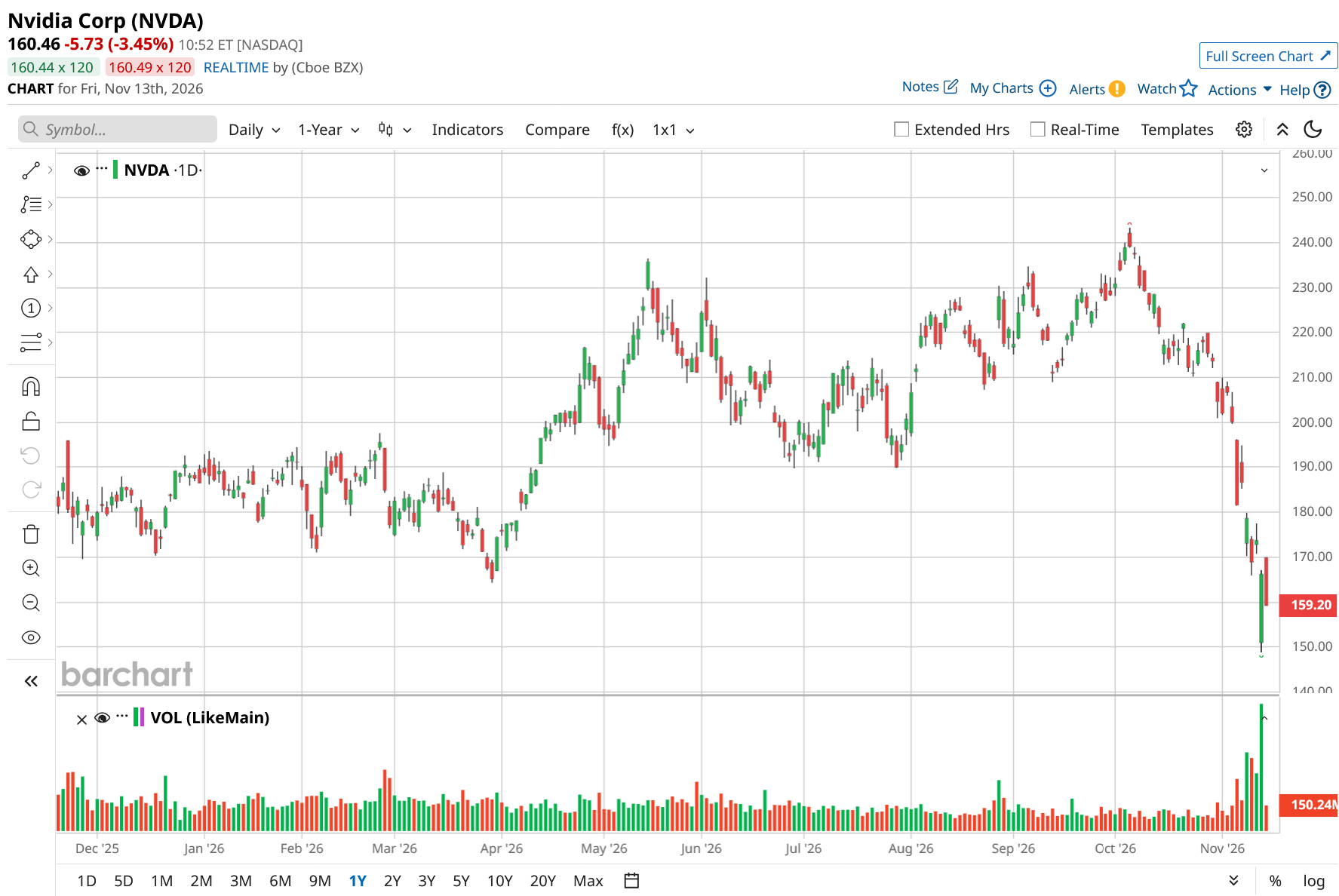
Two months later, that confidence looks quite different. Huang resigned as CEO on Thursday, Nov. 12, after revelations that he had two extramarital affairs (and then a third was revealed the same day). The $4.2 trillion chipmaker, already down sharply from its highs, must now move forward without the man who built it. So what should investors do with a great business when its leader is in trouble after he leaves?
Why Nvidia Became the Face of AI
At the Goldman Sachs conference, Huang’s pitch was simple: he explained that old computers retrieved stored information, while new ones must generate answers on the spot, which requires significant computing power.
Huang also said Moore’s Law is ending. For decades, chipmakers packed twice as many transistors onto a chip on a steady schedule, which no longer works. So Nvidia designs its chips, software, and systems together and links many chips with its NVLink technology to enhance performance.
Huang said a report he accessed recently showed Grace Blackwell NVLink 72 racks growing 27% month to month. He said a 1-gigawatt data center costs about $60 billion, yet that capacity brings in roughly $50 billion in revenue each year.
Goldman Sachs' Jim Schneider noted Huang had voiced confidence in 70% revenue growth next year. Huang also called Nvidia the only company that runs every major artificial intelligence (AI) model, closed or open.
Nvidia also helps finance some of its customers. Skeptics call that circular financing since the money returns to Nvidia as chip orders. Huang claimed that every $1 invested by Nvidia rings back around $100. He also said Nvidia sees its partners’ contracted demand before it backs them, which he forecast at $100 billion.
Huang Resigns as Nvidia CEO After Scandal
On Sunday, Nov. 8, Huang admitted to an affair with a woman whom news outlets report U.S. intelligence concluded was a Chinese spy, CNBC reported. “I was unfaithful to my wife,” he wrote in a message to staff.
Then The New York Times reported a second affair, this one with an executive at the company. The Wall Street Journal reported the board was preparing to oust him, and CNBC confirmed the board is meeting to decide. On Thursday, Nvidia announced that Huang had resigned as CEO and as a board member. The board has also hired the law firm Wachtell, Lipton, Rosen & Katz for an independent investigation, according to CNBC.
Chief Financial Officer Colette Kress is now interim CEO. She has held the CFO job for more than 13 years. The board is searching for a permanent successor and is looking at both internal and external candidates, according to a staff email from board chair Harvey Jones that CNBC obtained. Jones, a director since 1993, is Nvidia’s first-ever board chair, and Nvidia has not named a successor.
Republican Sen. Kevin Cramer of North Dakota had said a day earlier that Huang should resign. Three House chairs asked him to testify on Nov. 18, and they say subpoenas are possible. Huang has now agreed to testify before Congress sometime before Thanksgiving on Nov. 26. Republican Rep. Brian Mast of Florida, who chairs the House Foreign Affairs Committee, said there could be public hearings for other people or other things down the road.
New Report Ties Alleged Spy to a Huawei Data Center
A CNBC exclusive adds a new twist. Analysts at private intelligence firm Tesari found that Alice Huang, the woman at the center of the spy reports, may have owned stakes in Chinese businesses that benefited Huawei. Nvidia named Huawei a top competitor in 2024.
According to documents CNBC reviewed, a Shenzhen data center tied to her financial firm, Hexi, counted Huawei Cloud as its key customer. Hexi also guaranteed the loans that financed it. Separately, The Information reported that Megaspeed, spun off from a subsidiary of the company that bought her cloud business, helped ship at least $7.5 billion of Nvidia chips to Chinese firms.
Nvidia and Huawei did not respond to CNBC, and Alice Huang could not be reached. China’s Foreign Ministry has called the spy allegation unfounded. CNBC said it remains unclear whether any sensitive information was shared.
Evercore’s Bullish Call Faces a Big Test
According to a Seeking Alpha report:
- Julian Emanuel, senior managing director at Evercore ISI, says the weakness could be “the opportunity of an absolute lifetime,” only if leadership remains sound.
- His firm recently added Nvidia to its list of AI stocks to buy for next year. Emanuel also noted that tech stocks now trade cheaper than the S&P 500 ($SPX) for the first time in more than a decade.
- He called Nvidia one of the key companies in the AI revolution and emphasized that the larger AI shift should not derail even if the chipmaker stays under pressure.
- Mizuho Securities analyst Jordan Klein agrees on value. He told CNBC that Nvidia's forward price-to-earnings (P/E) ratio has dropped below 10, making it an attractive value buy.
- Klein did flag the risk. He called Huang irreplaceable in the eyes of investors, and the unknown timeline of the scandal brings uncertainty.
That risk has now played out. Emanuel spoke while Huang’s fate was still unclear. Now his condition faces a real test, and Jones says the board has complete confidence in Kress, but she is interim, and no permanent CEO has been named.
Is the AI Trade Under Threat
CNBC explained that:
- Nvidia has made hundreds of billions of dollars in financial commitments to AI firms, earning it the nickname “central bank of AI.”
- Nvidia disclosed in July that it will buy up to $36 billion in cloud services from neoclouds. It also promised a $105 billion phased guarantee for an Ohio data center planned by OpenAI and SB Energy.
- Columbia Business School professor Stijn Van Nieuwerburgh estimates the total of Nvidia’s financial obligations to other firms at $400 billion. Notably, the chipmaker is forecast to report revenue of $412 billion in fiscal 2027 (ending in January).
- Former FDIC chair Sheila Bair said Nvidia is not too big to fail the way a bank is. Still, she said Nvidia going down would be “a pretty seismic event.”
Huang’s exit also puts his $500 billion plan to turn AI chips into tradable debt securities in the spotlight. Nvidia signed preliminary agreements with Apollo Global Management, BlackRock, Blackstone, Brookfield, Goldman Sachs, and KKR. They would raise additional capital using Nvidia chips as collateral.
Sunaina Sinha Haldea of Raymond James told CNBC she does not expect the capital raise to be impacted, but lenders could want to be paid more for the uncertainty.
What NVDA Investors Should Watch Next?
Nvidia reports earnings on Tuesday. Analysts expect revenue to surge 90.7% year-over-year (YoY) in fiscal 2027 and surpass $1 trillion by fiscal 2030. Then come the Nov. 18 testimony deadline, a company meeting on Nov. 18, the search for a permanent CEO, Huang’s testimony before Nov. 26, the board’s investigation, and a push in Congress to pass tougher chip export bills.
Arthur Kroeber of Gavekal Dragonomics told CNBC the scandal has destroyed the credibility of the biggest corporate lobbyist against U.S. export controls on China. He sees a good chance Congress tightens the rules before the end of the year.
The Evercore call hinged on one small word: “if.” Huang’s resignation now puts that word to the test.
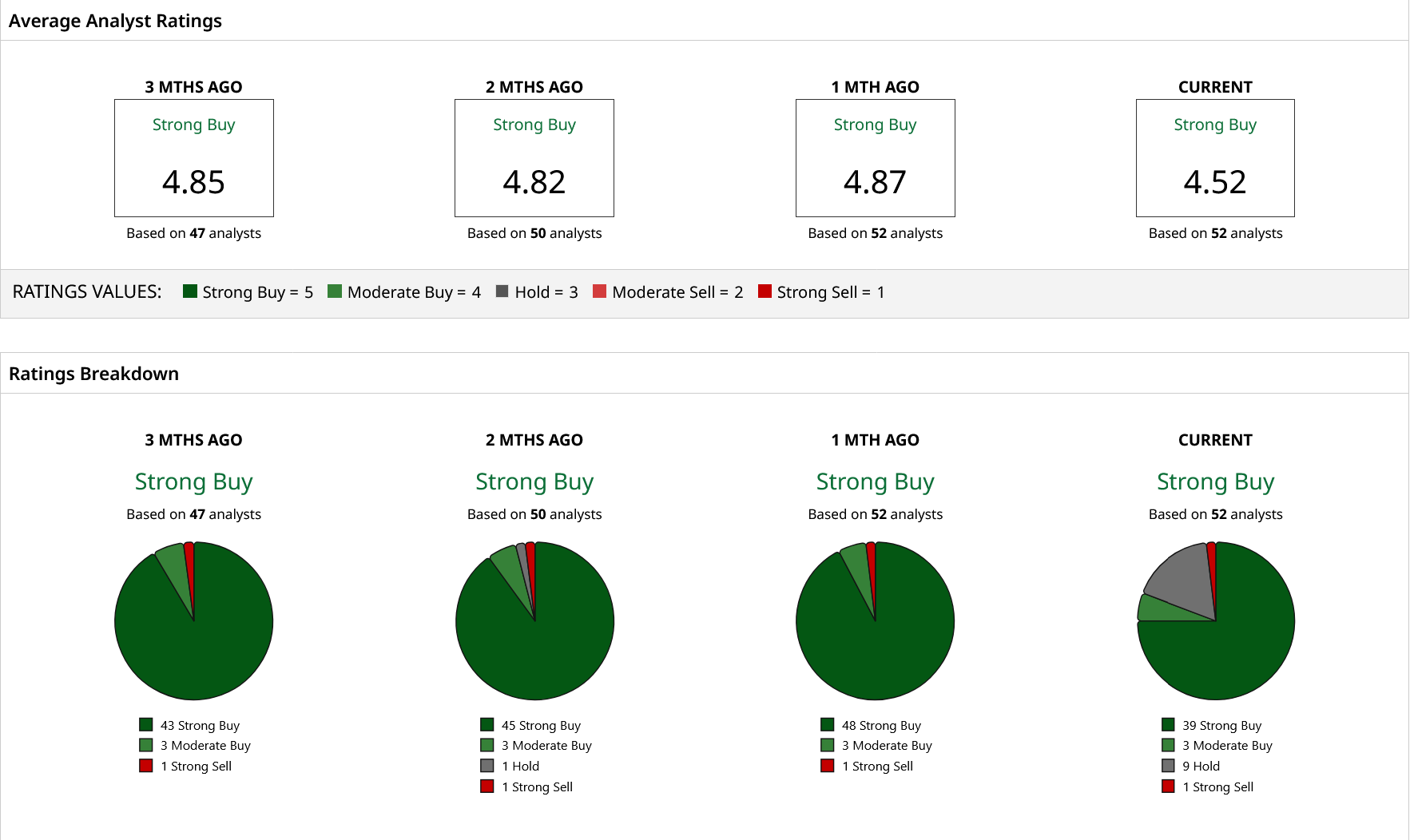
Out of the 52 analysts covering NVDA stock, 39 recommend “Strong Buy,” three recommend “Moderate Sell,” nine recommend “Hold,” and one recommends “Strong Sell.” The average NVDA stock price target is $292.40, above the current target of $159.
On the date of publication, Aditya Raghunath did not directly have a position in any of the securities mentioned in this article. All information and data in this article is solely for informational purposes. For more information please view the Barchart Disclosure Policy here.