


EN
Nvidia Names Colette Kress Interim CEO: How to Weigh Product Worries Against Nvidia's AI Financing Role
Colette Kress is now running Nvidia (NVDA) as interim CEO, and she is keeping her CFO job too, after Jensen Huang resigned as CEO on November 12 following a series of reports about his personal relationships. For 33 years, Nvidia only ever had one CEO, so Huang's ouster came as a real shock – and while the board searches for a permanent successor, Kress, who has served as CFO since 2013, will hold both roles.
Naturally, the scandal weighed on NVDA stock, and after falling as much as 14.3% earlier in Thursday's session, it closed at $166.19, down 4.3%. Much of that selling stems from worries that Nvidia has lost the leader who shaped its products from the start, which is understandable.
But personally, I think the more important test is Kress herself, because she also built the financing setup that now sits behind much of Nvidia’s order book.

That test comes into focus with Nvidia’s earnings on November 17 – more on this later.
First, it helps to walk through how the week unfolded.
Timeline: What Led to Jensen Huang’s Exit From Nvidia
Now, this story actually started back on October 29, when reports first surfaced that U.S. intelligence suspected a Singapore businesswoman named Alice Huang of passing information to Beijing. For context, she has been an executive at Megaspeed, which is a data center company that buys Nvidia chips (and despite the shared last name, she is not related to Jensen Huang).
Then, in early November, a U.S. memo reportedly described a romantic relationship between the two. That Sunday, Huang admitted to the affair in a message to staff. The board opened an independent investigation the same day and said it still had confidence in him. But investors were clearly far less patient, because Nvidia fell 4.3% on Monday even as the broader chip index jumped 6.9%. To me, that performance gap shows the market saw this as a problem specific to Nvidia.
After that, things moved quickly, as new reports on Tuesday claimed the relationship helped clear the way for at least $7.5 billion in Nvidia chip shipments to Chinese firms. On top of that, chatter of a separate affair with Kimberly Powell, who heads Nvidia’s healthcare business and reported directly to Huang, surfaced around the same time – so, much of the surprise was baked in by the time the board accepted his resignation on Wednesday and announced it Thursday morning. Since then, the board has also brought in an outside search firm to help find a permanent CEO.
As for China, Nvidia’s outlook already assumes zero data center chip sales there, so the direct hit to revenue should be small. Personally, though, I think the more serious risk is political, because the Republican chairs of three House committees had already asked Huang for a closed-door briefing on November 18. After this week, Washington now has every reason to look harder at each export license Nvidia applies for.
Keep in mind, too, that the stock was already more than 21% below its early October high after a post-midterm selloff, so the scandal landed on a stock that was already bruised. That brings us to the worry behind most of this week’s selling, which is the idea that Nvidia just lost its “product guy.”
Why Nvidia’s Chip Pipeline Holds Up Without Its Product Guy
To be fair, the concern makes sense. Huang ran Nvidia with an unusually flat setup, and an internal chart from last year showed 36 executives reporting straight to him, most of them engineering and product leaders. (Huang himself has stated he has up to 60 direct reports.) On top of that, Nvidia never published a succession plan. Given that Kress has spent her whole career in finance, nobody should expect her to design the next chip.
Even so, I think the product risk sits further down the road than the stock price suggests. Vera Rubin, Nvidia’s next-generation AI platform, started shipping in August and is already in customers’ hands, and every major cloud provider has placed orders. Kress expects it to bring in about 20% of third-quarter data center revenue, which is also why Nvidia built up $31.6 billion in inventory ahead of the ramp.
Put another way, the chips Nvidia plans to sell through 2027 were designed on Huang’s watch, and the engineers behind them aren’t going anywhere. Rumored Huang successor Ian Buck, who created CUDA, is one of them, along with Chief Technology Officer Michael Kagan. CUDA is the software toolkit developers use to write programs for Nvidia chips, and it’s a huge reason customers rarely switch to rivals.
But where I do see a loss is on the sales side, because Huang personally pitched huge AI projects to governments in Saudi Arabia, the United Arab Emirates, Japan and South Korea, and relationships like those take years to build. Whoever takes his seat will have to earn them all over again.
If that gap shows up at all, I expect it in the form of slower sovereign AI deals through 2027 and 2028, meaning deals where countries pay to build their own national AI systems. However, Nvidia’s largest customers today are AI labs and cloud providers, and the money behind many of those deals is exactly where Kress comes in.
What Kress’s AI Financing Deals Mean for Nvidia Investors
Over the past year, Nvidia quietly became a financial backer of its own customers, and it was Kress who built most of that setup. During the August earnings call, she said Nvidia had invested or committed nearly $50 billion in frontier AI labs, meaning the companies racing to build advanced AI models, like OpenAI and Anthropic.

On top of that, Nvidia teamed up with six investment firms, including BlackRock (BLK), Blackstone (BX), and KKR (KKR), on financing platforms that aim to raise more than $500 billion of outside money for AI data center projects, though the final agreements are still pending.
The largest of these commitments came in August, when Nvidia agreed to back the lease payments on a 4.25-gigawatt data center campus in Ohio that SB Energy is developing for OpenAI. In plain terms, if OpenAI falls behind on rent for the land, power and buildings, Nvidia covers it up to $105 billion. Add up every deal, and Nvidia’s maximum guarantee exposure comes to $108.5 billion.

Numbers like these were bound to draw circular financing criticism, which is the worry that Nvidia funds customers who then turn around and spend that money on Nvidia chips, making demand look stronger than it really is. Kress has pushed back on this directly, explaining that outside lenders vet each deal separately, that Nvidia is not making loans, and that these commitments are a small slice of the free cash flow Nvidia expects to generate.
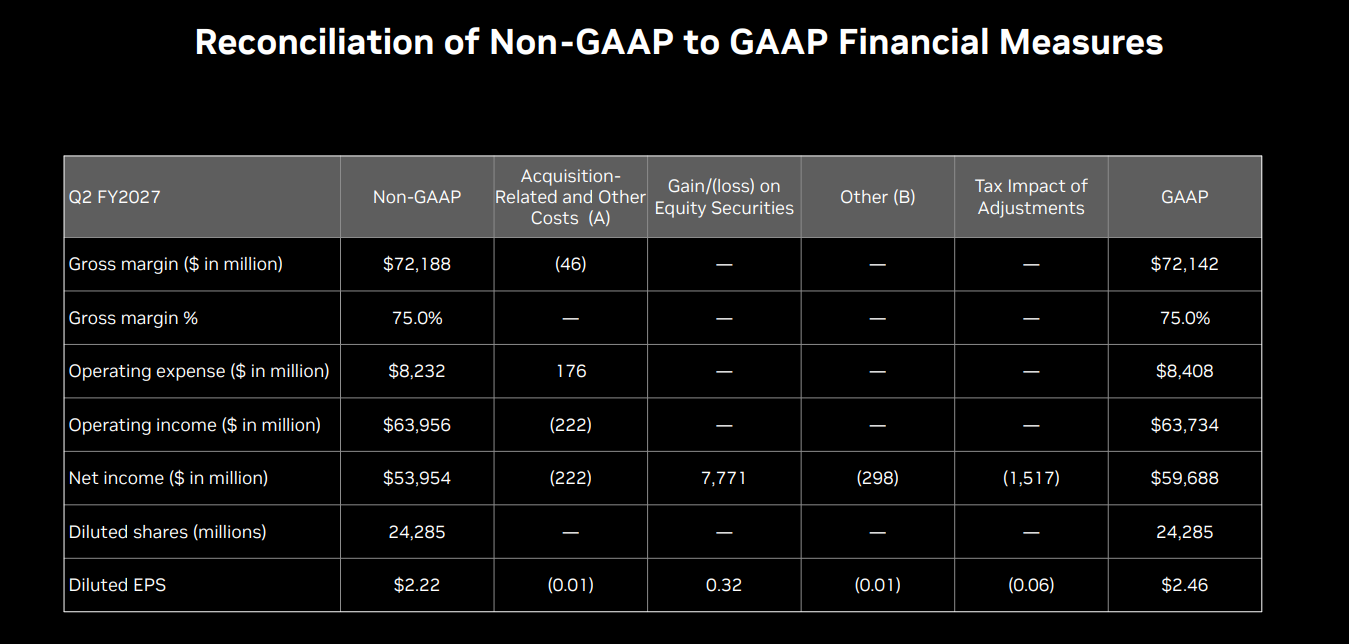
For the most part, her explanation holds up. But a closer look at the second quarter shows why investors remain cautious. GAAP earnings came in at $2.46 per share, well above the $2.22 adjusted figure, largely because Nvidia booked $7.8 billion in gains on its equity investments. In other words, part of the profit came from stakes in its own customers going up in value, and OpenAI, the customer behind the largest guarantee, still lacks an investment-grade credit rating.
Weighing all of that, I prefer having the person who built these deals in charge right now, since an outsider might pull back just to look careful and rattle Nvidia’s partners. With Huang gone, though, each guarantee will be judged on how solid the customer on the other end is.
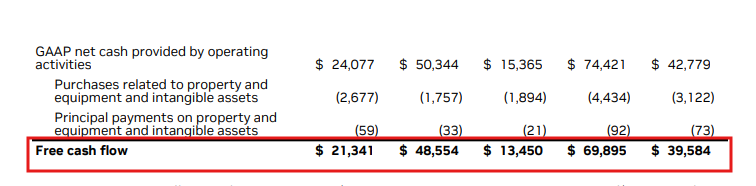
As for the Ohio guarantee, I am fairly comfortable with it. It does not kick in until fiscal 2029, it shrinks with every lease payment, and in a worst case, Nvidia would be on the hook for a campus built to run its own hardware, one that another tenant could step into. On top of that, Nvidia generated $69.9 billion in free cash flow in the first half of fiscal 2027 alone, which leaves plenty of room to absorb a setback.
What concerns me a bit is concentration. Kress said labs backed by Nvidia’s balance sheet should make up roughly a quarter of next year’s business, and if one of those labs stumbles, Nvidia loses a customer and takes a hit on an investment in the same quarter – which is exactly why the choice of a permanent CEO carries so much weight.
Tim Cook and Other Names Floated for Nvidia’s CEO Job
Interestingly, Tim Cook’s name first came up through a business school professor, when Yale’s Jeffrey Sonnenfeld mentioned Cook and former Google (GOOGL) CEO Eric Schmidt as possible outside picks during a TV interview, though neither was a confirmed candidate.
But the idea picked up steam after President Trump posted that Cook was the only person who could replace Huang, writing “A Legend replaces a Legend!” and Dan Ives of Yorkville later said he sees Cook as the top candidate. For context, Cook stepped down as CEO of Apple (AAPL) on September 1 after 15 years and now serves as executive chairman, where he focuses on policy work.
On paper, I think the case for someone like Cook is stronger, because the kind of leader Nvidia needs most right now is operational and political. Managing $279 billion in supply commitments, rebuilding trust in Washington and running a calm transition are exactly the things Cook did well at Apple. Those supply commitments are Nvidia’s agreements to buy parts like memory from its suppliers, and keeping that pipeline running smoothly is the kind of work Cook spent years mastering.
The harder part is timing and optics, given that Cook only just started his chairman role at Apple. He also chairs the advisory board of Tsinghua University’s business school in Beijing, and for a company already under fire over China ties, that makes him an awkward fit. This likely explains why other names keep floating around, including the aforementioned Buck and Kagan; Kress herself; and Arm (ARM) CEO Rene Haas, who spent seven years at Nvidia before joining Arm.
As for the right profile, Futurum Group CEO Daniel Newman put it well when he said Nvidia would need “its own Tim Cook.” Personally, I prefer an operator as CEO, paired with a technical leader like Buck in an expanded role, so the product side stays in experienced hands.
My concern is a long search, because every month Kress holds both the CEO and CFO jobs adds strain on financial oversight right when the financing book needs the closest attention. That makes Tuesday’s call the first real look at how she handles that load, and it sets up the bigger question of what all of this means for the stock.
Why I’m Staying Bullish on Nvidia Stock Despite the CEO Shake-Up
Nvidia was judged by what Huang put on stage in the past three decades, but starting Tuesday, it gets judged by what Kress puts on paper. I think that’s a fair trade for now, since investors don’t need a keynote at the moment, and what they really need are clear answers on who owes what, and when.
Of course, I’m not ignoring the weak spots. A drawn-out CEO search, a stumble at one of the financed labs, or tougher export rules out of Washington could each keep the stock under pressure well into next year.
Even so, I’m still bullish. Demand for Nvidia’s chips didn’t just end on Thursday, and at roughly 10 times next year’s earnings estimates, I’d be happy to stay patient while the leadership picture sorts itself out.
On the date of publication, Rick Orford had a position in: GOOGL , AAPL . All information and data in this article is solely for informational purposes. For more information please view the Barchart Disclosure Policy here.