


EN
Trump Floated Tim Cook as a Potential Successor to Jensen Huang. Nvidia’s Operating Performance Matters More Than Huang’s Successor.
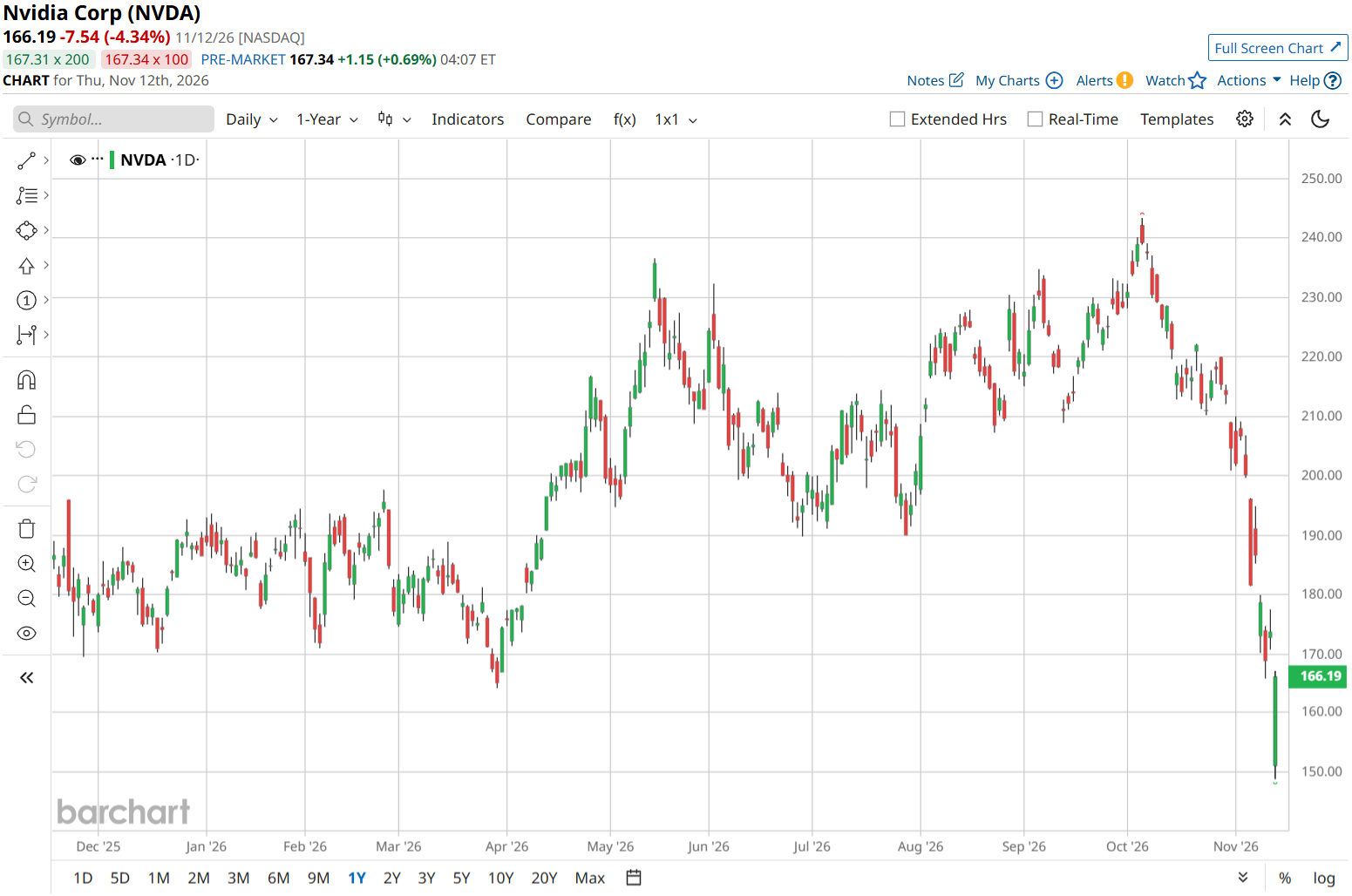
Nvidia (NVDA) was worth more than $4 trillion just weeks ago. Then, on Nov. 12, co-founder Jensen Huang resigned as president, CEO, and board member after 33 years in charge. NVDA shares fell as much as 14% at the open, hitting their lowest level in more than 16 months. The stock had already dropped roughly 27% from its October record as investors worried about Huang’s future.
Hours later, President Donald Trump suggested that former Apple (AAPL) CEO Tim Cook should replace Huang. But how much weight should investors actually give a presidential endorsement when $4 trillion in market value, and the entire AI supply chain, hangs in the balance? Let’s take a closer look.
The Context Behind Trump's Cook Endorsement
Trump backed Tim Cook on Nov. 12, hours after Jensen Huang stepped down from Nvidia after 33 years in charge. CFO Colette Kress became interim CEO while the board looks for a permanent replacement. Trump said Huang “has done a fantastic job” and named the former Apple CEO as his choice, calling it “a legend replaces a legend.”
Huang’s exit followed reports of extramarital affairs, including one with a businesswoman suspected by U.S. intelligence of spying for China. Beijing denied the allegations. Nvidia opened an investigation but said it had “no reason to believe” national security or company secrets had been compromised. Reports of another affair with a company executive added to the pressure before Huang resigned.
Both Huang and Cook have maintained ties with Trump, which helps explain the president’s interest. But his endorsement does not settle the search. Nvidia is “considering both internal and external candidates,” and Cook has not been announced as a candidate. For investors, Trump’s preference is worth noting, but it is not a hiring decision.
Nvidia's Fundamentals Beyond the CEO Drama
In its fiscal second-quarter results, released Aug. 26, revenue reached $96.2 billion, up 18% from the previous quarter and 106% from a year earlier. Both GAAP and adjusted gross margins stood at 75%, showing that rapid growth had not come at the expense of profitability. Data Center drove most of that performance, with sales rising 117% year over year and 18% sequentially to $89 billion, or roughly 92% of total revenue.
Those sales produced adjusted operating income of $63.96 billion, up 124%, with an operating margin of 66.5%. Adjusted EPS climbed 120% to $2.22, while GAAP net income rose 126% to $59.69 billion, or $2.46 per share. Still, the GAAP profit included $7.8 billion in equity-portfolio gains, making adjusted earnings useful for judging operating performance. Management’s next-quarter outlook called for $108 billion in revenue, plus or minus 2%, without Data Center compute sales to China. But strong results have not kept the stock from falling as investors worry about leadership. NVDA is down 14.25% over the past 52 weeks and 10.89% year to date.
The company’s expanded partnership with Meta Platforms (META) announced Oct. 27, gives its next CEO something to build on. Meta plans to use more Vera Rubin systems and Vera CPUs, along with Spectrum-X networking and BlueField-4 technology.
Both companies will also work to improve the performance of its Muse models and AI agents. Nvidia committed $3 billion to Meta's equity offering, too. The partnership could help Nvidia sell more than chips, adding networking and other equipment to customer orders.
What Analysts Say About the Road Ahead
Nvidia will report earnings on Nov. 17 after the market closes. Analysts expect earnings of $2.49 per share for the October 2026 quarter, up 100.81% from $1.24 a year earlier. For fiscal 2027, they expect $9.29 per share, a 103.28% increase from $4.57.
But strong earnings expectations have not eased every concern. Yorkville Ives analyst Dan Ives cut his fair-value estimate to $225 from $300 after Huang’s departure. He calls Huang effectively “irreplaceable” because of his role in product development, AI strategy, customer relationships, and long-term planning. Until the board explains who will take over and what comes next, Ives expects that uncertainty to weigh on investors, regardless of Trump’s support for Cook.
Citigroup analyst Atif Malik is watching costs as well. He kept his “Buy” rating but lowered his target to $285, even though he expects another earnings beat. “We expect higher sales to be offset by lower gross margins due to HBM price increases,” he said, referring to high-bandwidth memory. He will also watch supply, demand, and how quickly outstanding orders turn into sales.
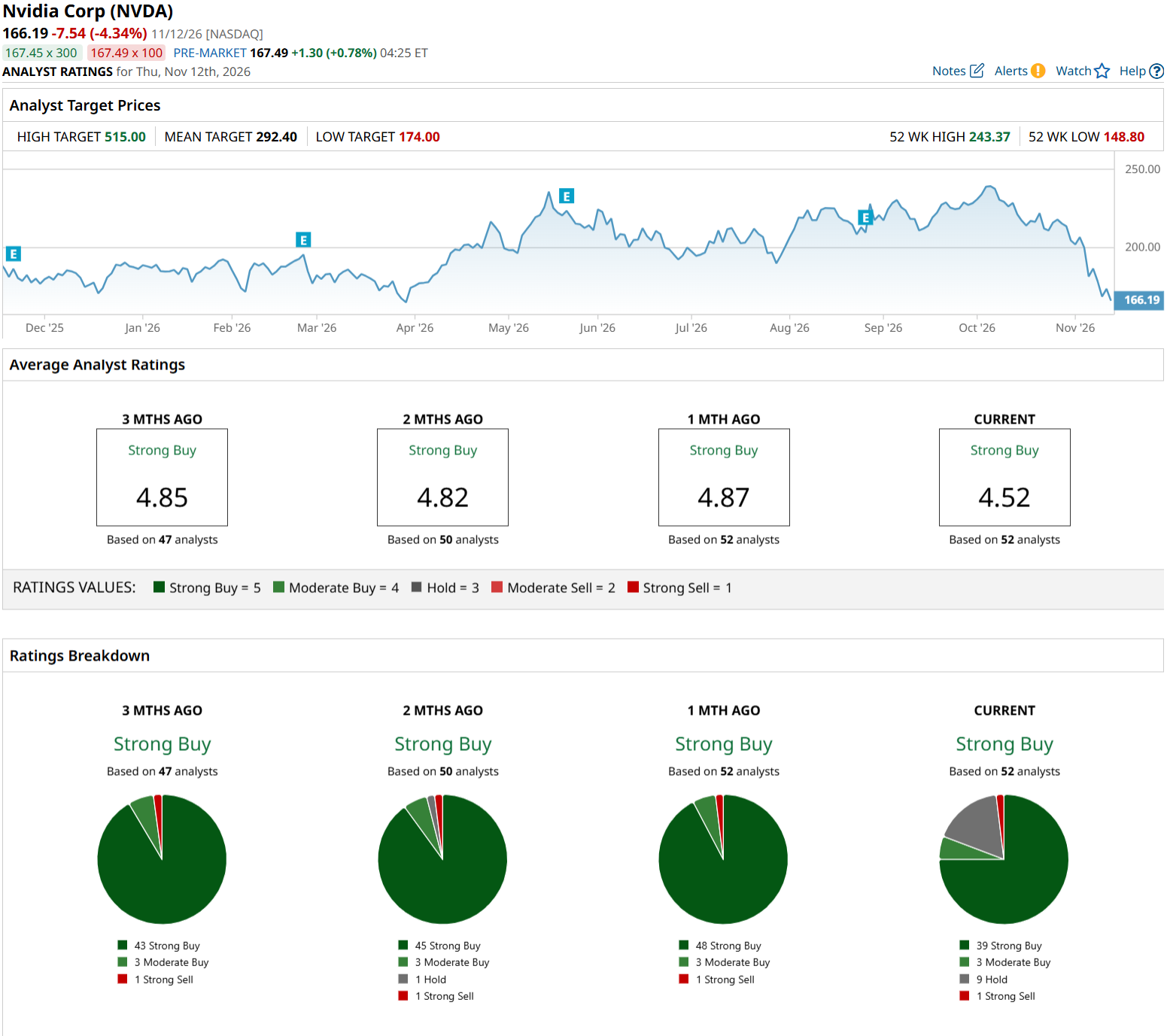
Overall, the 52-analyst survey still gives NVDA a “Strong Buy” consensus. The $292.40 average target implies 75.94% upside from recent price levels.
Conclusion
Investors should treat Trump’s Cook endorsement as political commentary, not a reason to buy NVDA. The next CEO matters, but protecting Nvidia’s product execution, customer relationships, and profitability matters more. Its latest results show strong growth, while the leadership transition adds uncertainty that an endorsement cannot erase. My base case is volatile trading rather than a clean rebound in the near term. Beyond that, I lean cautiously bullish if earnings and guidance confirm that demand remains intact under new leadership. Cook’s name may move the conversation, but operating performance will determine whether the stock’s recovery has staying power.
On the date of publication, Ebube Jones did not directly have a position in any of the securities mentioned in this article. All information and data in this article is solely for informational purposes. For more information please view the Barchart Disclosure Policy here.