


EN
Jet Fuel Relief Could Lift Copa Holdings Stock And Other Airline Shares
Fuel markets have flipped from scarcity stories to talk of surplus, with the IEA now flagging extra barrels on the water and more emergency reserves ready to flow. That kind of shift can squeeze energy producers yet quietly ease the pressure on transport and logistics operators whose biggest variable cost is often fuel. This article unpacks the backdrop and then walks through three stocks exposed to this news that could see meaningful margin breathing room.
The three stocks below are a small sample of this theme, and the full screen surfaced 65 more transport and logistics companies with equally compelling stories that are not covered here. To go straight to the full list, use the Global Energy-Intensive Transport & Logistics Beneficiaries screener to identify, analyze, and focus on your highest conviction fuel sensitive ideas.
Copa Holdings (CPA)
Copa Holdings is one of the clearest fits for this fuel sensitive screener theme, with a Pan-American passenger and cargo network built around the Panama hub, and the analyst consensus Narrative on Simply Wall St frames its opportunity through network expansion, tight costs, and disciplined capital returns.
Expansion of Copa Holdings' Hub of the Americas through high teens capacity growth, new destinations and the planned move from 6 to 8 daily connecting banks by March 2027 is set to deepen connectivity across the Americas, which can support higher revenue and load factors as more traffic is funneled through the Panama hub.
What really matters next is how a single cost line moves against that growing hub, because it could heavily sway future margins.
Copa Holdings runs a Pan-American airline focused on passenger and cargo flights, generating about US$4.0b from air transportation and carrying a market value near US$5.9b, which gives it meaningful scale for a fuel exposed transport stock in this screener’s universe.
That tipping point on fuel sensitivity is exactly what the full narrative for Copa Holdings unpacks, showing where margins could accelerate and where hidden risks might still be masking the story.

easyJet (LSE:EZJ)
easyJet is a low cost European carrier that fits squarely into this fuel sensitive theme, and according to PittTheYounger, an investor in the Simply Wall St Community, its combination of scale and efficiency gives it meaningful leverage to any period of softer jet fuel costs.
EasyJet ranks among the best players in this industry, both in terms of operational efficiency and market share.
What matters now is how one unresolved pressure shapes the balance between ticket pricing power and any fuel driven cost relief.
That unresolved pressure is exactly where the full narrative for easyJet picks up the story, explaining how fuel, fares and capacity could be decoupling for easyJet.

Qantas Airways (ASX:QAN)
Qantas Airways is one of the clearest fuel exposed beneficiaries in this screen, with a large domestic and international network where jet fuel costs heavily influence profitability.
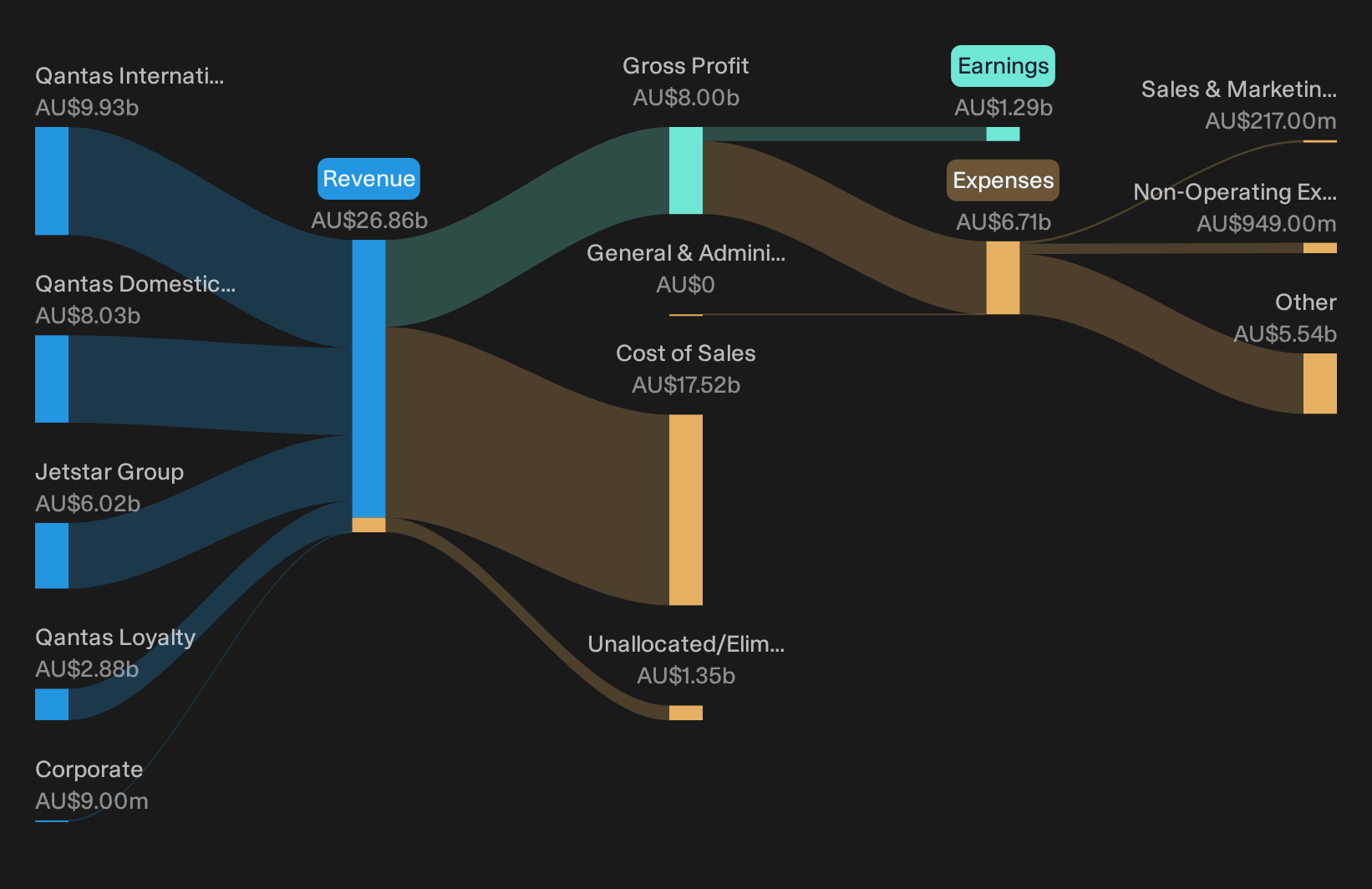
Qantas Airways runs a A$25.5b aviation group across Qantas Domestic, Qantas International, Jetstar and a sizeable Qantas Loyalty arm. Most revenue comes from Qantas International including freight at about A$9.9b, Qantas Domestic at A$8.0b and Jetstar at A$6.0b, and the stock is valued around A$14.7b.
According to Aneeq, an investor in the Simply Wall St Community who wrote the Narrative, the fuel sensitive Qantas story really starts with market structure and how that shapes pricing power.
The Australian domestic market is effectively a duopoly between Qantas and Virgin Australia, which supports pricing discipline and rational capacity management.
What happens if easing fuel costs meet that kind of pricing backdrop will hinge on one pressure point that could sharply shift margins.
If that pressure point interests you, the full narrative for Qantas Airways maps where pricing power, capacity and fuel costs could be quietly accelerating or masking the next chapter for Qantas Airways.
Seeking Fresh Alternatives Before Others?
Fuel sensitive plays like Copa Holdings, easyJet and Qantas are only one angle. Market momentum shifts fast and fresh opportunities can get caught once the crowd piles in, so consider exploring alternatives promptly.
- Spot cash rich operators before momentum screens pick them up by running the list of solid balance sheet and fundamentals (23 results). This can help identify financially resilient stocks while they still fly under the radar.
- Target cash generative chip and software picks using the 41 profitable AI stocks that aren't just burning cash. This can help find candidates while expectations remain grounded and price moves may not yet fully reflect earnings strength.
- Pursue resilient utilities and infrastructure players through the 43 power grid technology and infrastructure stocks. This can be useful while this critical theme is still largely treated as a source of income rather than as a potential growth story.
Have feedback on this article? Concerned about the content? Get in touch with us directly. Alternatively, email editorial-team@simplywallst.com