


EN
Should Fee Earnings Growth Require Action From ICG Stock Investors?
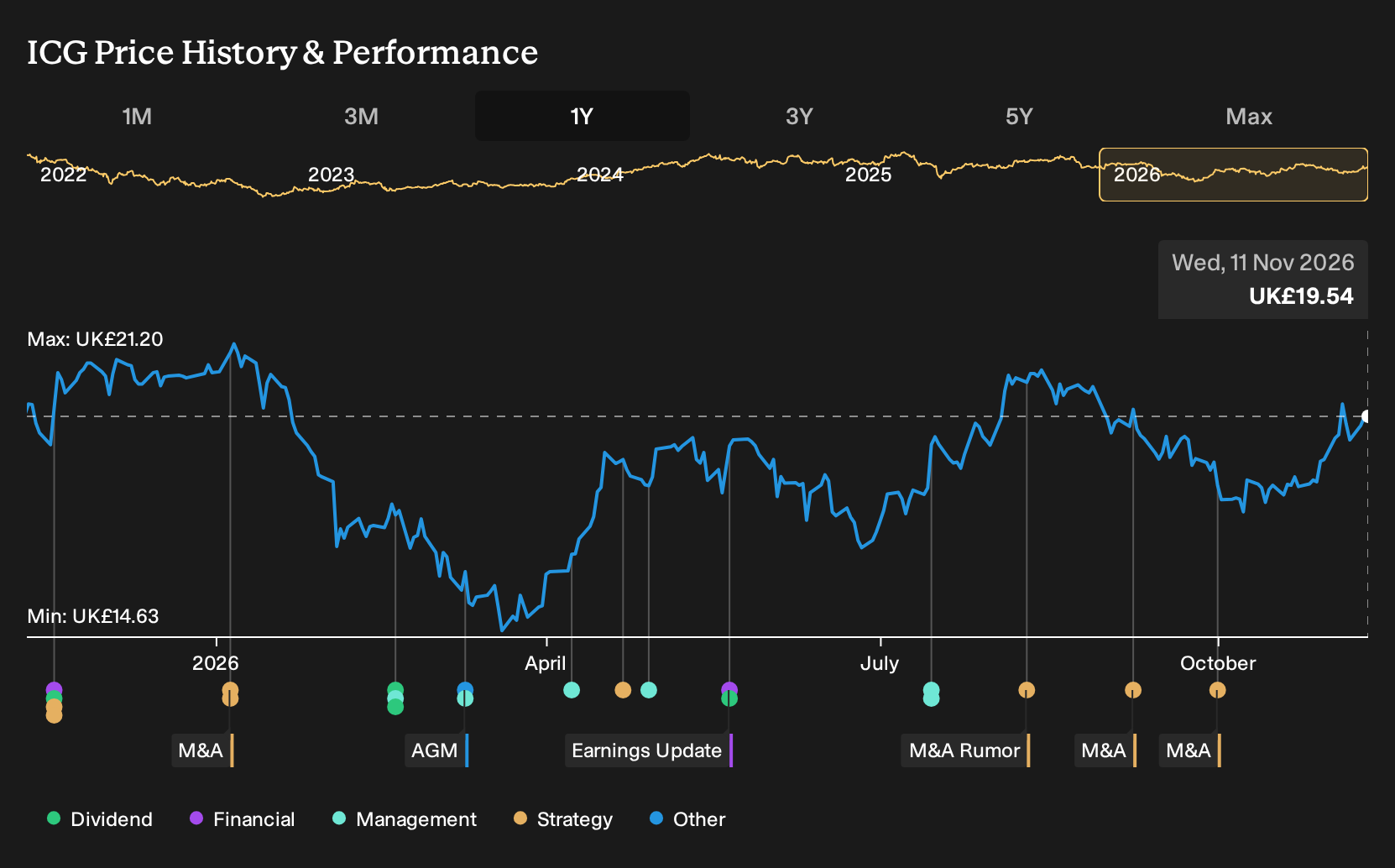
- ICG plc reported half year results to 30 September 2026 with revenue of £532.1m, net income of £234.3m and basic earnings per share from continuing operations of £0.823.
- Management highlighted an 18% rise in fee related earnings and a new medium term goal of zero net financial debt, alongside potential capital returns and ongoing product launches. Together, these elements sharpen the focus on recurring fee income and balance sheet flexibility.
- We will now look at how ICG’s investment narrative could be reshaped by the fee earnings jump and the zero net debt ambition.
ICG Investment Narrative Recap
To own ICG, you need to be comfortable with a story that leans heavily on fee related earnings, fundraising progress and disciplined use of its £2.6b balance sheet. The analyst consensus Narrative on Simply Wall St assumes that higher fee strategies, new products and the Amundi partnership all convert into rising fee earning AUM and cash generation.
The latest half year numbers show revenue and net income below the prior period, so the short term focus lands on whether the 18% uplift in fee related earnings is sustainable and deploys the remaining $19b of non fee earning AUM. The near term operational risk stays tied to slower private equity realizations and possible margin pressure in competitive private markets.
The push towards zero net financial debt feels most relevant for the current earnings discussion. Management is signalling a cleaner balance sheet that could rely less on external borrowing, which matters because 100% of ICG’s liabilities currently come from higher risk funding sources rather than deposits. A lower net debt position would likely improve flexibility around seeding funds and managing co investments.
For you as a shareholder, that zero net debt goal sits alongside the possibility of capital returns and a progressive dividend, although the dividend track record has been described as unstable. Progress on this balance sheet plan could influence how confidently ICG leans into new strategies such as infrastructure debt and GP led secondaries, which the analyst consensus Narrative on Simply Wall St already treats as important drivers of future fee income.
ICG's narrative projects £1.2b revenue and £658.1m earnings by 2029. This assumes 7.6% yearly revenue growth and an earnings increase of about £179.7m from £478.4m today.
Uncover why ICG's fair value indicates a 28% potential upside to its current price that could narrow quickly.
Exploring Other Perspectives
One bullish twist in the alternate ICG story is the focus on wealth channel expansion through Amundi. The most optimistic analysts were sketching out about £1.3b of revenue and £759.6m of earnings by 2029 before this half year update. You can see how far opinions stretch, so explore both narratives and decide which feels closer to your own view.
Explore 4 other ICG fair value estimates, including one that suggests there may be as much as 58% upside from the current price.
Reach Your Own Conclusion
Disagree with existing narratives? Extraordinary investment returns rarely come from following the herd, so go with your instincts.
- A great starting point for your ICG research is our analysis highlighting 4 key rewards and 1 important warning sign that could impact your investment decision.
- See our latest analysis for ICG. The report includes a comprehensive fundamental analysis summarized in a single visual, the Snowflake, making it easy to evaluate ICG's overall financial health at a glance.
Looking for more investment ideas beyond ICG?
Once you have a view on ICG, it can help to line it up against a few very different opportunities. Use the Simply Wall St Screener to quickly scan other companies that match the balance of quality, income and risk that fits your own approach.
- If you want potential mispricing on your side, compare ICG with a hand picked 17 high quality undervalued stocks that combine healthy fundamentals with discounted valuations.
- For investors who care most about getting paid while they wait, line up ICG against income focused options from our 4 dividend fortresses that prioritize substantial yields.
- Risk control comes first for some portfolios, so weigh ICG against companies from a 5 resilient stocks with low risk scores that emphasizes balance sheet strength and lower volatility profiles.
Have feedback on this article? Concerned about the content? Get in touch with us directly. Alternatively, email editorial-team@simplywallst.com