


EN
MiniMax (00100) open source H3-Image image model accessed by mainstream global chip manufacturers on the first day
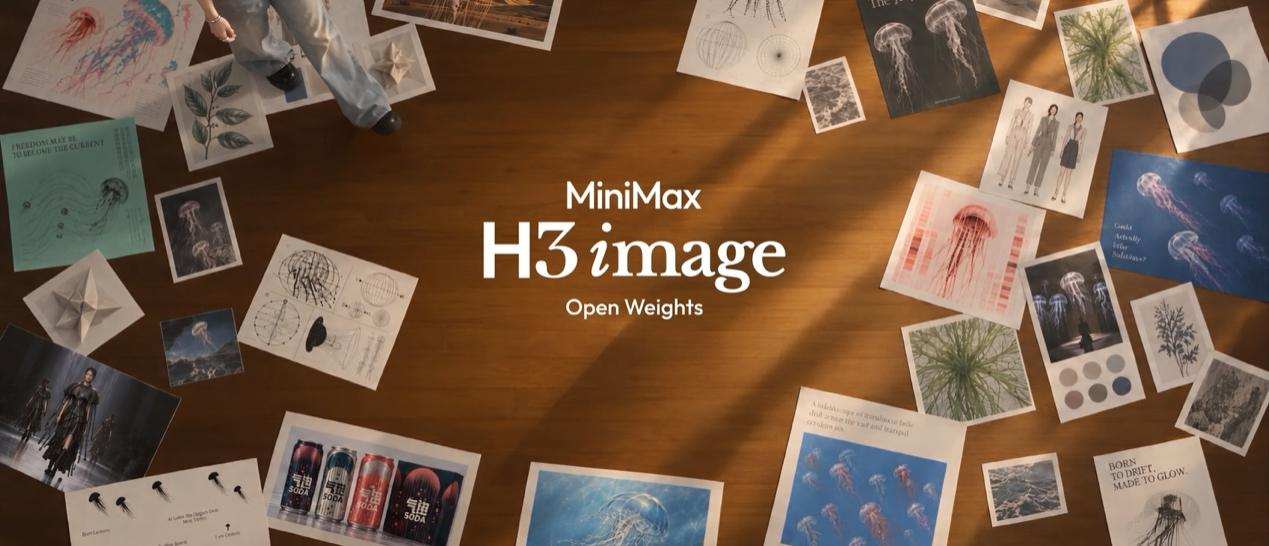
The Zhitong Finance App learned that on the evening of November 10, MiniMax (00100) released the image generation model MiniMax H3-Image and simultaneously opened the model weights.
The model is derived from MiniMax H3 and supports bibliography, image referencing, and image editing. Based on the extensive imaging capabilities granted by H3 pre-training, H3-Image has further strengthened the entire post-training link. Improvements in various aspects such as data, reinforcement learning, step compression, PE, and deployment optimization have made H3-Image simultaneously competitive in terms of speed, image quality, and instruction compliance.
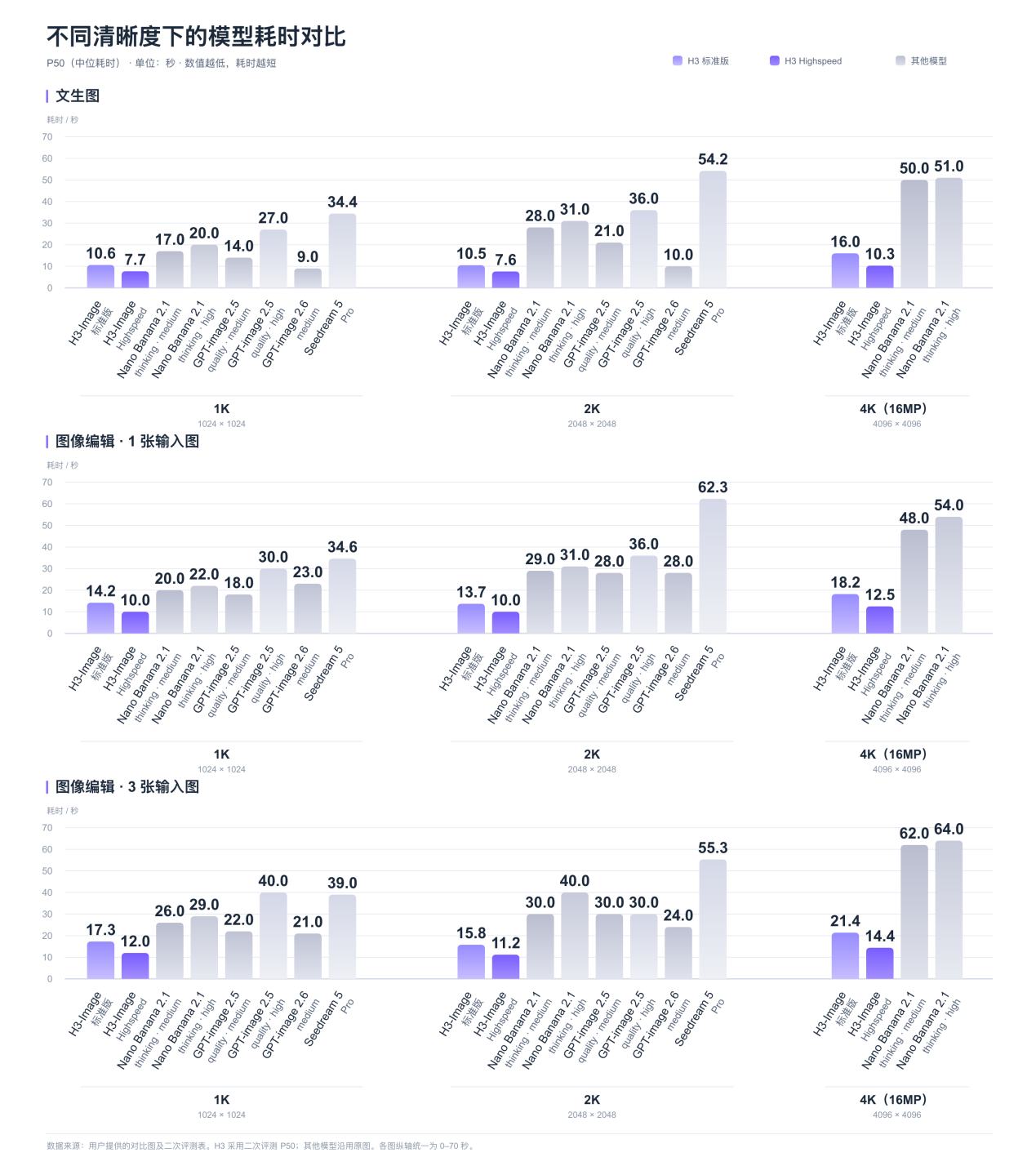
According to the introduction, the MiniMax H3-image can generate a 4096 x 4096 pixel high specification image of about 16 MP (4K) within 10 s, and the speed can reach 5 times the mainstream level in the market. In terms of image quality, the model provides rich picture details and a strong sense of realism, and the distance between the AI-generated image and the real visual world is further reduced. Additionally, H3-Image has top command compliance capabilities in the open source model and supports up to 16 reference images.
MiniMax also provides H3-image image generation services through an open platform, miniMaxCode, and MiniMax Conch. The generation speed of the H3-Image standard model is about 1.5 to 2 times that of mainstream tools on the market, the Highspeed model can reach 3 to 4 times, and the service price is about 50% to 70% of mainstream tools in the same class.
In the first week of release, MiniMax offered a 50% discount on official pricing for generation requests with specifications of 16MP and above.
Three months after MiniMax H3 was released, MiniMax extended the strategy of open weights from video generation to image generation. In terms of model architecture, H3Image removed the audio branch from H3's original architecture and optimized for image generation and editing. According to technical data released by HuggingFace, H3Image uses a dense diffusion transformer (dIT) with 33.1 billion parameters, has a total of 50 layers, uses the MiniMax H3 QwEN3-VL text encoder, and combines image VAE to process reference images and generate images.
Businesses and developers can explore new tools and creative methods based on model weight, and can also directly use high-quality generation services through official channels such as the MiniMax open platform. Through H3-image's official API, individual developers can connect to daily workflows in agents such as MiniMax Code, WorkBuddy, and Codex, making image generation a basic capability that can be used by various agent frameworks.
The release of H3-Image raised the upper limit of open source image models to a new level, that is, whether complex creative requirements can be accurately understood and whether these requirements can be transformed into beautiful and realistic images. An image containing text and multiple layers of information must not only clearly explain the content and relationships, but also allow the composition, lighting, and details to serve the expression of the creator's intention. H3-Image combines instruction following, multi-image reference, and high-resolution generation, continuing MiniMax's multi-modal fusion route, and providing new possibilities for open source models to narrow the gap with top closed source models in complex visual creations.
On the first day of open source, MiniMax teamed up with global chip companies such as HUAWEI Shengteng, Pingtou, Kunlun Chip, MoorThreading, Wallace, Haiguang, Mu Xi, Tianshu, NVIDIA, AMD, Intel, Tenstorrent, and many mainstream inference and cloud service platforms to promote Day0 access. MiniMax said, “We hope H3-Image will bring convenience to more people's daily lives and work, and we will continue to build more powerful tools to help achieve inclusive AGI.”