


EN
3 UK Financial Stocks That Could Benefit From Higher Interest Rates
Stubborn UK inflation, a Bank of England that sounds softer than its own forecasts, and markets pricing structurally higher rates have turned the country’s financial system into a live stress test. Some businesses could be squeezed as funding costs bite. Others may find higher yields a tailwind for earnings. This article walks through three UK-listed financial stocks exposed to these rate and inflation shocks and explains what that might mean for your portfolio.
The three stocks covered below are just a sample, and the full screen has surfaced 14 more UK financials with similarly detailed rate and inflation narratives that are not discussed here.
To go beyond this short list, head straight into the UK Rate-Beneficiary Financials (Banks, Insurers, Money-Market & Cash Managers) screener to identify, filter and analyze the potential higher conviction ideas that best fit your portfolio.
Chesnara (LSE:CSN)
Overview: Chesnara is a UK based life assurance and pensions group that manages long term savings, protection and investment contracts.
Operations: Chesnara reports £294 million of revenue from the UK and £88.7 million from Movestic in Sweden, with a £149.4 million segment adjustment.
Market Cap: £830 million
Chesnara sits neatly in this rate beneficiary screen because it runs long term life and pension policies backed mainly by fixed income investments. Higher UK short term and gilt yields feed directly into returns on those assets. The stock currently offers a high dividend yield and improving profitability, and both lean on how one unseen pressure evolves.
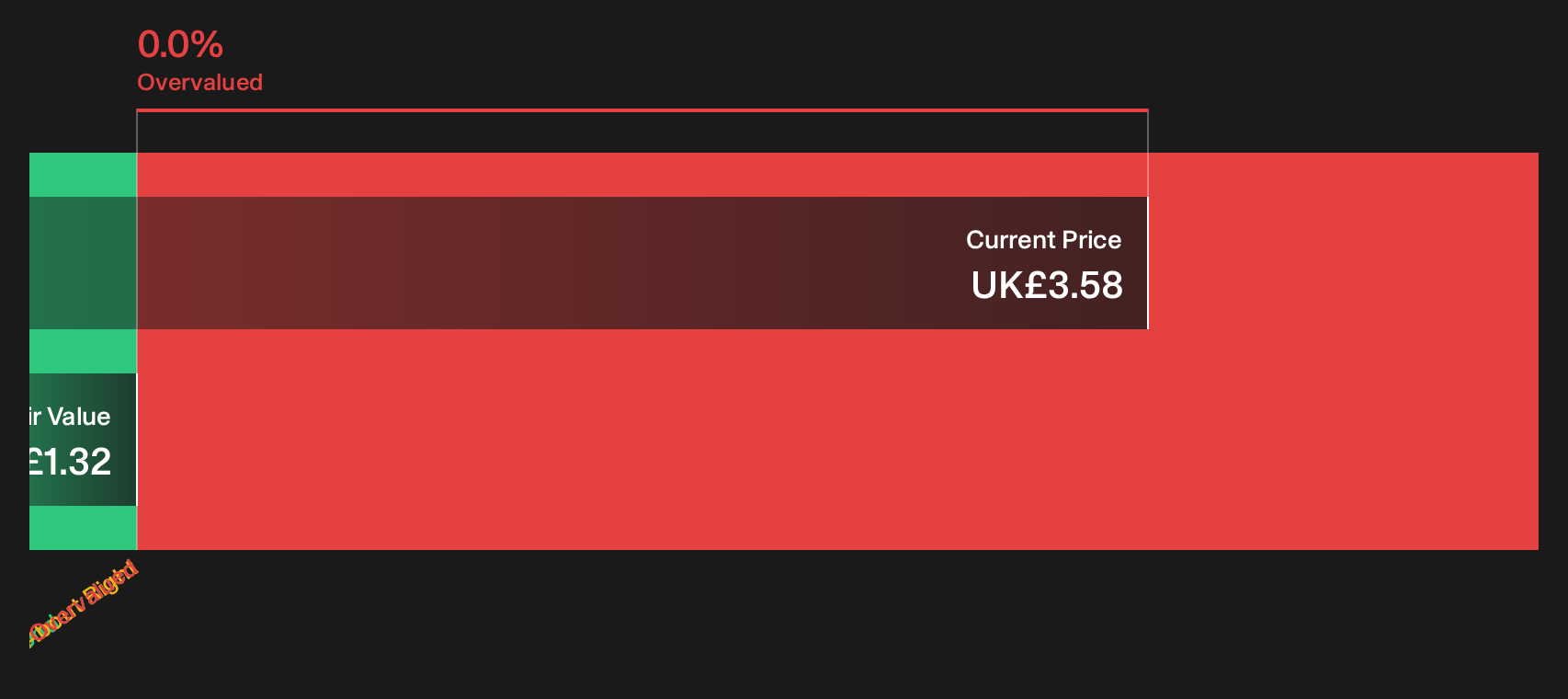
That hidden pressure point is exactly what shows up inside the DCF valuation analysis for Chesnara, where rates and cash flows either quietly compound your income story or start to fray it.
Aviva (LSE:AV.)
Overview: Aviva is a large UK based insurer and wealth manager that provides general insurance, life, pensions, retirement and investment products across several countries.
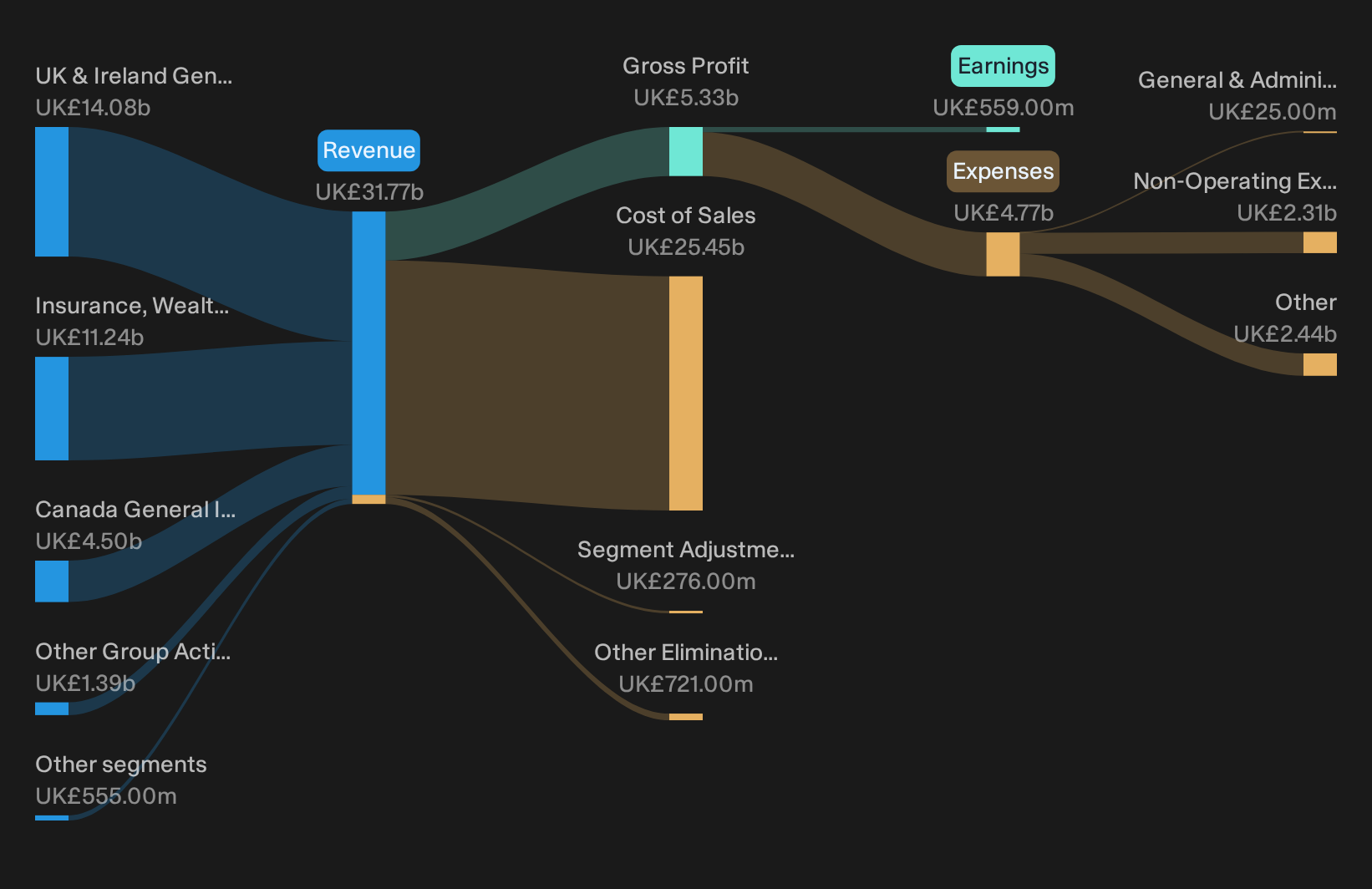
Operations: Aviva generates most of its income from UK & Ireland General Insurance at £14.1b and Insurance, Wealth & Retirement at £11.2b, with meaningful contributions from Canada General Insurance and Aviva Investors.
Market Cap: £21.9b
Aviva fits this rate beneficiary screen because it runs a sizeable fixed income portfolio behind its insurance and retirement promises. The yield it can earn on that float becomes central to its earnings power when UK rates and inflation stay higher for longer, which is exactly what the analyst consensus Narrative on Simply Wall St leans into.
"The shift from public to private responsibility for pensions and health coverage in Aviva's core markets is expanding the company's addressable market in wealth, workplace, protection, and health insurance, directly underpinning sustained double-digit net flows and supporting long-term topline revenue growth."
What happens to Aviva's margins if one key assumption about how those higher reinvestment yields interact with pricing and claims proves too optimistic?
If that balance between pricing power and claim experience is your main focus, go straight to the full narrative for Aviva to see how those forces could be accelerating or stalling Aviva's story.
XPS Pensions Group (LSE:XPS)
Overview: XPS Pensions Group provides consulting, administration, governance and technology services for UK pension schemes, insurers and employers, earning fee based income.
Operations: XPS Pensions Group generates about £263 million from consulting and administration services for UK pension schemes, almost entirely within the United Kingdom.
Market Cap: £707 million
XPS Pensions Group plugs into this rate beneficiary theme not through its own balance sheet but through the constant decisions pension trustees now need to make as higher UK yields reshape how defined benefit schemes manage risk, a link that the analyst consensus Narrative on Simply Wall St highlights clearly.
"Continued movement of UK defined benefit schemes into surplus is creating a multi year pipeline for funding advice, surplus allocation and bulk annuity transactions. This can keep advisory and project revenues for XPS Pensions Group above normal maintenance fee levels and support earnings."
What could really shift the dial for XPS Pensions Group is how one emerging pressure on its cost base interacts with that multi year demand.
As that cost pressure builds, read the full narrative for XPS Pensions Group to see whether rising demand is accelerating XPS Pensions Group's earnings story or quietly masking new risks.

Curious About What You Might Be Missing?
Fresh ideas can move fast. Breakout momentum, dropping entry windows and under the radar opportunities rarely stay quiet for long. Scan these focused lists before the crowd and act now.
- Spot sturdy balance sheets before they start flying by using the curated list of solid balance sheet and fundamentals (9 results) and see which businesses still look financially resilient while it matters.
- Catch strong income plays before yields get compressed by screening through the carefully filtered 6 dividend fortresses and focus on companies designed to keep payouts front and center.
- Ride the next leg of AI momentum instead of watching it from the sidelines by scanning the hand picked 42 profitable AI stocks that aren't just burning cash and focus on firms already turning revenue into cash.
Have feedback on this article? Concerned about the content? Get in touch with us directly. Alternatively, email editorial-team@simplywallst.com