


EN
Micron Stock Looks Dirt Cheap Even as Its Taiwan Dreams Stumble
Micron Technology (MU) has hit a fresh hurdle in its ambitious expansion plans, and it could have implications for the memory chip market.
The American company has suspended a $4.5 billion plant in the city of Taoyuan near Taipei, Taiwan, over a dispute with workers over pay and profit sharing, according to the report.
This is worrying news for a firm with such a massive demand for its high-quality memory products. Greater production capacity is needed at Micron to meet the AI and consumer demand for high-bandwidth memory and advanced DRAM chips. A halt in expansion may make that more difficult. There's another side to this story, though.
A slower capacity ramp should also help to maintain a tight supply of memory chips, which will benefit prices and margins given the strong demand.
However, a construction delay is not the same as a halt in any ongoing activities. According to management, Micron's other Taiwan-based operations are still normal. The real issue is whether this disagreement is going to move the long-term expansion schedule of the company and whether investors should be concerned about execution risk for a company with record earnings.
Micron's Stock Has Delivered a Massive Rally
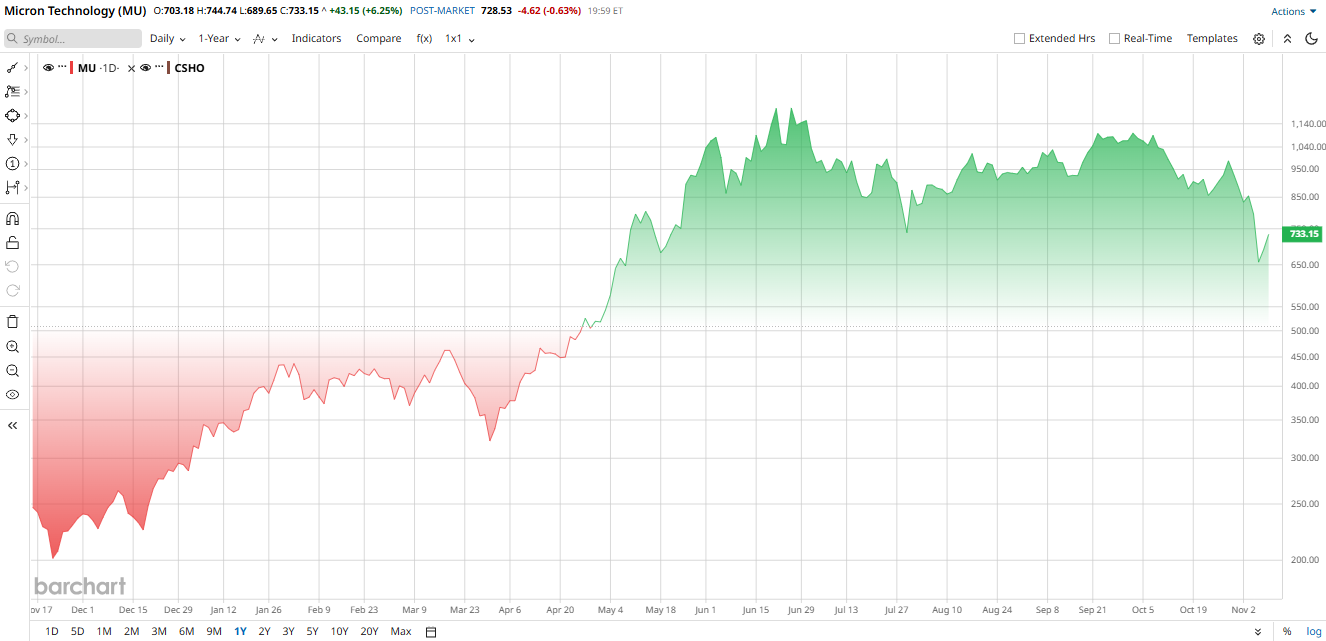
Micron shares have had an extraordinary run in 2026. Despite the ongoing broader chip selloff, Micron has been able to gain more than 147% in 2026 so far. This rally has been driven by strong AI infrastructure spending, rising DRAM prices, and growing demand for high-bandwidth memory, which has supported the rally.
However, investors have recently become more cautious. MU has retreated substantially from its June peak of $1,255 as technology stocks faced selling pressure and investors reassessed elevated valuations.
But the most tempting part is that MU trades at a very attractive price right now. Its price/earnings (P/E) ratio is just 4, much lower than the sector median of 26, reflecting a significantly cheaper stock. Additionally, MU’s EV/EBITDA is 3 compared to the sector median of 13, again highlighting deep undervaluation. Most valuation metrics signal MU is inexpensive versus its peers, despite a higher price/book (P/B) of 6 versus the sector's 3.
Why the Taiwan Plant Suspension Matters
Returning to the headline, according to Bloomberg, Micron has nearly halted construction of its planned Fab 11E complex in Taoyuan.
The project was expected to cost between $3 billion and $4.5 billion, with production targeted for 2028.
The stumbling block is worker compensation. Employees reportedly wanted an indefinite profit-sharing agreement that would net them 15% of profits from operations.
That is not an insignificant issue for Micron. Taiwan is also a major manufacturing base for the company, where it is making a significant amount of DRAM. As demand for AI continues to grow, further capacity may be stalled by the ongoing dispute.
But, at least for the short term, revenue impacts do not seem to be significant. The company has said that the operations of existing plants are being continued, and the company has stated that there are no impacts on customer deliveries.
The company has an upside as well for MU shareholders. Pricing may be supported by delayed capacity in the industry as well.
Meanwhile, Micron is aiming for a much bigger gain in the U.S. Its NYC manufacturing plant will be numbered and contracted for over $100 billion for more than 20 years. That will help diversify its manufacturing presence slowly, but mostly not take the place of Taiwan capacity all of a sudden.
Micron Q4 Earnings Show Why Demand Remains Strong
Micron once again smashed expectations on its latest earnings report. In Q4, revenue soared 379% year-over-year (YoY) to $54.23 billion, while net income surged to $37.70 billion from $3.20 billion a year earlier. Adjusted EPS climbed to $33.42 from $3.03.
The cash generation was equally impressive too. Adjusted free cash flow reached $33.20 billion, while cash and equivalents stood at $38.39 billion.
CEO Sanjay Mehrotra said, “Micron delivered record fiscal 2026 results, and we expect an even stronger fiscal 2027.”
Looking ahead, management expects fiscal Q1 2027 revenue of $61.5 billion, plus or minus $1.5 billion, and adjusted EPS of $38.15, plus or minus $1.
That forecast indicates that the AI memory boom remains in good form. But investors should be aware that margins in memory markets are cyclical and today's high margins might not persist in perpetuity.
Wall Street Remains Bullish on MU Stock
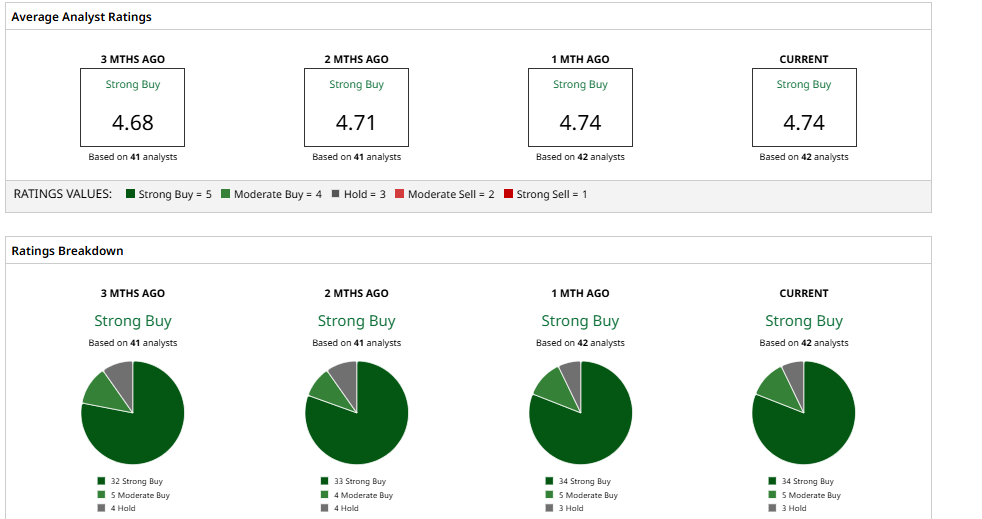
Analysts have maintained a positive outlook on MU stock despite the recent volatility.
Wall Street has a solid “Strong Buy” consensus rating, with an average price target of $1,555.46. That suggests that the stock could more than double in the next 12 months from the current price.
Put separately, Bernstein reiterated its “Buy” rating with a $1,300 target. Citi maintained “Buy” with the same target. While Wedbush maintained “Buy” with a $1,400 target.
The common thread is that analysts continue seeing strong AI-related memory demand as a major earnings driver.
The Taiwan issue is another headache for Micron but has no immediate impact on the demand picture. Investors may need to take care of the construction schedule, labor negotiations, and memory prices, etc., before drawing any conclusions about MU stock’s next movement.
On the date of publication, Nauman Khan did not directly have a position in any of the securities mentioned in this article. All information and data in this article is solely for informational purposes. For more information please view the Barchart Disclosure Policy here.