


EN
How Federal Loan Backing Will Impact Alliant Energy Stock Investors
- Alliant Energy reported third quarter 2026 revenue of US$1,285 million and net income of US$398 million, raised 2026 EPS guidance, outlined 2027 EPS and dividend targets, and closed a US$5.1 billion lower-interest federal loan package for new generation and storage projects.
- The combination of higher earnings per share, a planned dividend increase for 2027, and long-duration federal financing links Alliant Energy’s near term profitability to its longer term capital program and customer cost outlook.
- This article examines how Alliant Energy’s investment narrative is affected by stronger earnings and the new long term federal loan package.
Scan how Alliant Energy’s latest earnings and long term federal loan compare with other regulated utilities by reviewing our curated shortlist of 42 power grid technology and infrastructure stocks.
Alliant Energy Investment Narrative Recap
Owning Alliant Energy means buying into a regulated utility that is leaning hard into data center demand, while trying to keep customer bills in check. The analyst consensus Narrative on Simply Wall St leans on a multi year capital plan tied to about 3.4 GW of contracted hyperscale load and a further 2 to 4 GW pipeline as the core driver.
Right now, the short term swing factor is execution on that growth while keeping operations and maintenance costs in line as new projects stack up. The biggest risk is that large load projects or cost trends fall short of the plan, which would pressure earnings even if current quarterly numbers look solid.
The 30 year, US$5.1b lower interest federal loan package is the cleanest bridge between today’s earnings story and the long build out for data centers. Long duration, cheaper capital directly addresses prior worries that interest costs and external borrowing could weigh on returns as US$13.4b of projects move ahead.
For catalysts, the financing supports planned natural gas generation, storage and related infrastructure that underpin the EPS guidance for 2026 and the 2027 target range of US$3.63 to US$3.73. The flip side is execution risk. If projects are delayed, re scoped through regulation, or miss cost assumptions, that same leverage can work against Alliant Energy’s equity story.
Alliant Energy's current earnings of US$817.0 million are set against analyst expectations for US$1.2 billion of earnings and about US$5.4 billion of revenue by 2029. This implies 6.8% yearly revenue growth and an earnings increase of roughly US$383 million by that forecast year.
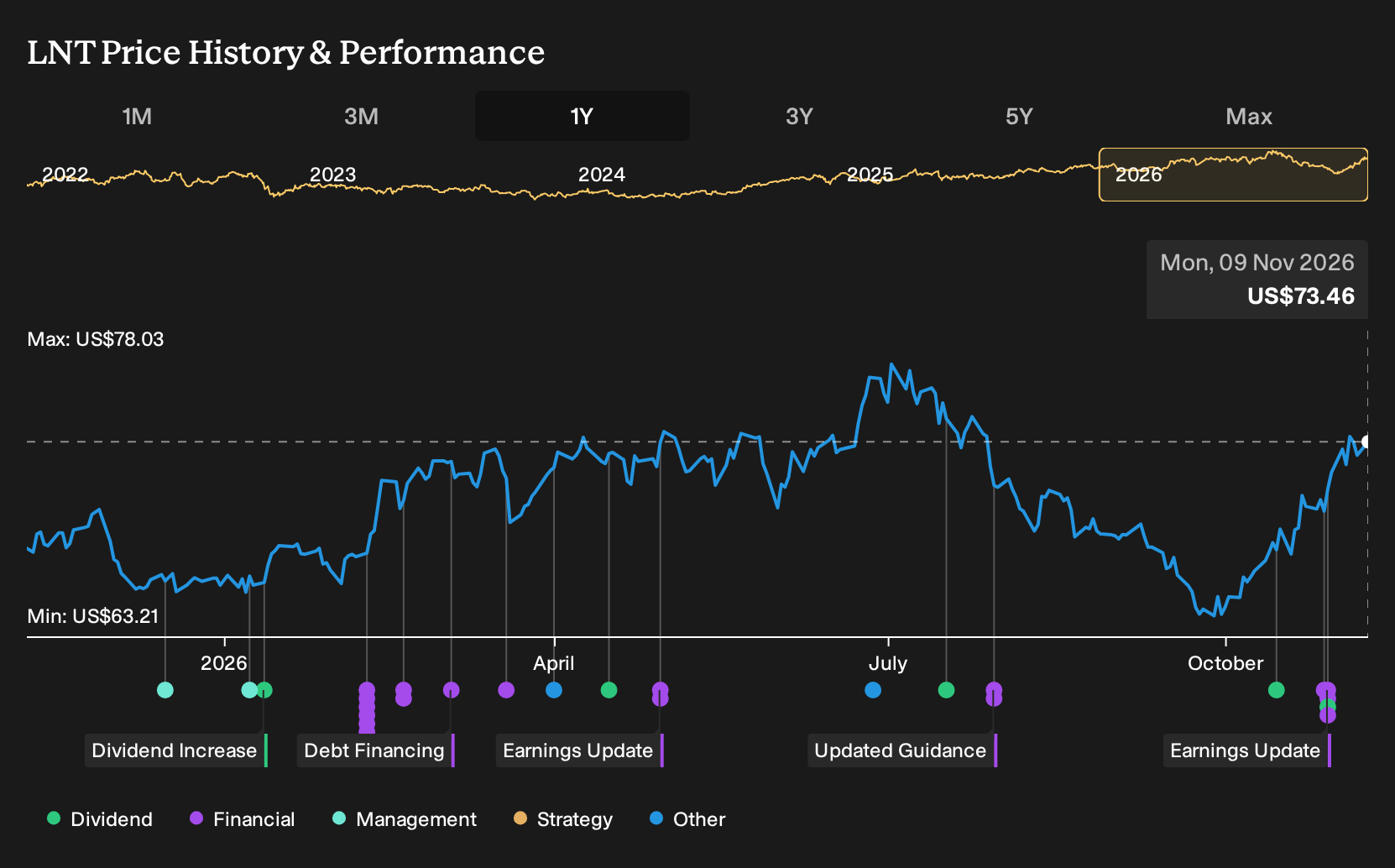
Uncover why Alliant Energy's fair value indicates a 4% potential upside to its current price that may not last much longer.
Exploring Other Perspectives
Views on Alliant Energy inside the Simply Wall St Community are scattered, with three retail investors posting fair values between about US$67.92 and almost US$94,478. Such a huge span shows how far opinions can stretch when people model data center demand, regulatory outcomes and the new federal loan terms differently. If you want context for your own view, treat these as starting points and explore how each thesis either leans on or questions the current earnings guidance and 30 year funding plan.
Explore 2 other Alliant Energy fair value estimates, including one that suggests up to 8% downside from the current price.
Decide For Yourself
Don't just follow the ticker. Dig into the data and build a conviction that's truly your own.
- A great starting point for your Alliant Energy research is our analysis highlighting 2 key rewards and 2 important warning signs that could impact your investment decision.
- See our latest analysis for Alliant Energy. The report includes a comprehensive fundamental analysis summarized in a single visual, the Snowflake, making it easy to evaluate Alliant Energy's overall financial health at a glance.
Looking for more Alliant Energy style investment ideas?
If Alliant Energy fits how you think about regulated earnings, capital plans and income, you can broaden that framework to other opportunities using the Simply Wall St Screener.
- For investors who want quality at a sensible entry point, scan a curated group of 33 high quality undervalued stocks that pair fundamentals with more modest pricing.
- If capital preservation matters to you, focus on businesses with steadier profiles by reviewing a 30 resilient stocks with low risk scores that may better match your comfort level.
- Income seekers who prize balance sheet strength can zero in on a list of solid balance sheet and fundamentals (25 results) to extend their watchlist beyond Alliant Energy.
Have feedback on this article? Concerned about the content? Get in touch with us directly. Alternatively, email editorial-team@simplywallst.com