


EN
What K+S Shareholders Got Right
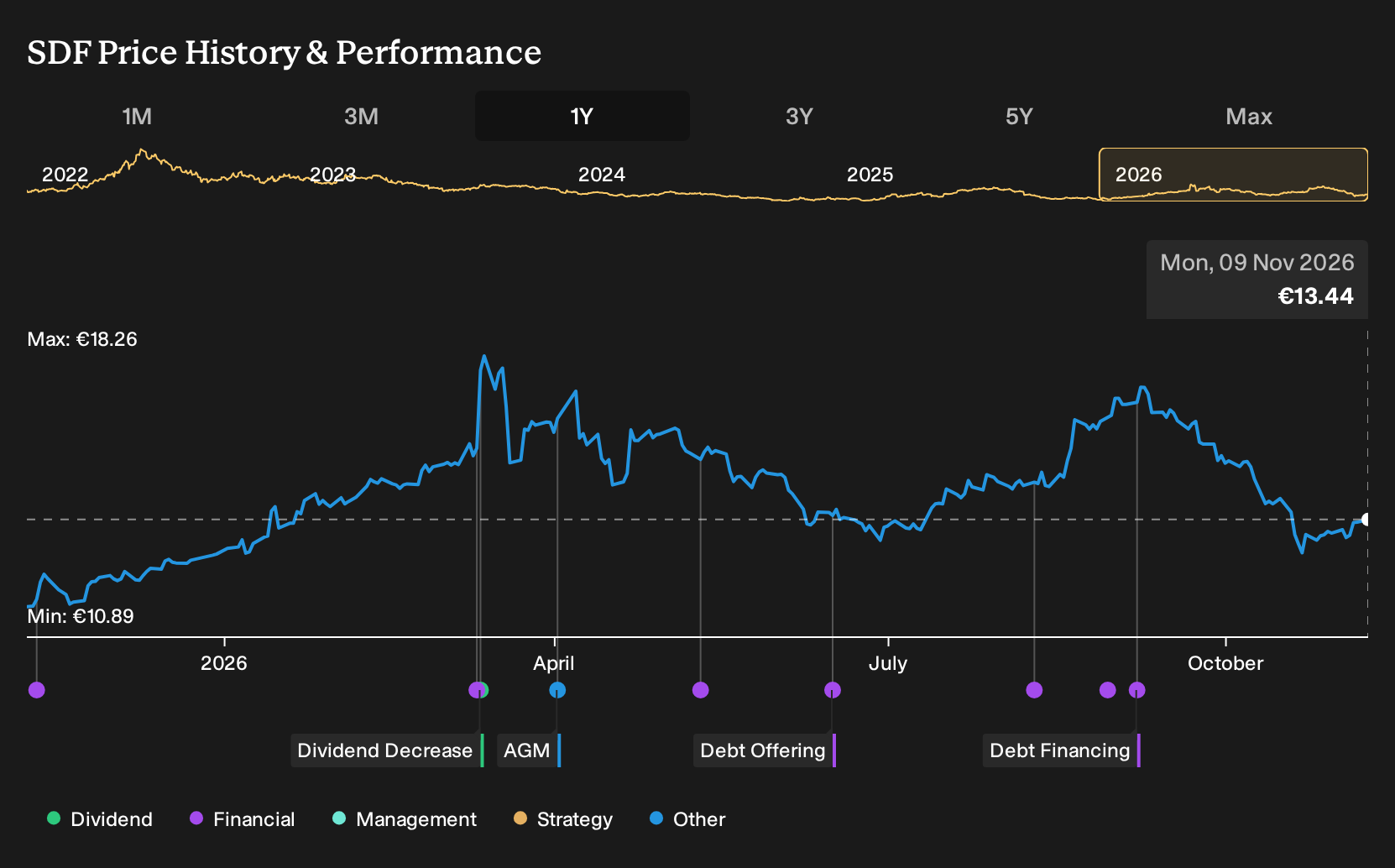
If you had bought K+S on 2025-11-09, the past year turned out to be anything but dull. For K+S shareholders, the return over the past year was 24.0%, including dividends. The result looks clear on a chart. At the starting line, investors were staring at a business coming off a huge loss, with analysts split between tight potash supply and aging European assets. Which of those competing stories looked strong enough to justify pressing the buy button then?
This theme extends beyond K+S. See which of 33 best rare earth metal stocks may still merit a closer look.
The Two Stories Investors Had To Weigh On K+S
The shares cost €10.86 at the start of the period, and anyone looking at K+S then faced two very different stories about where the business could head next.
The bullish argument saw global fertilizer demand as the anchor, with a Fair Value of €13.66 that reflected an implied upside based on revenue growing about 2.1% a year and profit margin eventually reaching 2.5%.
The bearish view put more weight on aging European assets and rising environmental costs, with a Fair Value of €10.25 that assumed ongoing margin pressure from higher long term mining and compliance obligations.
What The Results Changed For K+S
The clearest new datapoint was K+S shifting from a net loss of €1,734.1m in Q2 2025 to net income of €646.4m on €978.3m revenue in Q2 2026. This leaned toward the optimistic case on profitability. A jump in net margin from a loss of 199.0% to a 66.1% profit also challenged the assumption of persistently strained margins.
The lesson is simple. When a story hinges on margin repair, focus on reported net margin and the absolute profit line first, then test whether those improvements line up with the earlier thesis you bought into.
What Today's K+S Price Already Assumes
With K+S now at €13.44, the bearish analyst Narrative on Simply Wall St places its Fair Value below that level, arguing the current tag already builds in a healthy earnings step up.
The central question is whether K+S can fund heavy CapEx and environmental charges while still turning salt and specialties into steady cash engines. Anyone paying today is effectively betting that free cash flow grows despite those fixed burdens. How secure does that look if Werra water limits or softer pricing occur at the same time?
"Bearish analysts expect K+S to remain in a high-investment phase, where elevated CapEx and environmental and regulatory costs continue to limit sustainable free cash flow and pressure margins. The key requirement is that K+S turns salt and sulfur or magnesium specialties into reliably cash generative pillars that help offset Werra water risk and recurring EU ETS and energy costs, while the current potash demand and pricing backdrop remains in place."
The price and this Narrative do not agree. → Uncover what this Narrative says K+S is actually worth
Looking One Step Beyond K+S
K+S highlights how important potash has become to maintaining stable food supplies. That naturally raises the question of where new supply might emerge next.
Some developers now aim to avoid the classic giant mine model entirely. They adapt horizontal drilling techniques from the oil industry to reach potash seams.
Instead of deep shafts and massive surface piles, the ore is dissolved underground and pumped up as brine. This can allow smaller sites, less visible waste and different permitting discussions.
If this approach works at scale, future rivals to K+S could reach production with leaner projects. The unresolved issue is who proves it in real operations first.
The case is on the record, with the assumptions it rests on. → See the Narrative that values this company 36% above its price
Have feedback on this article? Concerned about the content? Get in touch with us directly. Alternatively, email editorial-team@simplywallst.com