


EN
Missed Garmin's Run? What Holders Had To Believe
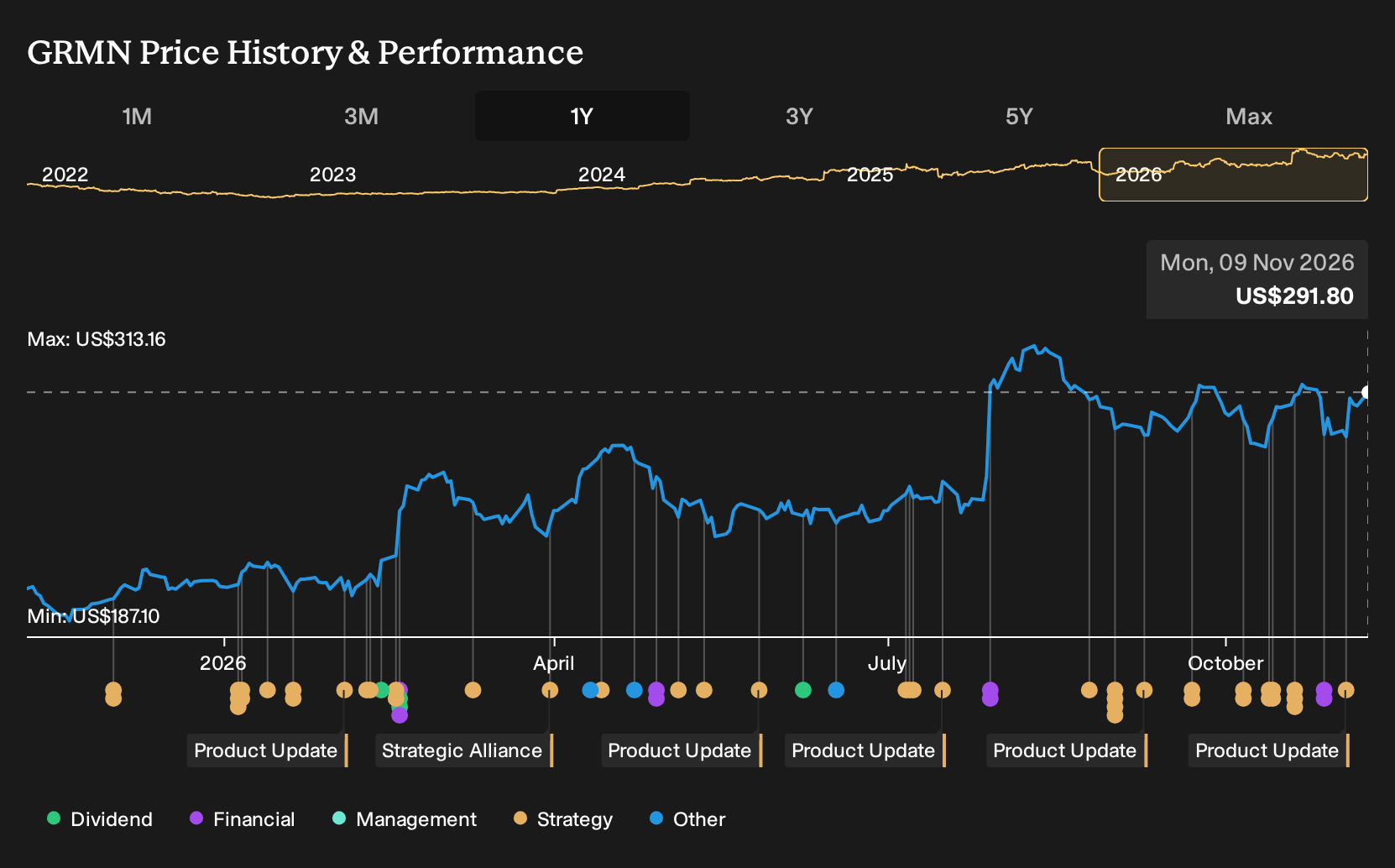
Garmin spent the year posting record quarters and rolling out new products in fitness, aviation, and marine, yet the real surprise showed up in investor portfolios. For Garmin shareholders, the return over the past year was 46.3%, including dividends. If you had bought on 9 November 2025, faced with both bullish optimism and sharp bearish warnings on wearables and regulation, how could you have weighed those clashing expectations against the result that actually followed?
Garmin has already moved. Pinpoint other ways to investigate the theme among 34 elite gold producer stocks.
The Two Stories Garmin Investors Had To Weigh
The shares cost US$201 at the start of the period, and Garmin sat between two sharply different stories about what might come next.
The bullish view argued that new fitness wearables and premium services could keep the business resilient. This view cited a Fair Value of US$215, a notional price implied by assumptions such as 8.2% revenue growth and a future P/E of 28.3x.
The bearish narrative pointed to competition, regulation, and niche exposure. It cited a Fair Value of US$167 and concern that heavier compliance costs would squeeze profitability in wearables and connected devices.
What The Results Changed For Garmin’s Two Stories
Record Q3 2026 figures gave Garmin investors hard numbers to test both scripts. Revenue reached US$1,986.1 million and net income US$541.7 million, with net margin at 27.3% compared with 22.7% a year earlier. That profitability shift backed the bullish idea that wearables, services, and aviation could support stronger margins, while leaving the more cautious worries about future regulation and competition unresolved.
The takeaway for any other stock is simple. When the argument hinges on margin pressure, do not just track sales or earnings per share. Watch whether net margin over several reporting periods actually moves toward the scenario each side described.
What Garmin’s Current Price Already Assumes
Garmin now trades at US$292 after a 46.3% gain over the past year. The bearish analyst Narrative on Simply Wall St places its Fair Value below that level, arguing the stock already embeds generous assumptions about earnings quality and cash generation.
That Narrative centers on whether Garmin can keep margins and cash flow robust as hardware cycles, input costs, and Auto OEM swings play through. Anyone paying today’s price is effectively betting that high profitability proves durable. So how does the risk of rising component costs and segment drag square with that assumption?
"The numbers imply the share price already reflects sustained high revenue, margin and free cash flow levels, so there is limited room for disappointment if any of these pillars weaken. The main thing that has to go right is that Garmin converts strong Fitness, Aviation, Marine and subscription performance into durable, high-margin earnings despite rising input costs and upcoming Auto OEM losses."
Not everyone reads the same price the same way. → See the lower figure this Narrative lands on, and how it gets there
Beyond Garmin, Another Fitness Angle
Garmin shows how training tech can become part of daily routine. One step away is a business built on the clothing and gear people pull on for those same sessions.
Instead of sensors on your wrist, this other group focuses on what covers your feet and body. It earns its keep when buyers choose shoes, kits and accessories for sport and everyday wear.
Because it sells into football, running and general fitness, demand can reflect longer term exercise habits rather than a single device cycle.
The lingering puzzle is whether that reach and brand pull can consistently turn active lifestyles into dependable profit over time.
That argument has a Narrative and a number behind it. → See the company one Narrative values 21% above its price
Have feedback on this article? Concerned about the content? Get in touch with us directly. Alternatively, email editorial-team@simplywallst.com