


EN
What Kingfisher Holders Got Right
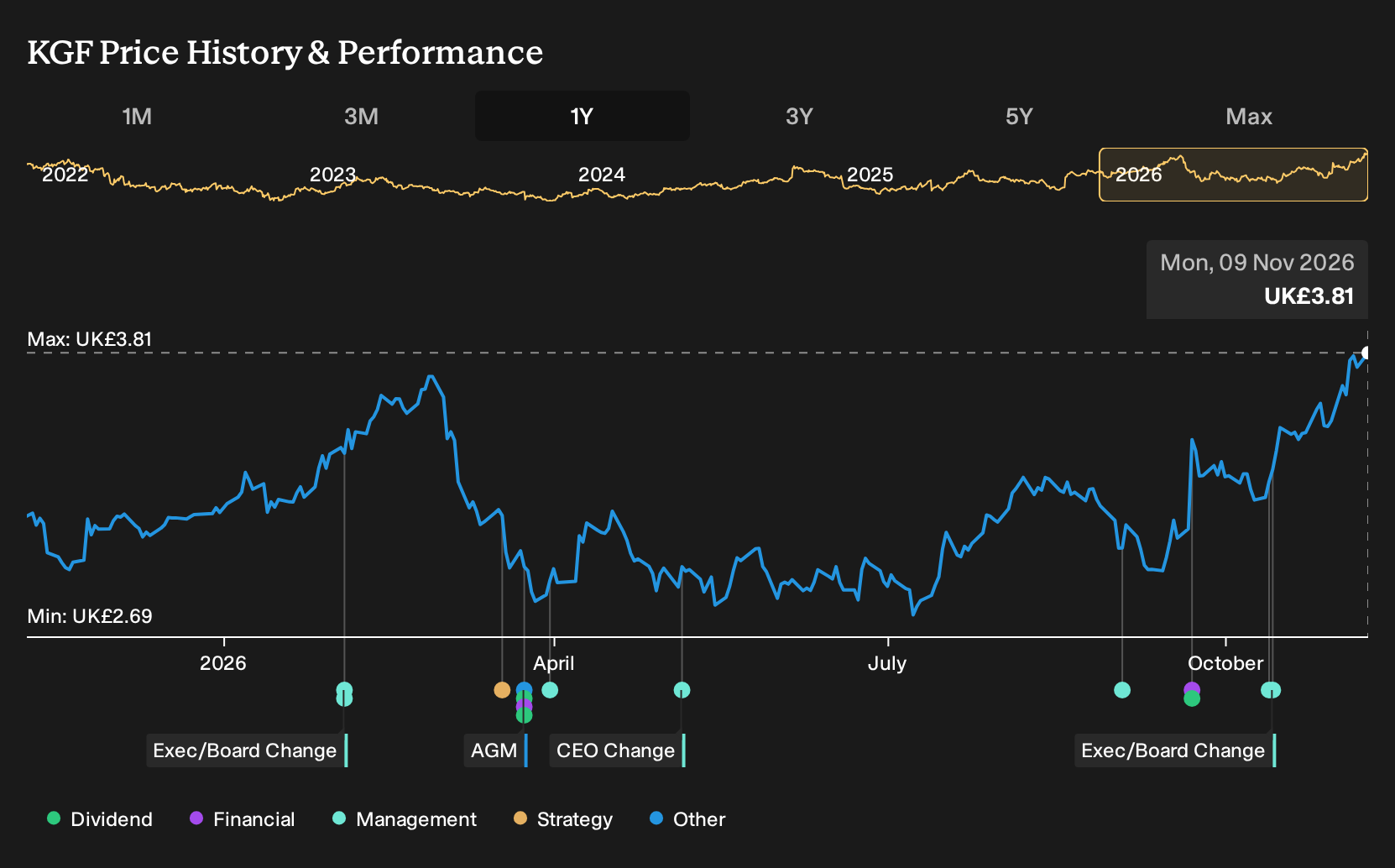
If Kingfisher was on your watchlist rather than in your portfolio, the return may sting. Investors who held Kingfisher over the past year are up 26.9%, including dividends. That outcome sits against a backdrop where bullish analysts were arguing that e-commerce rollout and eco focused renovation demand could reshape its earnings profile, while sceptics worried aging homeowners and online giants would squeeze margins. If you rewind to late 2025, how confident could you really be that digital and green DIY would win that argument?
Narratives are how investors here put a case on the record, with explicit assumptions about revenue, margins and the multiple. Those assumptions imply an estimated Fair Value.
If the move has made Kingfisher harder to judge, start where the gap is still open and scan 16 high quality undervalued stocks.
The Two Kingfisher Stories Investors Had To Hold In Their Heads
The shares cost £3.10 at the start of the period, and anyone looking at Kingfisher then had to choose between two very different stories that both sounded plausible.
On the bullish side, one camp put Fair Value at £3.87 and leaned on the idea that e-commerce, compact urban formats and eco focused home improvement could reshape the group and lift margins through a more efficient digital supply chain.
The bearish view pointed to a Fair Value of £2.35 and stressed slower 1.0% revenue growth assumptions, pressure from aging homeowners, and persistent fixed costs in a large physical store network as a long term margin risk.
What The Results Changed For The Kingfisher Debate
Kingfisher’s H1 2027 report showed revenue of £6,864m and net income of £290m, with net margin at 4.2% versus 3.5% in H1 2026. That cleaner profitability supported the bullish story that higher margins were possible. A later 1% share price fall during a wider sell off suggested the opposite effect. Overall, the evidence pointed in both directions.
The key assumption here was margin, not just sales. For any other retailer, stress test the story against reported net margin, and track whether each set of results is nudging that figure closer to or away from the original thesis.
What Kingfisher’s Current Price Already Implies
Kingfisher trades at £3.81 today, and the bearish analyst narrative on Simply Wall St places its fair value below that level. The gap reflects a view that the recent share gain already incorporates a lot of positive expectations regarding cash generation, efficiency and capital returns.
For that price to be justified, you would need confidence that Kingfisher can continue turning trade and digital growth into solid profit, even if mix pressures limit future gross margin progress.
"The main factor that needs to work in Kingfisher’s favor is the ability to translate higher trade penetration, digital growth and margin initiatives into sustained profit and cash generation, despite gross margin headwinds from trade, freight and supplier pricing."
The price and this Narrative do not agree. → Uncover what this Narrative says Kingfisher is actually worth
Looking Beyond Kingfisher’s Aisles
Kingfisher’s story centers on physical stores growing smarter and more digital. You can also start from the online side and work backward.
Retailers trying to grow online DIY and trade sales still rely on external cloud infrastructure. Those providers run data systems, logistics software and recommendation engines in the background.
They also invest in AI tools that help merchants forecast demand and adjust prices. That spending shapes how efficiently online commerce operates.
If your thesis on Kingfisher leans on durable digital habits, that upstream role matters. The open question is how much value ends up there instead of at the checkout.
One Narrative has already put a figure on it. → Uncover the company trading 41% below one Narrative's Fair Value
Have feedback on this article? Concerned about the content? Get in touch with us directly. Alternatively, email editorial-team@simplywallst.com