


EN
What Fair Isaac Bears Saw Before A 59% Drop
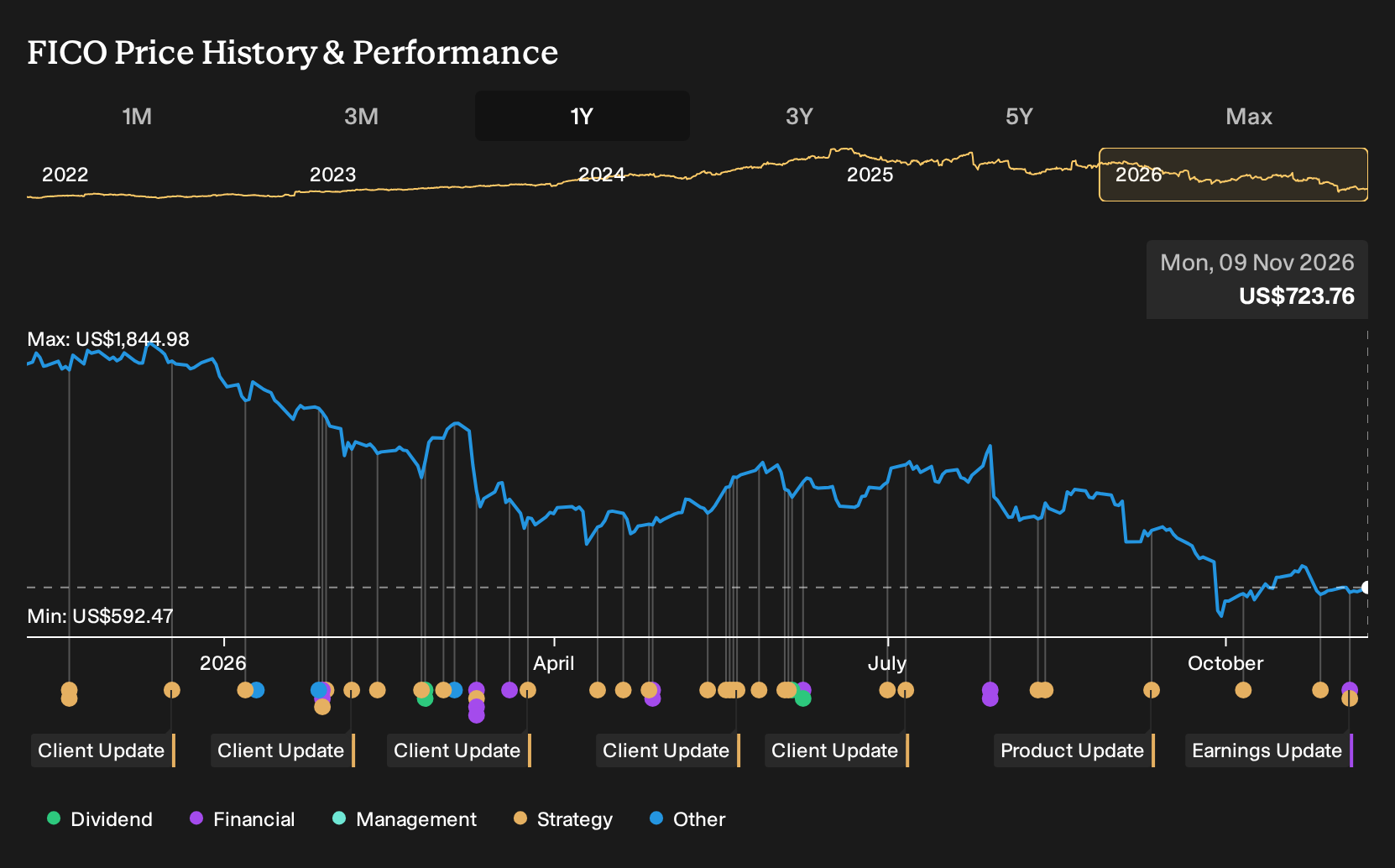
Regulators finally loosened Fair Isaac’s grip on mortgage scoring and short sellers lined up, yet earnings headlines during the year still looked strong on the surface. For Fair Isaac shareholders, the loss over the past year was 58.8%, including dividends. If you had bought after the bullish October 2025 thesis that used assumptions of 14.3% annual revenue growth, 36.8% margins and a 49.9x future P/E, what exactly did that investment case miss about regulatory risk and mortgage pricing power?
The useful thing about a Narrative is that the reasoning is checkable: the assumptions sit beside the argument, and together they imply an estimated Fair Value you can disagree with.
The move put Fair Isaac in the middle of this trade. Scan 40 AI small caps for other companies exposed to it.
What Fair Isaac Investors Were Actually Arguing About
The shares cost US$1,740 at the start of the period, and Fair Isaac sat between two very different stories about its future.
The optimistic narrative saw a fair value of US$1,875 based on 14.3% annual revenue growth assumptions, 36.8% profit margins and a future P/E of 49.9x, with mortgage licenses and SaaS adoption expected to strengthen pricing power.
The cautious view put fair value at US$1,364, assuming 13.0% yearly revenue growth, a 38.0% margin and a 39.2x future P/E, and warned that tighter data privacy rules and DeFi tools could weaken traditional credit scoring models.
What The Evidence Did To The Fair Isaac Story
Fair Isaac’s later results showed Q4 revenue at US$657.0m and net income at US$175.0m, both higher than Q4 2025, while net margin slipped from 30.1% to 26.6%. That operating picture broadly supported the optimistic case on growth and profitability. The FHFA’s move to put VantageScore on equal footing and criticism of FICO mortgage pricing clearly challenged the assumed durability of its pricing power.
The key lesson is to tag any thesis that leans on monopoly style pricing. Then track regulatory rulings, customer choice rules, and segment level margins to see if that pricing power actually survives contact with policy.
What Fair Isaac’s Drop Has Already Priced In
Fair Isaac now trades at US$724 after a 58.8% loss over the past year, and this Narrative’s Fair Value sits above that level rather than below it. The analyst consensus Narrative on Simply Wall St centers on whether mortgage pressure is temporary, while FICO Platform and newer scores reshape the mix.
Before treating the fall as a potential opportunity instead of a warning, a buyer today would need to believe those platform and non mortgage scoring engines can carry revenue and margin quality if mortgage pricing power stays capped.
"The main thing that has to go right is that FICO Platform and newer scores like FICO Score 10T and UltraFICO offset the regulatory driven erosion of the legacy mortgage scoring franchise and support margins similar to recent non GAAP levels."
One Narrative disagrees with today's price. → See where this Narrative says Fair Isaac should trade
Which Company Could Surprise You Next?
Passing on this one could have spared you a loss. Where might you find the opposite surprise? Start looking for companies whose prices leave room for a better outcome than investors expect. These three trade below our estimated value.
- Company 1 - 49% below our estimate - runs an asset light hotel network while scaling a higher margin branded retail ecosystem.
- Company 2 - 28% below our estimate - builds an aviation aftermarket platform that expands through engine programs and acquired repair capacity.
- Company 3 - 39% below our estimate - shifts freight mix toward heavy haul while rolling out AI tools to raise agent productivity.
Those are three of them. See the full list of 33 companies trading below our fair value estimates →
Have feedback on this article? Concerned about the content? Get in touch with us directly. Alternatively, email editorial-team@simplywallst.com