


EN
Synchrony Financial Stock: Analyst Estimates & Ratings
Stamford, Connecticut-based Synchrony Financial (SYF) operates as a consumer financial services company in the United States. Valued at a market cap of $22.8 billion, the company provides credit products, such as credit cards, commercial credit products, and consumer installment loans.
SYF stock has lagged behind the broader market over the past year, growing marginally compared to the S&P 500 Index’s ($SPX) 12.2% surge. Moreover, in 2026, the stock has fallen by nearly 12.2%, underperforming the SPX’s 10.3% rise.
Zooming in further, the State Street Financial Select Sector SPDR ETF (XLF) has risen 9.9% over the past year, lagging behind the stock. In 2026, XLF has grown 5.9% and has outpaced the stock.
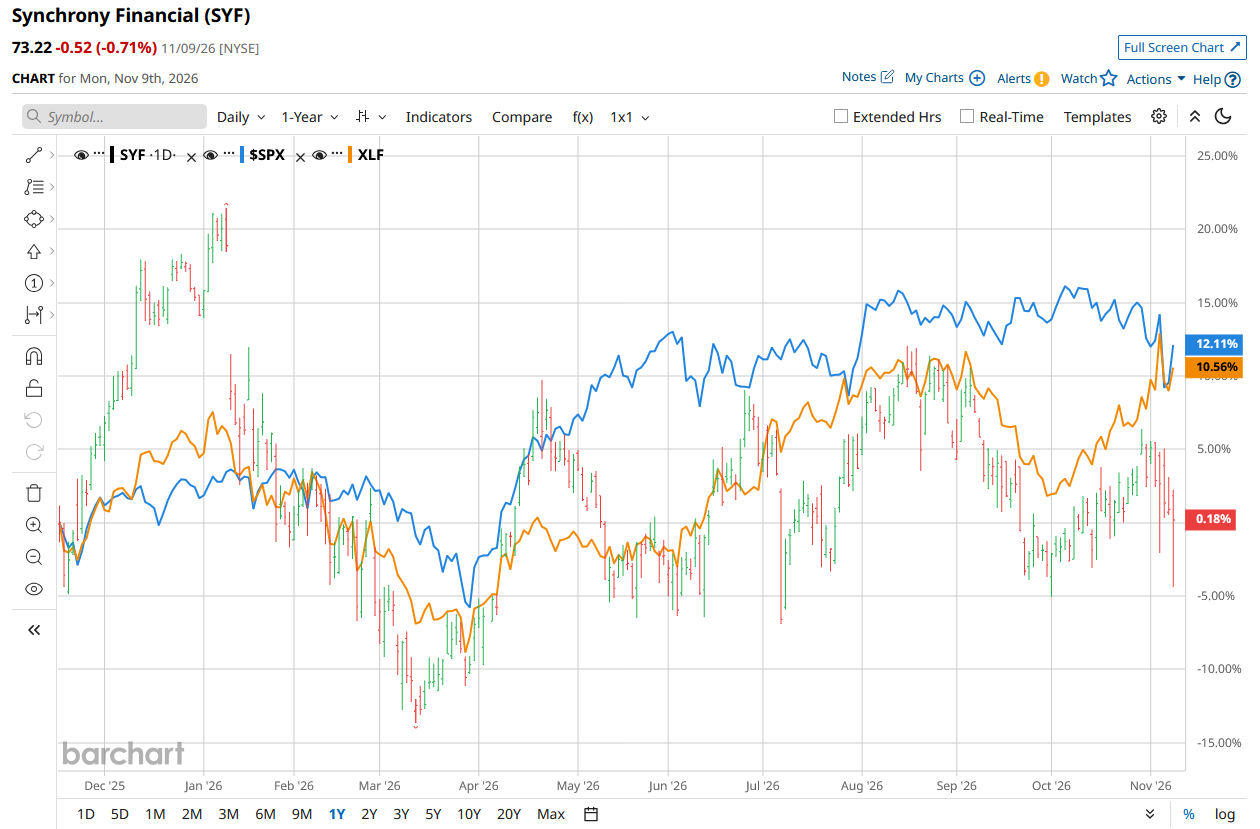
On Oct. 20, SYF stock declined 1.2% following the release of its mixed Q3 2026 earnings. The company’s revenue for the quarter remained flat YoY, coming in at $3.8 billion, and missed the Street’s estimates. However, its adjusted EPS amounted to $2.68, surpassing the consensus estimates. Additionally, the company’s net interest income also came in line with Wall Street’s expectations, but it missed the mark with its tangible book value per share.
For the current year, which ends in December, analysts expect SYF’s EPS to rise 1.8% to $9.59 on a diluted basis. The company met or surpassed the consensus estimate in each of the last four quarters.
Among 22 Wall Street analysts covering SYF stock, the consensus is a “Moderate Buy.” That’s based on 11 “Strong Buy” ratings, one “Moderate Buy,” and 10 “Holds.”
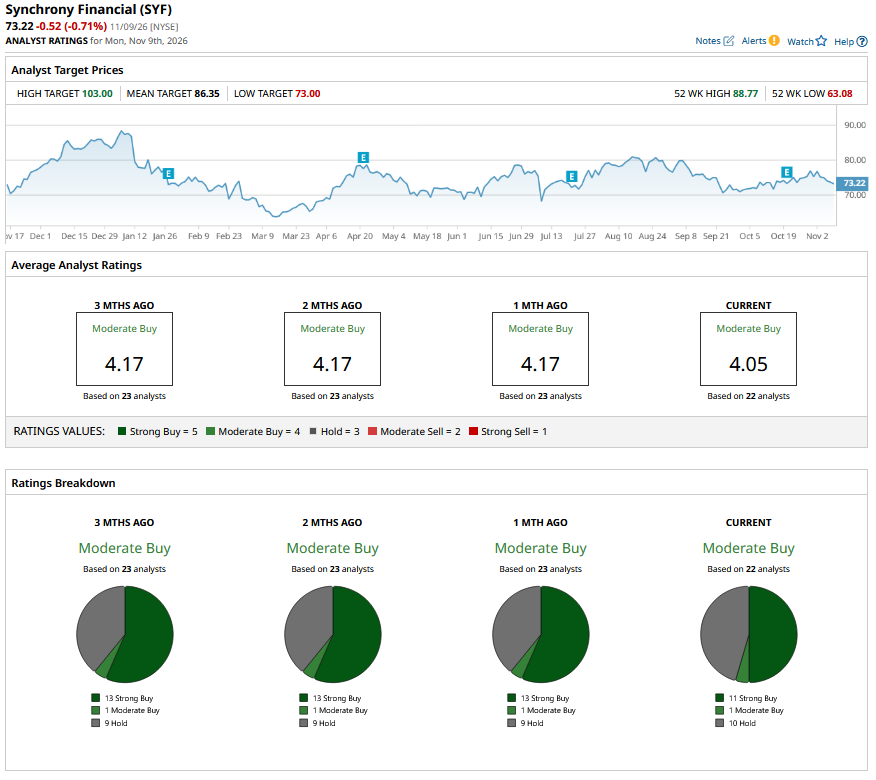
The configuration has grown bearish over the past month, with the stock’s “Strong Buy” ratings decreasing from 13 to 11.
On Nov. 3, UBS analyst Erika Najarian maintained a “Hold” rating on Synchrony Financial stock and set a price target of $80.
SYF’s mean price target of $86.35 offers a 17.9% upside compared to the current market price. Its Street-high target of $103 implies a robust 40.7% upside from current levels.
On the date of publication, Aritra Gangopadhyay did not directly have a position in any of the securities mentioned in this article. All information and data in this article is solely for informational purposes. For more information please view the Barchart Disclosure Policy here.