


EN
3 UK Defensive Dividend Stocks With More Predictable Cash Flows
Rate calls at the Bank of England are again finely balanced, energy markets are on edge and the UK jobs backdrop looks fragile. That mix can punish highly cyclical stocks yet leave some large, dividend-paying defensives looking relatively better anchored. If you care about protecting income while the macro story keeps shifting, this article walks through three UK blue chips exposed to these pressures and explains where the current setup might help or hurt them.
The three stocks in this article are just a sample from the wider idea, and the full screen surfaced 9 more large cap income plays with similarly interesting stories that are not covered here. To go straight to the source and identify, compare, and analyze the highest conviction opportunities for UK defensive dividends, head into the UK Defensive, Dividend-Paying Large Caps screener.
United Utilities Group (LSE:UU.)
United Utilities Group slots neatly into the UK Defensive, Dividend-Paying Large Caps theme as a regulated water and wastewater provider, and the analyst consensus Narrative on Simply Wall St highlights why its mix of inflation-linked assets and income appeal is back in focus now.
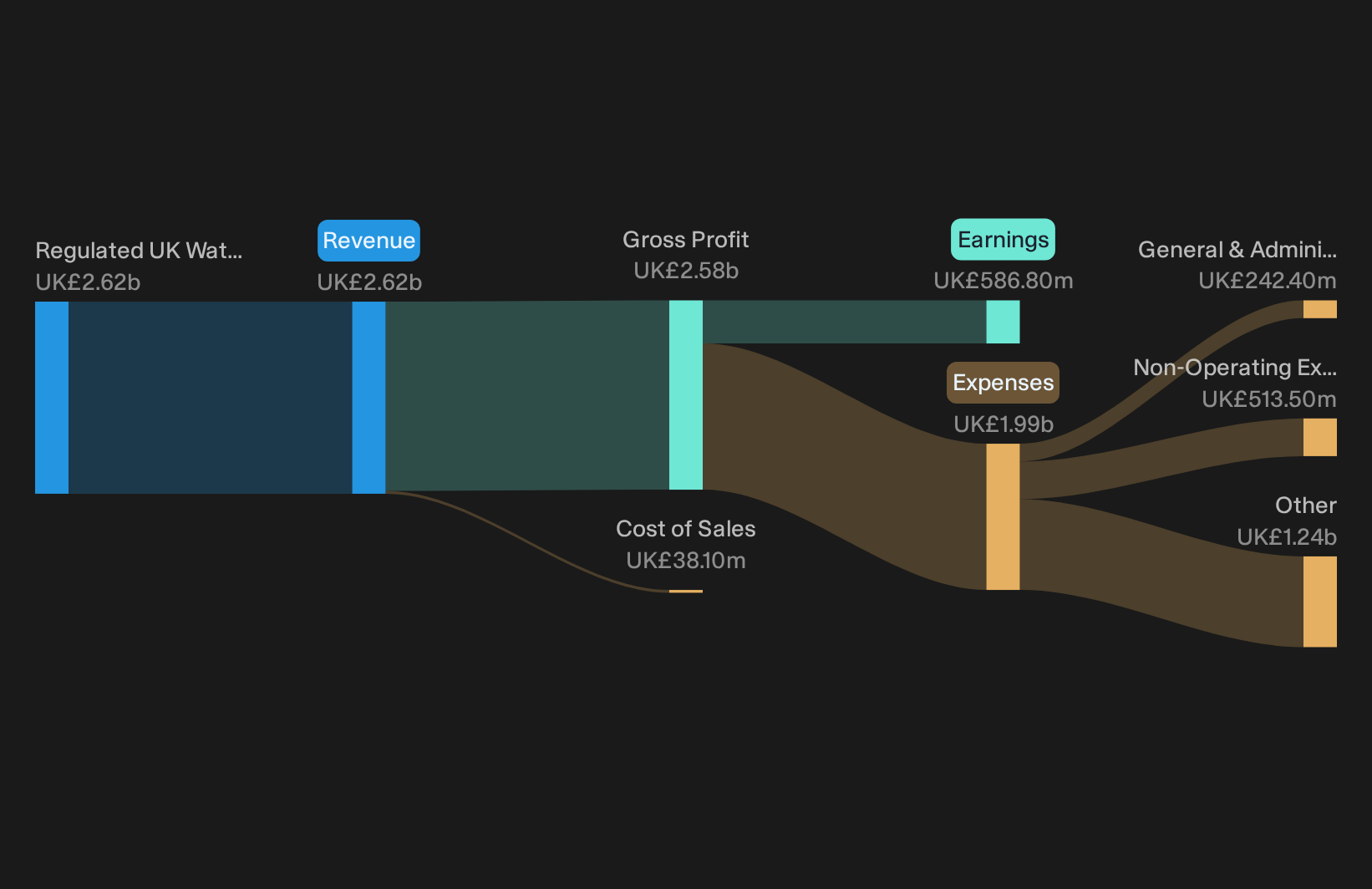
United Utilities Group runs regulated water and wastewater networks across the UK, earning about £2.6b from its core regulated business and giving it a £11.5b market value as a FTSE utility heavyweight.
"United Utilities Group is rolling out advanced technology such as satellite imaging and telecoms fiber networks to detect leaks, which is expected to reduce water loss and operating costs and in turn support higher net margins over time."
What happens to those margins if one unseen pressure on its cost base or allowed returns shifts even slightly will be crucial for income investors.
Those shifting pressures on returns are exactly why the full narrative for United Utilities Group goes deeper into how regulation, capex and technology could be quietly reshaping United Utilities Group’s income profile.
Target Healthcare REIT (LSE:THRL)
Target Healthcare REIT gives this UK Defensive, Dividend-Paying Large Caps screen pure-play exposure to modern care homes, with all of its £72 million in property investment income coming from UK facilities and supported by a market cap of about £743 million.
For income investors looking for assets whose cash flows lean more on demographic realities than short economic cycles, Target Healthcare REIT offers a focused way into UK care homes. The analyst consensus Narrative on Simply Wall St sets out why that can matter over the next decade.
"Structural growth in the over 85 population and a rising proportion requiring residential care is set to underpin high occupancy and support continued inflation linked rental uplifts, which should sustain revenue growth and earnings resilience."
What really moves the dial will be how one pressure point in the rent and funding model shapes future dividend cover and pricing power.
That hinge point is exactly what the full narrative for Target Healthcare REIT unpacks, separating durable rent growth from risks that could quietly stall Target Healthcare REIT’s income engine.

Supermarket Income REIT (LSE:SUPR)
Supermarket Income REIT fits the UK Defensive, Dividend-Paying Large Caps theme by owning grocery properties that support everyday food shopping. The trust has about £115 million coming from investment in supermarket assets and a market value of roughly £1.2b, giving income-focused investors pure exposure to this niche.
For income seekers wanting rent streams tied to essential food retail rather than discretionary spending, Supermarket Income REIT offers a focused way to access that idea. The analyst consensus Narrative on Simply Wall St highlights one operational shift that could materially change how much profit ultimately flows through to shareholders.
"The proposed internalization of the company is expected to significantly reduce costs, targeting an EPRA cost ratio below 9%, down from 13.6%."
What really matters for dividend investors is how this relatively quiet change in funding and rent growth assumptions ultimately shapes cash coverage of those payouts.
To see how that cost shift could reshape cash coverage and upside, go to the full narrative for Supermarket Income REIT for the fuller story on Supermarket Income REIT.

Seeking Alternatives Before The Crowd Moves?
Fresh ideas move first. The strongest themes often break out quietly, build momentum, then fly once the crowd finally notices. Scan these under the radar lists while it matters and consider positioning early.
- Spot resilient payers that keep income flowing as conditions shift by running the 6 dividend fortresses before yields adjust.
- Track potential breakout leaders in automation and industry 4.0 with the curated 91 robotics and automation stocks while the story is still under the radar.
- Hunt for early-cycle infrastructure names involved in grid upgrades using the focused 42 power grid technology and infrastructure stocks and review them before momentum builds.
Have feedback on this article? Concerned about the content? Get in touch with us directly. Alternatively, email editorial-team@simplywallst.com