


EN
What Flowserve Holders Bought Into
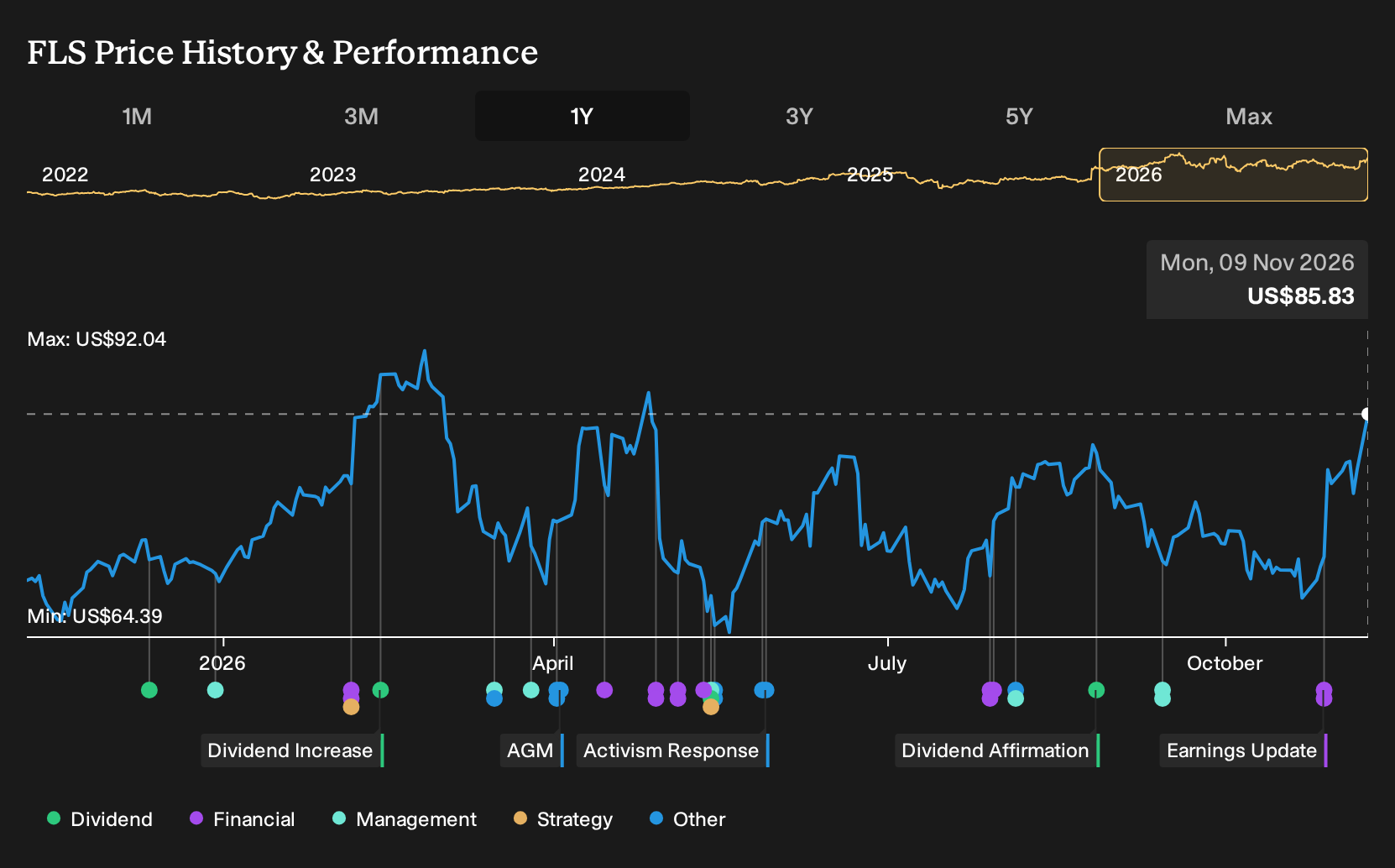
If you only glanced at Flowserve headlines, the story might start with its US$490 million purchase of Trillium’s valves division and fresh nuclear power exposure. Holding Flowserve over the past year would have returned 24.6%, including dividends. That outcome is now fixed on the scorecard. If you were deciding back on 2025-11-09 whether to buy, what did you need to believe about cleaner energy orders, water projects and tariff risks before any of this news hit the wires?
Flowserve is not the only name tied to this theme. Zero in on 17 nuclear energy infrastructure stocks and compare how each one is priced.
The Two Stories Investors Had To Choose Between On Flowserve
The shares cost US$69.24 at the start of the period, so anyone looking at Flowserve then had to weigh two very different stories about what that figure implied.
On the bullish side, one camp saw a Fair Value of US$76, a price they felt the cleaner energy and water demand assumptions could justify. Nuclear, LNG and carbon capture projects were seen as feeding a strong backlog, and aftermarket work accounted for over half of sales.
The bearish view anchored on a Fair Value of US$60, a level tied to worries that tariffs on materials from China, India and Mexico and complex supply chains might squeeze margins, even if nuclear and aftermarket orders stayed healthy.
What The Flowserve Evidence Actually Tested
Flowserve’s US$490 million purchase of Trillium’s valves division supported the bullish idea that cleaner energy and nuclear work could deepen its backlog and aftermarket mix. At the same time, Q3 2026 results showed revenue at US$1,237.8 million and net income at US$103.0 million, with net margin down from 18.7% to 8.3%. The evidence pointed in both directions.
The key lesson is to anchor forecasts to specific numbers. If the story depends on a richer project mix and higher service work, track reported net margin and aftermarket contribution each quarter to see whether that claim is reflected in cash generation.
What Flowserve’s Recent Run Already Prices In
Flowserve now trades at US$85.83, above where the bearish analyst Narrative on Simply Wall St places its Fair Value. That Narrative views this Fair Value as reflecting revenue constraints, Middle East disruption risk and slower conversion of nuclear and aftermarket bookings into earnings.
If you pay today’s price, the key assumption to test is that Flowserve keeps turning aftermarket strength, 80/20 portfolio work and the Trillium acquisition into durable operating margins, despite regional and backlog mix pressures.
"The main thing that has to go right is that Flowserve converts its strong aftermarket and nuclear related bookings, 80/20 actions and the Trillium acquisition into sustained operating margins around management's targets while managing regional disruptions and backlog mix."
One Narrative has put a figure on that disagreement. → See the Narrative with its lower Fair Value, assumptions and all
Where Flowserve’s Theme Extends Next
Flowserve puts you in the path of cleaner power and water work. One step away, another business tackles a different bottleneck.
AI data centres still need electricity and cooling, even when projects look nothing like pumps and valves. Without reliable thermal control, those facilities cannot operate effectively.
Here, a specialist builds the power systems, cooling hardware and software that keep racks within safe temperatures while they work nonstop.
That support role matters more as computing loads rise. If you track Flowserve for infrastructure exposure, this parallel corner might also belong on your watchlist.
The case is on the record, with the assumptions it rests on. → See the Narrative that values this company 104% above its price
Have feedback on this article? Concerned about the content? Get in touch with us directly. Alternatively, email editorial-team@simplywallst.com