


EN
Missed Vienna Insurance Group's Run? What Holders Had To Believe
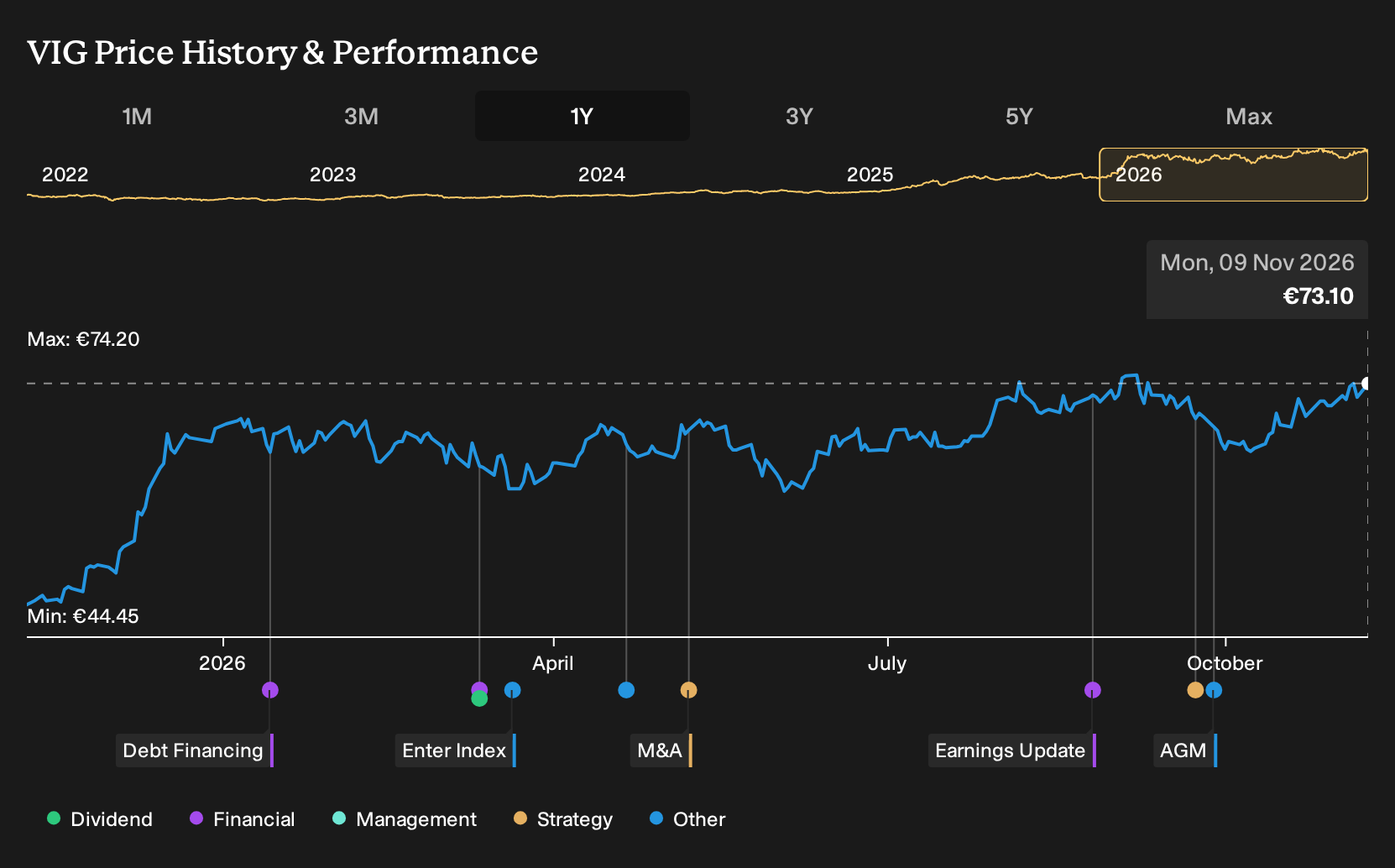
If you only glanced at Vienna Insurance Group headlines this year, the story might have looked like steady regional expansion rather than a standout wealth creator. For Vienna Insurance Group shareholders, the return over the past year was 68.9%, including dividends. If you had been weighing up the bullish call for long-term CEE growth against warnings on climate risk and digital gaps back in November 2025, what exactly explains that outcome?
Vienna Insurance Group has already moved. See which of 209 high quality undervalued stocks still trade below our estimates.
The Argument You Would Have Been Weighing Up On Vienna Insurance Group
The shares cost €43.75 at the start of the period, and Vienna Insurance Group sat between two well defined stories about where its CEE footprint and digital push might lead.
On the optimistic side, the bullish narrative pointed to a Fair Value of €51.0, a price that would only make sense if assumptions played out. This view was built on 5.0% assumed annual revenue growth and profit margins rising from 5.1% to 6.0% by 2028.
The cautious view anchored to a Fair Value of €24.5, again a price implied by its own forecasts. In this case, analysts assumed the same 5.0% top line pace but margins edging down from 5.1% to 5.0% as climate losses and CEE pressures bit into underwriting.
What The Evidence Around Vienna Insurance Group Actually Tested
The biggest shift came from Vienna Insurance Group closing its largest deal, taking 99.2% of NÜRNBERGER and stepping into Germany in scale. This supported the optimistic expansion story. H1 2026 results added weight, with insurance service revenue at €7.3b, profit at €465.8m and net margin at 6.4% versus 6.0% a year earlier. Overall, the period supported the optimistic case.
The practical takeaway is clear. When a thesis leans on cross border growth and better profitability, it is important to check whether acquisitions really change market mix and whether reported net margin moves toward the scenario investors were counting on.
What Vienna Insurance Group's Price Now Asks You To Believe
Vienna Insurance Group now trades at €73.1, with the bearish analyst Narrative on Simply Wall St seeing its Fair Value below that level based on current forecasts and risk estimates. That view leans heavily on how reserve choices, solvency headroom and higher risk markets might limit how much reported growth turns into lasting profitability.
A buyer today is effectively assuming Vienna Insurance Group can keep growing earnings while maintaining capital strength. The question then becomes how the Narrative's concerns about reserve build, war risk exposure and more volatile investment markets could influence how much of that ambition actually shows up in future margins and returns.
"Despite Vienna Insurance Group continuing to grow insurance service revenue and profit before tax at group level, using strong periods in key markets like Poland to reinforce reserves rather than to widen underwriting margins suggests that management may need to keep sacrificing short term profitability to maintain balance sheet strength, which may cap improvements in the combined ratio and earnings per share."
Not everyone reads the same price the same way. → See the lower figure this Narrative lands on, and how it gets there
Looking One Step Beyond Vienna Insurance Group
Vienna Insurance Group highlights how regional reach and balance sheet detail can matter. Another insurer shows a different route to similar aims.
Large global carriers face a comparable puzzle around efficiency, pricing and steadier earnings. Long contract books sharpen that challenge.
One European group leans on AI in underwriting, claims and customer contact to respond. It also reshaped its long term Life and Health portfolio to clarify locked in profit.
The blend of tech driven cost work, fee style health services and capital flexibility gives that business another way forward.
For investors, that contrast raises questions about which model can adapt fastest.
The case is on the record, with the assumptions it rests on. → See the Narrative that values this company 45% above its price
Have feedback on this article? Concerned about the content? Get in touch with us directly. Alternatively, email editorial-team@simplywallst.com