


EN
Learn Why The Bull Case For Trulieve Cannabis Stock Could Change Following DEA Registration
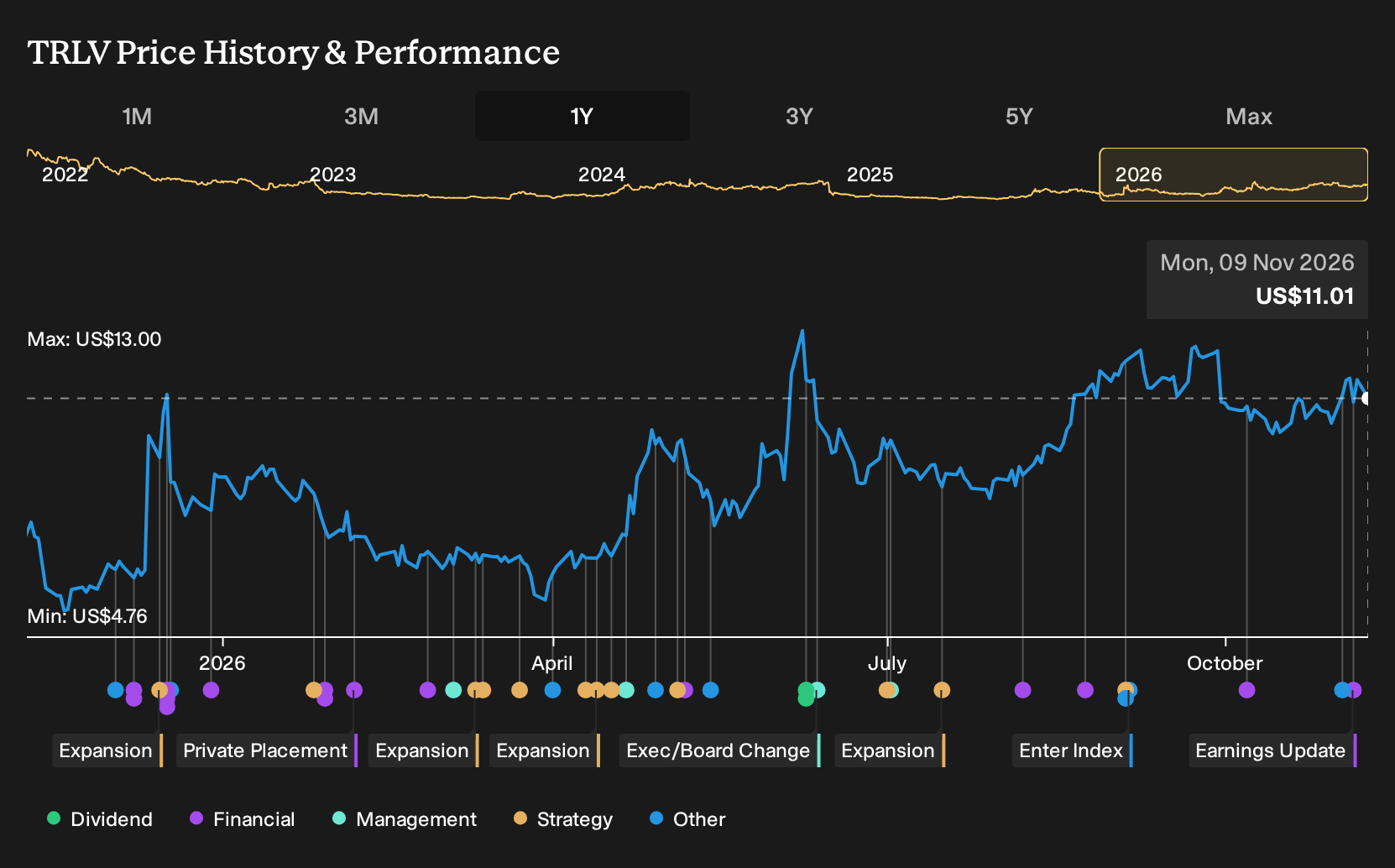
- Trulieve Cannabis reported third quarter 2026 revenue of US$230.22 million and net income of US$0.869 million, alongside DEA registration for its state licensed medical marijuana dispensaries under the new federal framework.
- The combination of returning to quarterly profitability and gaining early DEA registration positions Trulieve Cannabis at the intersection of federal policy change and operational execution in U.S. medical cannabis.
- This article now explores how Trulieve Cannabis's fresh DEA registration may reshape its investment narrative around regulation, cash flow and scale.
Trulieve Cannabis Investment Narrative Recap
For Trulieve Cannabis, the core belief is that a federally compliant medical platform can eventually turn current losses into durable cash generation. The recent return to a small quarterly profit and DEA registration both point toward tighter cost discipline and a clearer regulatory lane. The near term catalyst is whether operations in Florida, Georgia and Pennsylvania can keep supporting at least US$225 million in annual operating cash flow while capital spending rises.
The biggest near term risk is that pricing pressure and softer consumer wallets limit what Trulieve Cannabis can earn from that footprint, even with tax relief from rescheduling. Nine month results still show a US$402.7 million loss and higher basic loss per share, so any slowdown in demand or regulatory friction around 280E relief could quickly squeeze margins and delay a cleaner earnings profile.
The DEA registration is the announcement that most directly ties into the analyst consensus narrative on Simply Wall St, which focuses on Schedule III reclassification as a key driver. A federal framework that lets Trulieve Cannabis register its state operations gives the business clearer rules on compliance, expense deductibility and access to clinical research partnerships. All of these elements feed into the long term thesis.
That same registration also brings a new layer of federal oversight on top of state rules. Execution now depends on maintaining tight controls while expanding in markets such as Georgia and preparing for a possible Texas entrance. If guidance on tax treatment or DEA requirements proves less favorable than anticipated, the risk side of the narrative around earnings, cash generation and potential margin improvement becomes more prominent for existing and prospective shareholders.
Trulieve Cannabis' narrative projects US$933.9 million in revenue and US$183.7 million in earnings by 2029. This projection assumes revenue decreases at 6.4% per year and requires an earnings swing of about US$651.5 million from current earnings of a US$467.8 million loss.
Uncover why Trulieve Cannabis' fair value indicates that its current price may be undervalued by up to 65% before that discount starts to close.
Exploring Other Perspectives
One alternate view puts Trulieve Cannabis’s DEA registration in a different light. The most pessimistic analysts already assumed revenue of about US$869.6 million and earnings of US$250.1 million by 2029, with a lower 14.4x P/E. That cohort effectively priced in slower top line trends and invites you to compare several pre news viewpoints.
Explore 3 other Trulieve Cannabis fair value estimates, including one that suggests it could be worth just $15.00!
Decide For Yourself
Don't just follow the ticker. Dig into the data and build a conviction that's truly your own.
- A great starting point for your Trulieve Cannabis research is our analysis highlighting 3 key rewards and 1 important warning sign that could impact your investment decision.
- See our latest analysis for Trulieve Cannabis. The report includes a comprehensive fundamental analysis summarized in a single visual, the Snowflake, making it easy to evaluate Trulieve Cannabis' overall financial health at a glance.
Looking for more investment ideas beyond Trulieve Cannabis?
After reviewing Trulieve Cannabis, it can help to widen the lens and compare it against other opportunities with different risk and income profiles. The Simply Wall St Screener lets you filter by quality, balance sheet strength and yield so you can build a watchlist that actually fits your objectives rather than chasing the latest headline.
- If you want to focus on resilient businesses that aim to limit downside risk, start with a basket of 30 resilient stocks with low risk scores that have historically scored well on financial stability and volatility measures.
- For investors who care about both quality and valuation, scan through 33 high quality undervalued stocks that combine solid fundamentals with prices that analysts judge to be below intrinsic worth.
- If balance sheet strength matters most to you, filter for companies using the list of solid balance sheet and fundamentals (25 results) and compare how their debt, cash and profitability stack up before committing fresh capital.
Have feedback on this article? Concerned about the content? Get in touch with us directly. Alternatively, email editorial-team@simplywallst.com