


EN
What Compass Bulls Got Right
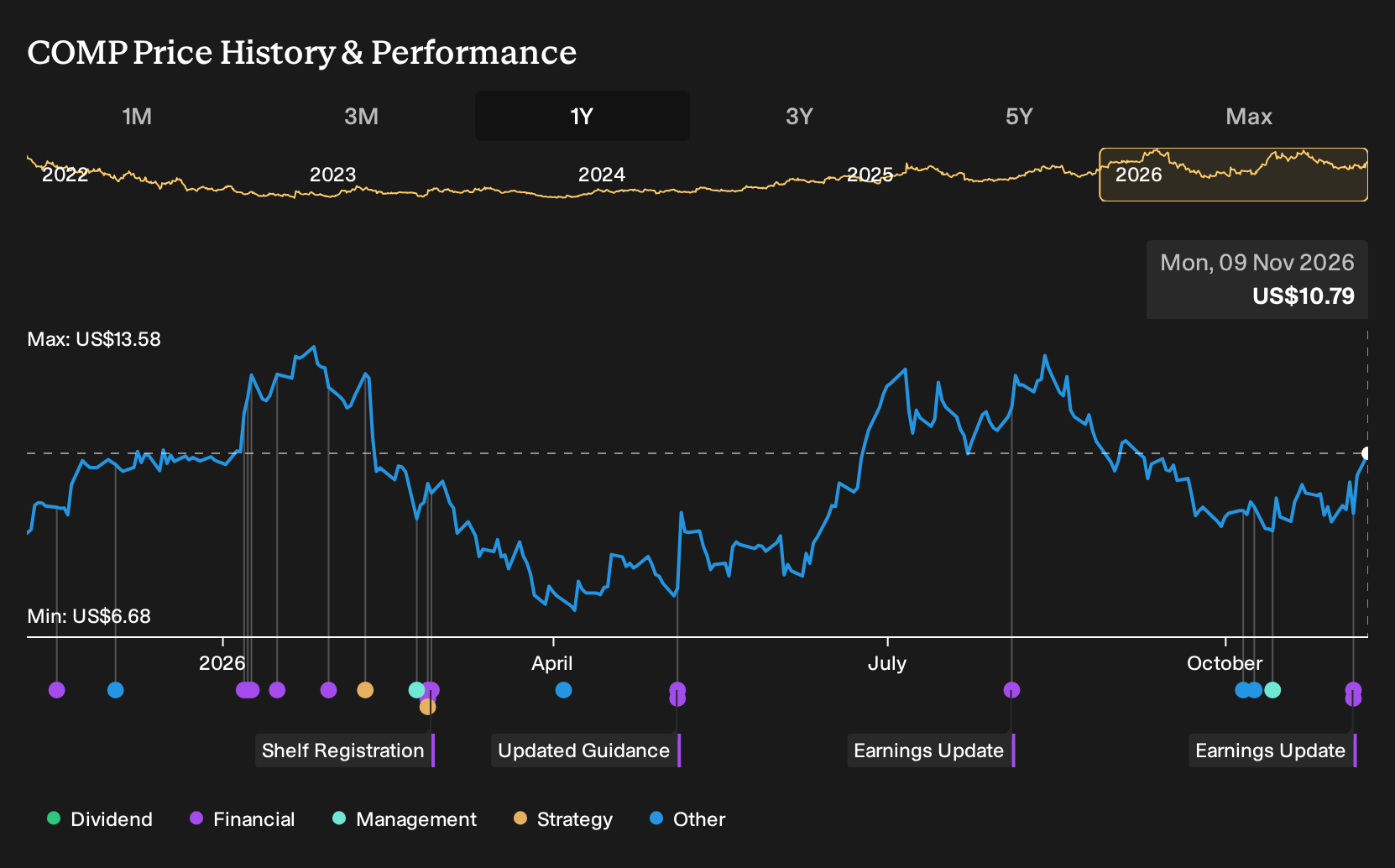
If you had bought Compass on 9 November 2025, the past year might now look very different. For Compass shareholders, the return over the past year was 22.8%, including dividends. That outcome lands against a backdrop of analyst targets that started only a touch away from the prevailing price, and sharply split bull and bear cases. If you were weighing that decision then, how much weight would you have put on AI, M&A and mounting legal scrutiny?
Narratives are how investors here put a case on the record, with explicit assumptions about revenue, margins and the multiple. Those assumptions imply an estimated Fair Value.
Compass has already moved. See which of 33 high quality undervalued stocks still trade below our estimates.
The Two Compass Narratives Investors Faced
The shares cost US$8.55 at the start of the period, and you were effectively choosing between two competing stories about where Compass could go next.
On the bullish side, one narrative put Fair Value at US$9.33, or 9% above the start price, based on Compass using AI tools and acquisitions to support revenue growth of 13.1% and a profit margin of 3.0%.
The bear case anchored on a Fair Value of US$7, 18% below the start price, and treated tech disruption and commission pressure as real threats even if revenue grew 11.6% with a 1.9% margin and a 31.7x P/E assumption.
What The Results Changed For The Compass Thesis
Compass reported Q3 2026 revenue of US$3.9b and net income of US$62m, compared with Q3 2025 revenue of US$1.846b and a small loss. Net margin shifted from a slight negative to 1.6%. That supported the focus on higher efficiency and scale, although profitability was still below the 3.0% margin that more optimistic assumptions were using as a reference point.
The lesson is simple. When a story hinges on margin expansion, as was the case for Compass, track the reported net margin alongside revenue rather than relying only on headline growth or share-price moves.
What Compass Buyers Are Assuming At US$10.79
Compass now trades at US$10.79, which is above the Fair Value implied by the bearish analyst Narrative on Simply Wall St. That view leans on MLS legal disputes and a rich P/E as reasons to treat the current quote as already pricing in a demanding execution path.
Anyone paying today is effectively betting that Compass can keep scaling its platform, protect listing economics and convert AI and M&A moves into durable free cash flow. The key question is how MLS conflicts and litigation costs interact with that expectation.
"The numbers imply the Compass share price already reflects a full and bullish execution path, with a very high P/E multiple relative to the sector pointing to limited room for disappointment."
That disagreement has a full argument behind it. → Uncover the lower Fair Value this Narrative argues for
Looking Beyond Compass To Transactions
Compass is trying to make agents more productive. You could also look at businesses trying to reshape the home sale itself.
One operator focuses on buying and reselling properties through a digital platform. It aims to fine tune spreads and contribution margins so each deal still works.
That model leans on tracking housing demand, pricing trends and inventory risk in real time. Cost cuts and leaner operations are intended to support that effort.
Product add ons such as listing services and marketplaces give sellers more ways to work with the platform. The unresolved test is how this approach holds up when housing conditions stay unpredictable.
It is written up in full, assumptions and all. → Explore the Narrative that puts this company 178% above its price
Have feedback on this article? Concerned about the content? Get in touch with us directly. Alternatively, email editorial-team@simplywallst.com