


EN
Here's Why We're Not At All Concerned With CuFe's (ASX:CUF) Cash Burn Situation
We can readily understand why investors are attracted to unprofitable companies. For example, although Amazon.com made losses for many years after listing, if you had bought and held the shares since 1999, you would have made a fortune. But the harsh reality is that very many loss making companies burn through all their cash and go bankrupt.
So should CuFe (ASX:CUF) shareholders be worried about its cash burn? In this article, we define cash burn as its annual (negative) free cash flow, which is the amount of money a company spends each year to fund its growth. First, we'll determine its cash runway by comparing its cash burn with its cash reserves.
Does CuFe Have A Long Cash Runway?
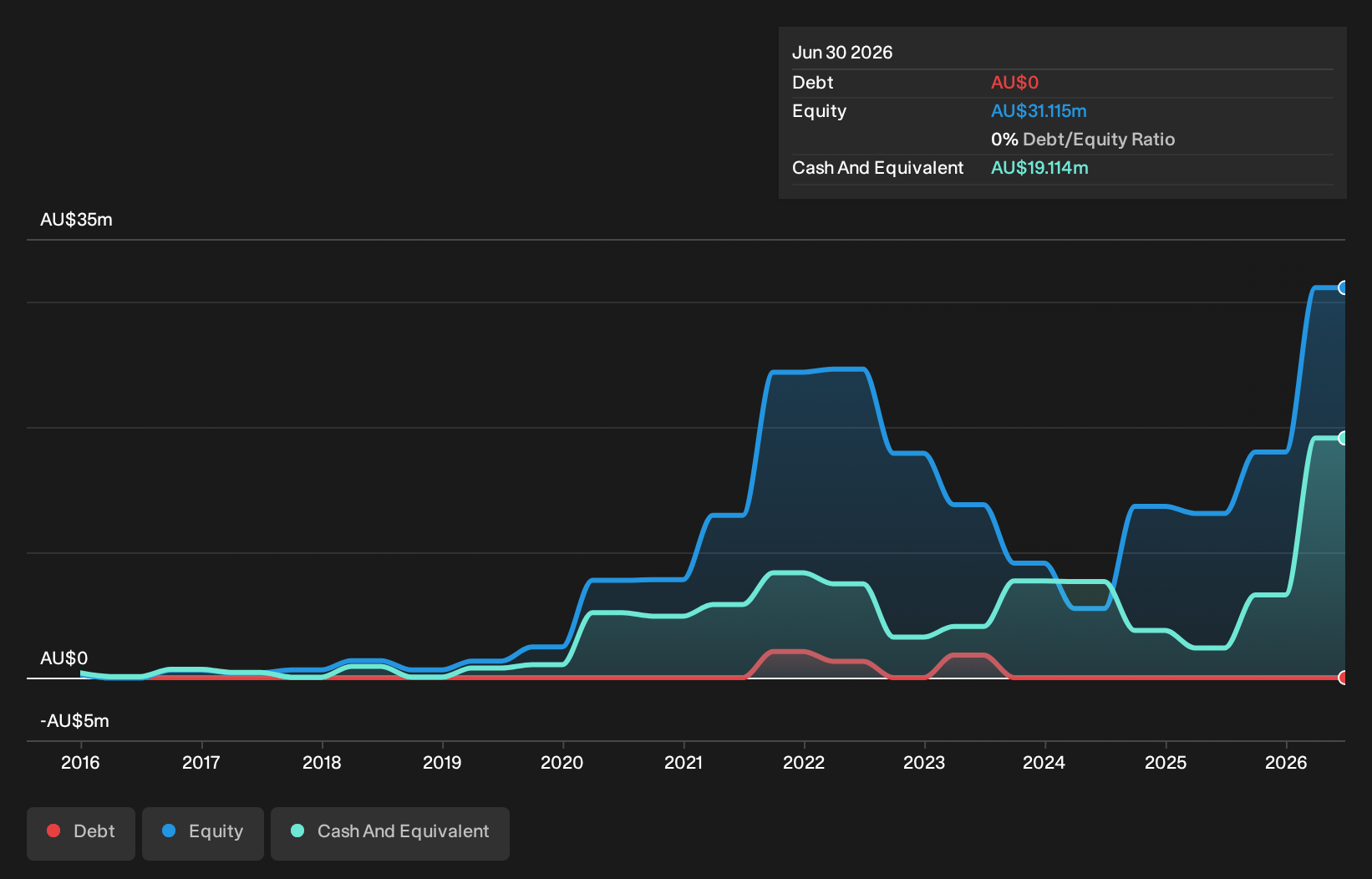
You can calculate a company's cash runway by dividing the amount of cash it has by the rate at which it is spending that cash. In June 2026, CuFe had AU$19m in cash, and was debt-free. In the last year, its cash burn was AU$4.9m. That means it had a cash runway of about 3.9 years as of June 2026. A runway of this length affords the company the time and space it needs to develop the business. The image below shows how its cash balance has been changing over the last few years.
View our latest analysis for CuFe
How Is CuFe's Cash Burn Changing Over Time?
CuFe didn't record any revenue over the last year, indicating that it's an early stage company still developing its business. So while we can't look to sales to understand growth, we can look at how the cash burn is changing to understand how expenditure is trending over time. The 80% reduction in its cash burn over the last twelve months may be good for protecting the balance sheet but it hardly points to imminent growth. CuFe makes us a little nervous due to its lack of substantial operating revenue. So we'd generally prefer stocks from this list of stocks that have analysts forecasting growth.
How Easily Can CuFe Raise Cash?
There's no doubt CuFe's rapidly reducing cash burn brings comfort, but even if it's only hypothetical, it's always worth asking how easily it could raise more money to fund further growth. Companies can raise capital through either debt or equity. Many companies end up issuing new shares to fund future growth. By comparing a company's annual cash burn to its total market capitalisation, we can estimate roughly how many shares it would have to issue in order to run the company for another year (at the same burn rate).
CuFe's cash burn of AU$4.9m is about 4.9% of its AU$100m market capitalisation. That's a low proportion, so we figure the company would be able to raise more cash to fund growth, with a little dilution, or even to simply borrow some money.
Is CuFe's Cash Burn A Worry?
It may already be apparent to you that we're relatively comfortable with the way CuFe is burning through its cash. For example, we think its cash runway suggests that the company is on a good path. But it's fair to say that its cash burn relative to its market cap was also very reassuring. Taking all the factors in this report into account, we're not at all worried about its cash burn, as the business appears well capitalized to spend as needs be. Taking a deeper dive, we've spotted 4 warning signs for CuFe you should be aware of, and 1 of them doesn't sit too well with us.
If you would prefer to check out another company with better fundamentals, then do not miss this free list of interesting companies, that have HIGH return on equity and low debt or this list of stocks which are all forecast to grow.
Have feedback on this article? Concerned about the content? Get in touch with us directly. Alternatively, email editorial-team (at) simplywallst.com.