


EN
Why Biogen Rose Even Though It Swung To A Loss
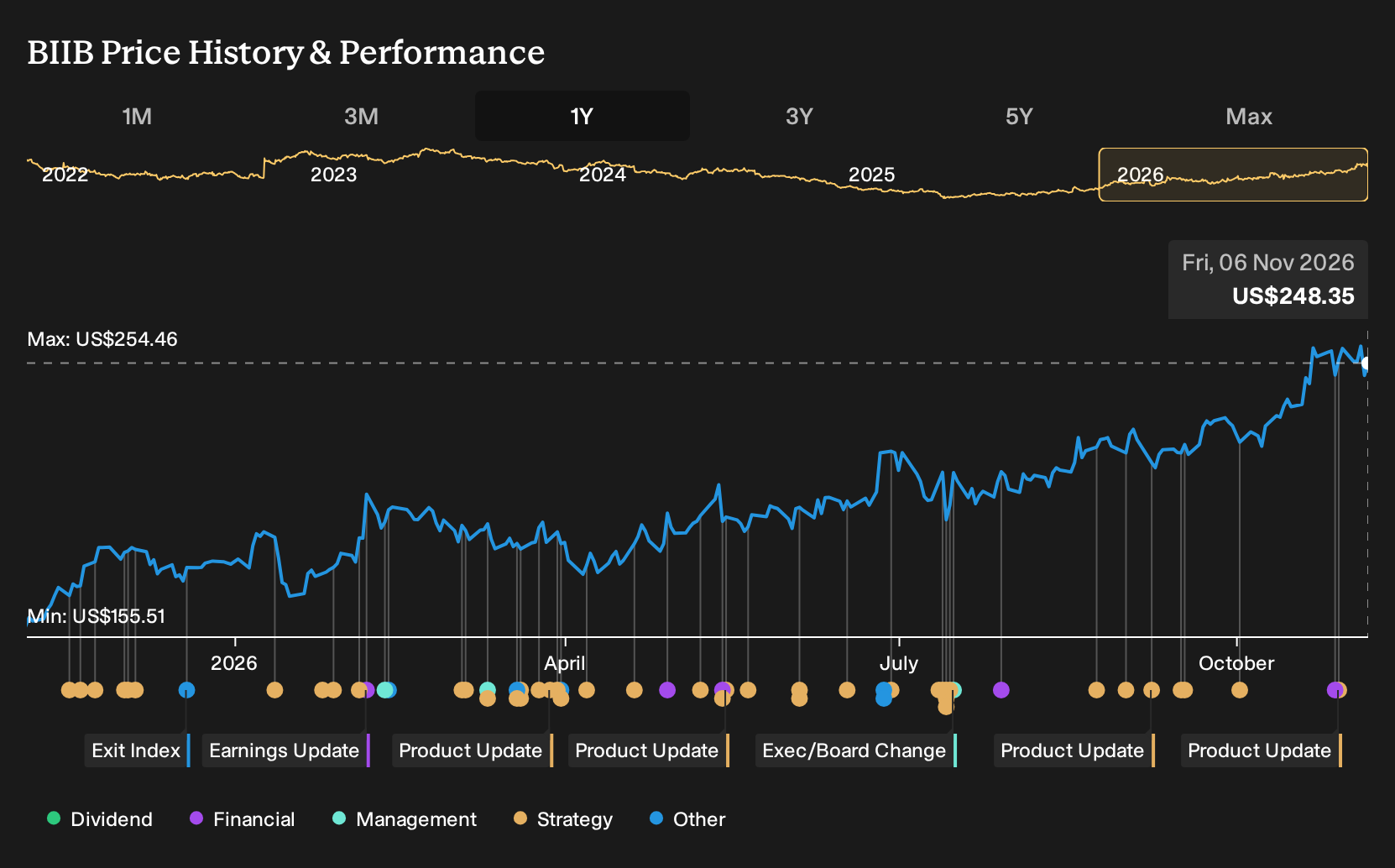
If you had bought Biogen on 6 November 2025, the decision quickly turned into a live test of how much volatility you were willing to stomach. For Biogen shareholders, the return over the past year was 58.9%, including dividends. Analysts were split at the start. One camp argued policy risks and new therapies justified paying 8% above the opening price, while another saw fair value 27% below. Which early clues about drug pricing pressure and launch execution would you have trusted most?
Biogen is not the only name tied to this theme. Zero in on 35 healthcare AI stocks and compare how each one is priced.
The Two Biogen Stories Investors Were Arguing About
The shares cost US$157 at the start of the period, which forced you to decide how much confidence you really had in Biogen's next wave of drugs.
The optimistic story saw a Fair Value of US$170. This was a rough guide to what the stock might be worth if revenue fell 2.1% a year, profit margin reached 22.4%, and the shares traded on a 14.9x P/E in three years.
The pessimistic case pinned Fair Value at US$115. It was built on pressure from drug pricing and generics that could hold the business to a 13.9x P/E even if earnings rose to US$1.7b.
What The Results Changed In The Biogen Argument
The completed US$5.3b Apellis purchase, adding EMPAVELI and SYFOVRE, backed the bullish story that Biogen could widen its drug portfolio beyond multiple sclerosis and Alzheimer’s. The later Q3 2026 figures pulled in the other direction. Revenue moved from US$2,534.7m to US$2,804.1m, while a profit of US$466.5m turned into a loss of US$20.6m and net margin fell to -0.7%. Overall, the evidence cut both ways.
The hinge assumption here was that new therapies and deals would improve profitability, not just scale. When you look at another biotech, check whether acquisitions and fresh launches show up in both top line and net margin, rather than only in revenue guidance or pipeline headlines.
What Biogen’s One Year Run Already Prices In
After a 58.9% gain over the past year, Biogen now trades at US$248. The bearish analyst Narrative on Simply Wall St places its Fair Value below that market price, arguing that a lot of good news is already reflected in the quote.
That Narrative hinges on whether Biogen’s broader portfolio and pipeline can offset pricing and reimbursement pressure. Anyone paying today’s level is effectively assuming those newer Alzheimer’s, immunology, and nephrology assets deliver smoothly. The question, then, is how much room is left if execution or data land closer to merely good than exceptional.
"The numbers imply Biogen’s share price already bakes in successful execution on its growth portfolio, pipeline readouts, and recent acquisitions, leaving limited room for disappointment if assets such as Alzheimer’s and lupus programs do not meet expectations."
Not everyone reads the same price the same way. → See the lower figure this Narrative lands on, and how it gets there
Which Company Could Surprise You Next?
What if your next investment idea came before the headlines? Go straight to the companies whose prices and our estimates still disagree. Three places to start, with the names waiting behind the link.
- Company 1 - 41% below our estimate - focuses on integrating acquired networking assets to capture AI infrastructure spending.
- Company 2 - 30% below our estimate - builds a bank funded digital lending platform using automation to speed product rollout.
- Company 3 - 20% below our estimate - supplies engineered electrical gear to projects adding power hungry data center capacity.
Those are three of them. See all 40 potentially undervalued companies →
Have feedback on this article? Concerned about the content? Get in touch with us directly. Alternatively, email editorial-team@simplywallst.com