


EN
3 AI Infrastructure Stocks Tied To Alphabet TPU Demand Investors Are Watching
Alphabet’s push to roll out new TPUs and sell them aggressively into AI data centers is not just a tech story; it is a supply chain story that could reshape who gets paid in the next wave of AI spending. Pricing pressure on GPUs, locked up TPU capacity, and rising third party adoption all ripple through component makers. This article walks through three stocks closely exposed to that news and explains why their role in this build out matters to your portfolio decisions.
The stocks covered below are only a small sample of the AI data-center component and interconnect suppliers tied to Alphabet’s TPU push. The full screen surfaced 67 more companies with equally detailed stories that do not fit into this article. To identify and analyze the highest conviction opportunities in this theme, head straight into the AI Data-Center Component & Interconnect Suppliers screener.
Zhongji Innolight (SZSE:300308)
Overview: Zhongji Innolight designs and sells high speed optical transceivers for cloud, AI data centers, and broader optical communication networks worldwide.
Market Cap: CN¥530.03b
Zhongji Innolight sits directly on the wiring of AI infrastructure, supplying 100G to 1.6T optical modules that link dense TPU and GPU clusters inside hyperscale data centers. Investors who want exposure to Alphabet’s expanding TPU footprint may view this as a focused opportunity in high speed interconnects. However, future returns depend on how pricing dynamics develop across those links, including the impact of competitive and cost pressures on margins over time.
Those margin swings are the real story, and the 5 key rewards and 2 important warning signs (2 are major!) so you can see what is driving Zhongji Innolight’s risk reward trade off.

Corning (GLW)
Overview: Corning produces optical fiber, cables and connectivity for AI and cloud data centers, alongside glass, ceramics and lab consumables worldwide.
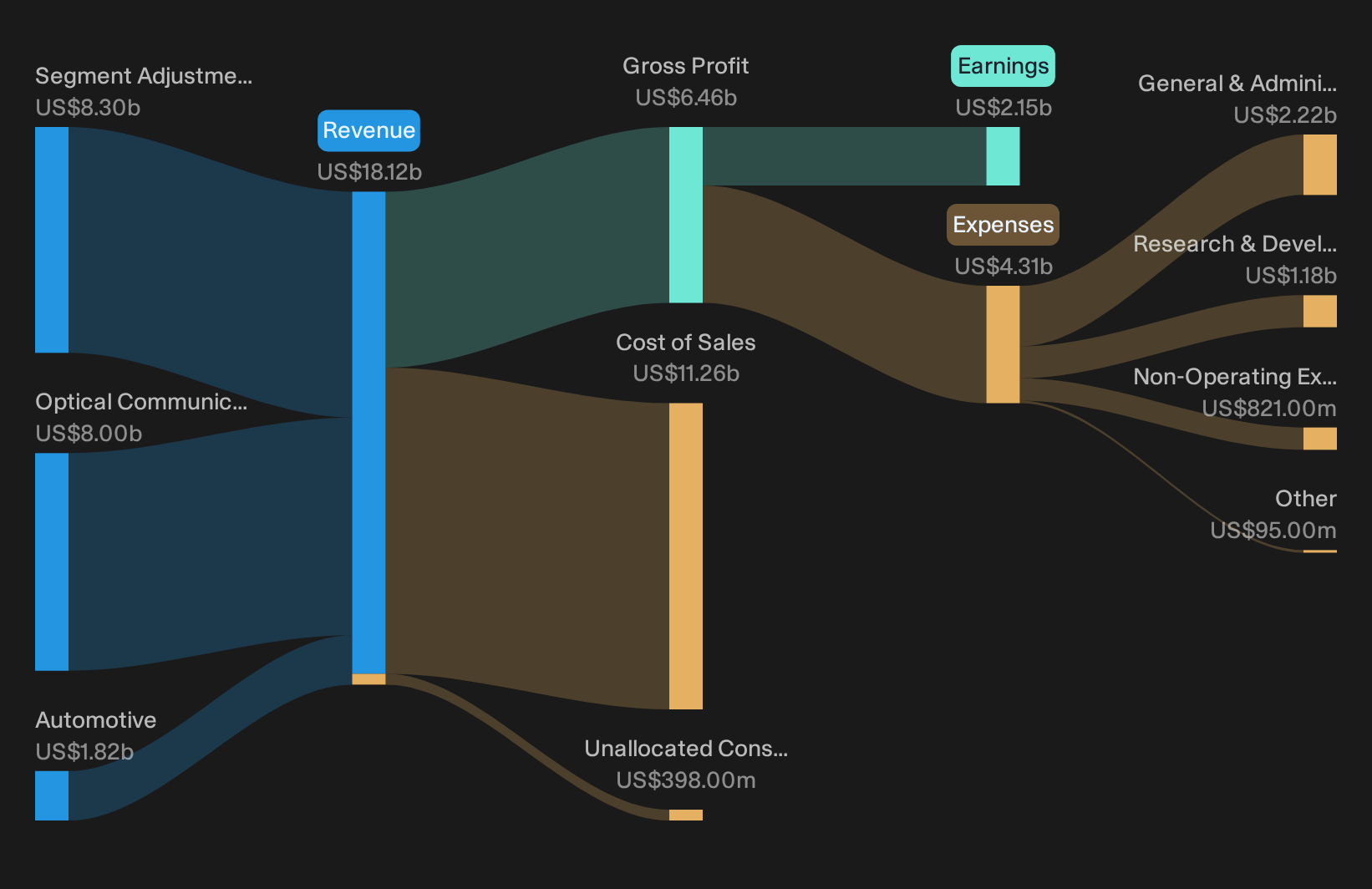
Operations: Corning generated US$8b from Optical Communications and US$1.8b from Automotive, with segment and currency adjustments affecting reported totals.
Market Cap: US$91.4b
Corning matters for this AI data center screen because its fiber and connectivity gear effectively form the plumbing that links high powered accelerators. The analyst consensus Narrative on Simply Wall St outlines how that infrastructure exposure may relate to long term earnings potential.
AI driven data center buildouts are expected to increase optical content per GPU by 1.3x to 1.5x by 2028. This supports the possibility that Corning's Enterprise optical revenue and segment net margins could grow at a different pace than GPU deployments through the decade.
A key factor for Corning now is whether one large, long duration customer commitment translates into sustained pricing power rather than relying on volume alone.
If that pricing question is front of mind, the full narrative for Corning shows how Corning’s AI fiber demand, capital intensity and contract structure could be decoupling from headline GPU cycles.
CIG Shanghai (SHSE:603083)
Overview: CIG Shanghai develops and sells high speed optical modules and edge computing hardware used in AI data centers and advanced networks worldwide.
Market Cap: CN¥33.0b
CIG Shanghai provides high speed optical transceivers and edge hardware that support AI data center buildout by moving data between accelerators and users. Recent TPU and GPU demand keeps this infrastructure in focus, particularly given that a single unseen pressure could influence how much of that traffic translates into lasting profitability.
That pressure point is exactly why the 4 key rewards and 2 important warning signs (2 are major!) could be useful for seeing how CIG Shanghai’s upside might stack up against that hidden squeeze.

Seeking Fresh Alternatives Before They Fly?
Fresh themes can gain momentum quickly, and some of the most notable breakouts may first appear in early screeners while they are still under the radar. Consider reviewing opportunities promptly.
- Identify potential trend leaders in smaller markets by scanning the 572 high quality undiscovered gems before they move out of your preferred price range.
- Focus on resilient cash generators using the list of solid balance sheet and fundamentals (193 results) while balance sheets and fundamentals may still be overlooked by many investors.
- Review the 225 dividend fortresses to analyze long term cash return characteristics before yields change in response to shifts in buying interest.
Have feedback on this article? Concerned about the content? Get in touch with us directly. Alternatively, email editorial-team@simplywallst.com