


EN
Two Days Left Until Smithfield Foods, Inc. (NASDAQ:SFD) Trades Ex-Dividend
Readers hoping to buy Smithfield Foods, Inc. (NASDAQ:SFD) for its dividend will need to make their move shortly, as the stock is about to trade ex-dividend. The ex-dividend date occurs one day before the record date, which is the day on which shareholders need to be on the company's books in order to receive a dividend. The ex-dividend date is important as the process of settlement involves a full business day. So if you miss that date, you would not show up on the company's books on the record date. This means that investors who purchase Smithfield Foods' shares on or after the 12th of November will not receive the dividend, which will be paid on the 25th of November.
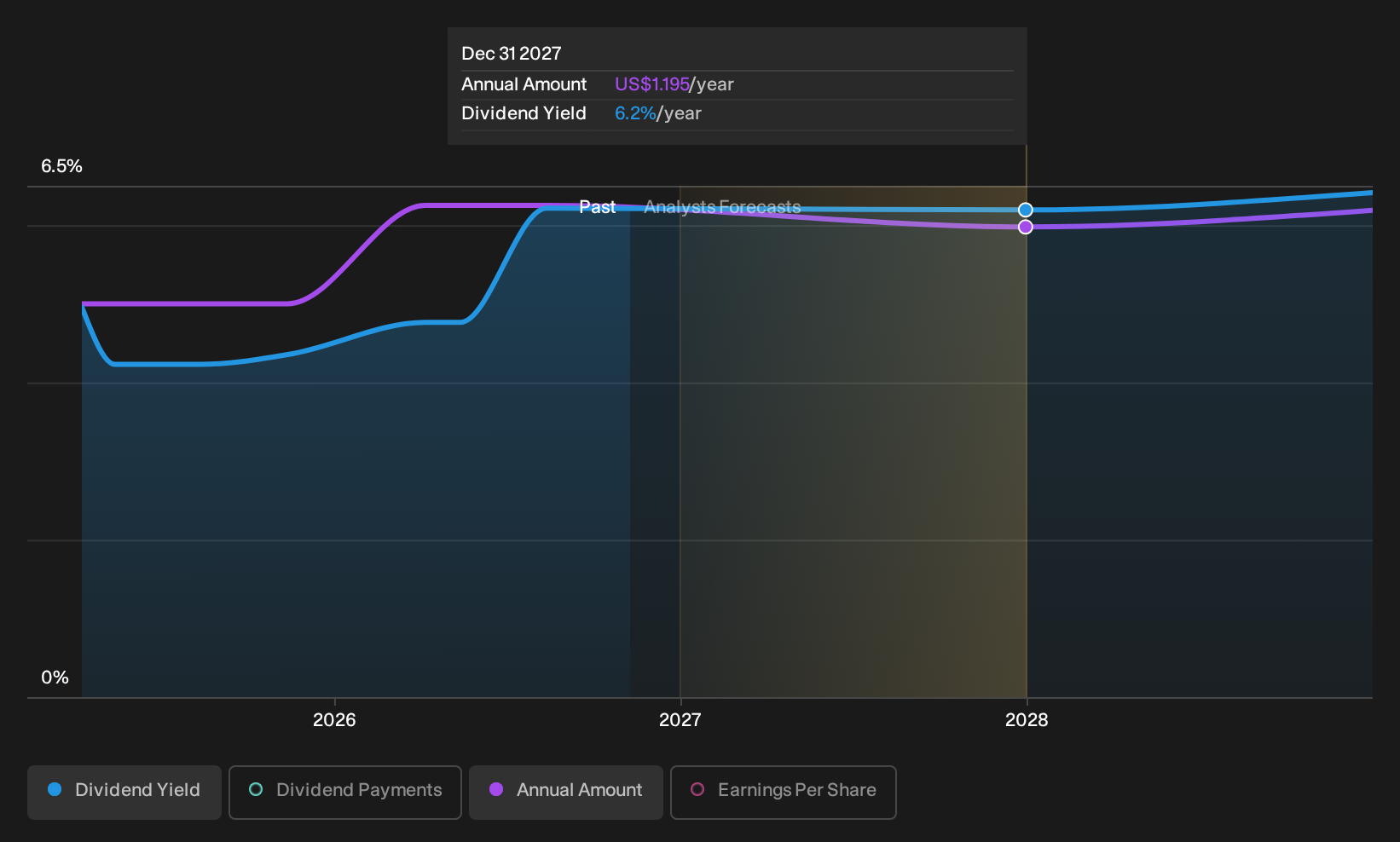
The company's next dividend payment will be US$0.3125 per share, and in the last 12 months, the company paid a total of US$1.25 per share. Based on the last year's worth of payments, Smithfield Foods stock has a trailing yield of around 6.5% on the current share price of US$19.30. Dividends are a major contributor to investment returns for long term holders, but only if the dividend continues to be paid. So we need to check whether the dividend payments are covered, and if earnings are growing.
If a company pays out more in dividends than it earned, then the dividend might become unsustainable - hardly an ideal situation. Smithfield Foods is paying out an acceptable 52% of its profit, a common payout level among most companies. That said, even highly profitable companies sometimes might not generate enough cash to pay the dividend, which is why we should always check if the dividend is covered by cash flow. Over the last year it paid out 54% of its free cash flow as dividends, within the usual range for most companies.
It's positive to see that Smithfield Foods's dividend is covered by both profits and cash flow, since this is generally a sign that the dividend is sustainable, and a lower payout ratio usually suggests a greater margin of safety before the dividend gets cut.
View our latest analysis for Smithfield Foods
Click here to see the company's payout ratio, plus analyst estimates of its future dividends.
Have Earnings And Dividends Been Growing?
Companies with consistently growing earnings per share generally make the best dividend stocks, as they usually find it easier to grow dividends per share. If earnings fall far enough, the company could be forced to cut its dividend. This is why it's a relief to see Smithfield Foods earnings per share are up 2.8% per annum over the last five years. Earnings per share growth has been slim, and the company is already paying out a majority of its earnings. While there is some room to both increase the payout ratio and reinvest in the business, generally the higher a payout ratio goes, the lower a company's prospects for future growth.
Another key way to measure a company's dividend prospects is by measuring its historical rate of dividend growth. In the last two years, Smithfield Foods has lifted its dividend by approximately 12% a year on average. It's encouraging to see the company lifting dividends while earnings are growing, suggesting at least some corporate interest in rewarding shareholders.
To Sum It Up
Has Smithfield Foods got what it takes to maintain its dividend payments? Earnings per share growth has been unremarkable, and while the company is paying out a majority of its earnings and cash flow in the form of dividends, the dividend payments don't appear excessive. It might be worth researching if the company is reinvesting in growth projects that could grow earnings and dividends in the future, but for now we're not all that optimistic on its dividend prospects.
If you want to look further into Smithfield Foods, it's worth knowing the risks this business faces. Every company has risks, and we've spotted 1 warning sign for Smithfield Foods you should know about.
Generally, we wouldn't recommend just buying the first dividend stock you see. Here's a curated list of interesting stocks that are strong dividend payers.
Have feedback on this article? Concerned about the content? Get in touch with us directly. Alternatively, email editorial-team (at) simplywallst.com.