


EN
UK Stock Market Today: FTSE 100 Futures Dip As Housing Weakness Clouds GDP Outlook
The Morning Bull - UK Market Morning Update Monday, 9 Nov 2026
UK stocks look set for a softer open, with sentiment dominated by fresh housing weakness rather than the upbeat tone in global equities. The latest UK house price data is pulling attention back to domestic demand risks.
The Lloyds House Price Index shows UK prices declining 1.2% year on year in October, with a 0.6% fall on the month and London under the most pressure. That combination flags ongoing strain in one of the key pillars of UK household wealth.
When property values slip, banks tend to be more cautious on lending and households often rein in discretionary spending. That can squeeze revenue expectations for domestically focused companies and keep a tighter lid on earnings sensitivity to any future moves in borrowing costs.
The open question is how this housing softness will interact with Thursday’s UK GDP figures. If growth indicators hold up, investors may treat the housing data as contained. If GDP prints weaker, the case for a broader domestic slowdown becomes harder to dismiss.
Stocks to Watch Before the Opening Bell
National Grid (NG.)
National Grid is in focus after reports that its net debt has reached nearly £48b, with borrowing expected to climb as it funds government driven net zero and decarbonisation projects. Higher financing needs can influence how regulators set allowed returns and how much eventually feeds through to household energy bills.
Pressure from politicians and the public on energy costs is building. Investors will be watching for any future regulatory reviews or policy shifts that could affect National Grid’s ability to recover spending through regulated tariffs.
Top Movers
- HUTCHMED (China) (AIM:HCM) surged 4.76% after its Syk inhibitor sovleplenib received a second US FDA orphan designation.
- Coca-Cola HBC (LSE:CCH) gained 3.36% as investors reassessed Russian operational risks and looked past prior market concerns.
- Oxford Instruments (LSE:OXIG) rose 2.87% following interest in scientific technology stocks as markets absorbed recent US economic data.

Top Losers
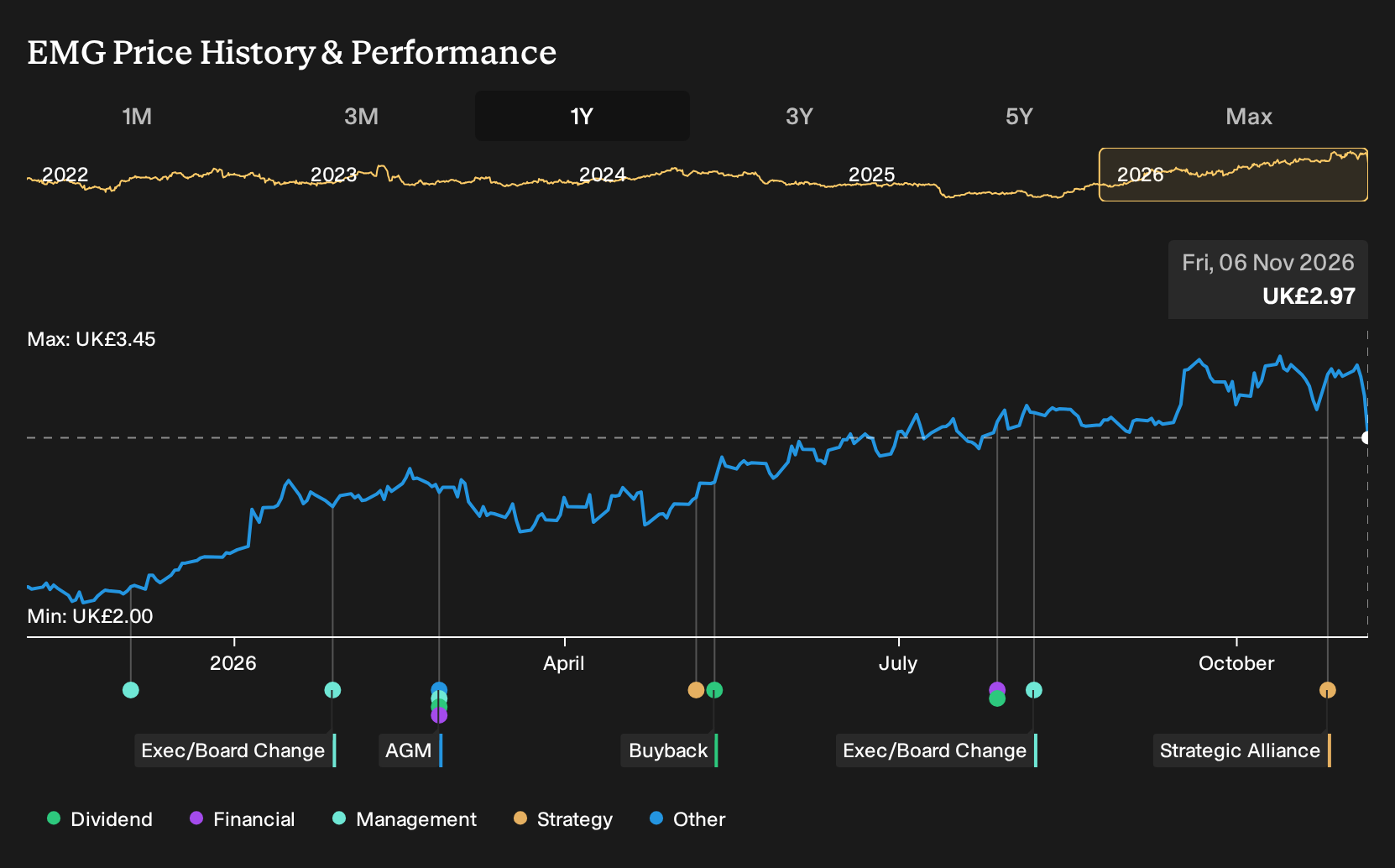
- Man Group (LSE:EMG) fell 7.65% after a Deutsche Bank price target cut and broader pressure on investment managers.
- BT Group (LSE:BT.A) declined 6.38% as investors reacted to sector wide AI regulation concerns despite recent earnings and dividend news.
- Anglo Asian Mining (AIM:AAZ) declined 5.56%.
On The Radar
UK macro data and a dense run of domestic earnings sit front and centre, with housing and consumer exposed stocks in focus as fresh numbers land.
- UK GDP Growth Rate QoQ Prel, Thu 12 Nov. The Q3 consensus sits at 0.7% with a 0.4% forecast, and a softer outcome would underline the domestic slowdown hinted at by weaker house prices and could keep pressure on UK focused cyclicals.
- UK GDP MoM, Thu 12 Nov. The September print carries a 0% consensus and 0.2% forecast, so any decline would reinforce concerns about household spending and could weigh on UK retailers and housebuilders already facing falling property values.
- UK Industrial Production MoM, Thu 12 Nov. Forecasts look for around a 0.3% decline after a previous 0.8% gain, and a larger drop would highlight strain in manufacturing that often feeds through to FTSE industrial and engineering stocks.
- UK Goods Trade Balance, Thu 12 Nov. September expectations cluster around a £18.5b deficit against a previous £18.01b shortfall, and a wider gap would underline external headwinds for exporters and could keep a lid on sterling.
- Burberry Group, Thu 12 Nov. First half 2027 results put attention on revenue trends and profit margins in its luxury fashion business, which matter for how exposed UK consumer discretionary stocks are to softer European and Chinese demand signals.
Sector & Industry Watch
Real Estate: Housing chill meets recent rebound
Real Estate has barely moved over the past week after a strong month, even as the Lloyds data show UK house prices falling on both monthly and yearly readings. Listed landlords and REITs are caught between softer property values and still elevated borrowing costs, which affects what they can refinance and how confidently they can talk about rents.
The clearest sector trigger now is Thursday’s RICS House Price Balance, which will show how surveyors see buyer interest and pricing on the ground.
Consumer Discretionary: Property wealth worries hit extras
Consumer Discretionary has slipped over seven days following a solid 30 day rise, with weaker UK house prices and softer eurozone retail sales putting household spending under scrutiny again. When homeowners feel less secure about property equity, they often cut back on holidays, fashion and other non essentials first.
The BRC Retail Sales Monitor early on Tuesday is the key check for anyone holding UK retailers or leisure stocks because it offers a direct read on October till receipts.
Utilities: National Grid debt keeps bills in play
Utilities have delivered a firm 30 day gain and a solid move over 12 months, yet attention is locked on National Grid and its near £48b debt pile. Higher borrowing linked to net zero projects can find its way into regulated charges, which matters for household energy bills and the cash available for dividends across the sector.
If you own National Grid or peers, focus on any comments from the regulator or politicians on allowed returns and bill formulas because those responses can quickly reset sentiment.
Energy and Oil and Gas: Weak week after strong year so far
Energy and Oil and Gas have fallen a little more than 5% over the past week, even though 12 month and year to date numbers remain positive. The group is also trading on a P/E around 10x, which is well below its recent three year average and reflects caution toward both commodity prices and company earnings.
The single external cue that matters most in the near term is US crude inventory data later this week, since large shifts there often move global oil benchmarks that feed straight into profits for UK listed producers.
Tech and Semiconductors: High growth pockets feel rate heat
Tech has pulled back over seven days, with Semiconductors dropping more sharply after a very large 12 month rise that left valuations elevated. These sectors tend to be sensitive to expectations for future interest rates because much of their appeal rests on earnings that are forecast further out.
Comments from US Federal Reserve speakers later today are the main sentiment driver to watch for UK Tech, as any change in tone on inflation or rates can ripple quickly through chip related stocks and broader growth areas.
Find Tomorrow's Top Performers
With UK house prices falling and pressure building around household energy bills, many investors are leaning toward steadier ideas. To begin, consider this list of 207 resilient stocks with low risk scores.
Have feedback on this article? Concerned about the content? Get in touch with us directly. Alternatively, email editorial-team@simplywallst.com