


EN
Don't Buy James Halstead plc (LON:JHD) For Its Next Dividend Without Doing These Checks
Some investors rely on dividends for growing their wealth, and if you're one of those dividend sleuths, you might be intrigued to know that James Halstead plc (LON:JHD) is about to go ex-dividend in just 2 days. The ex-dividend date generally occurs two days before the record date, which is the day on which shareholders need to be on the company's books in order to receive a dividend. It is important to be aware of the ex-dividend date because any trade on the stock needs to have been settled on or before the record date. In other words, investors can purchase James Halstead's shares before the 12th of November in order to be eligible for the dividend, which will be paid on the 11th of December.
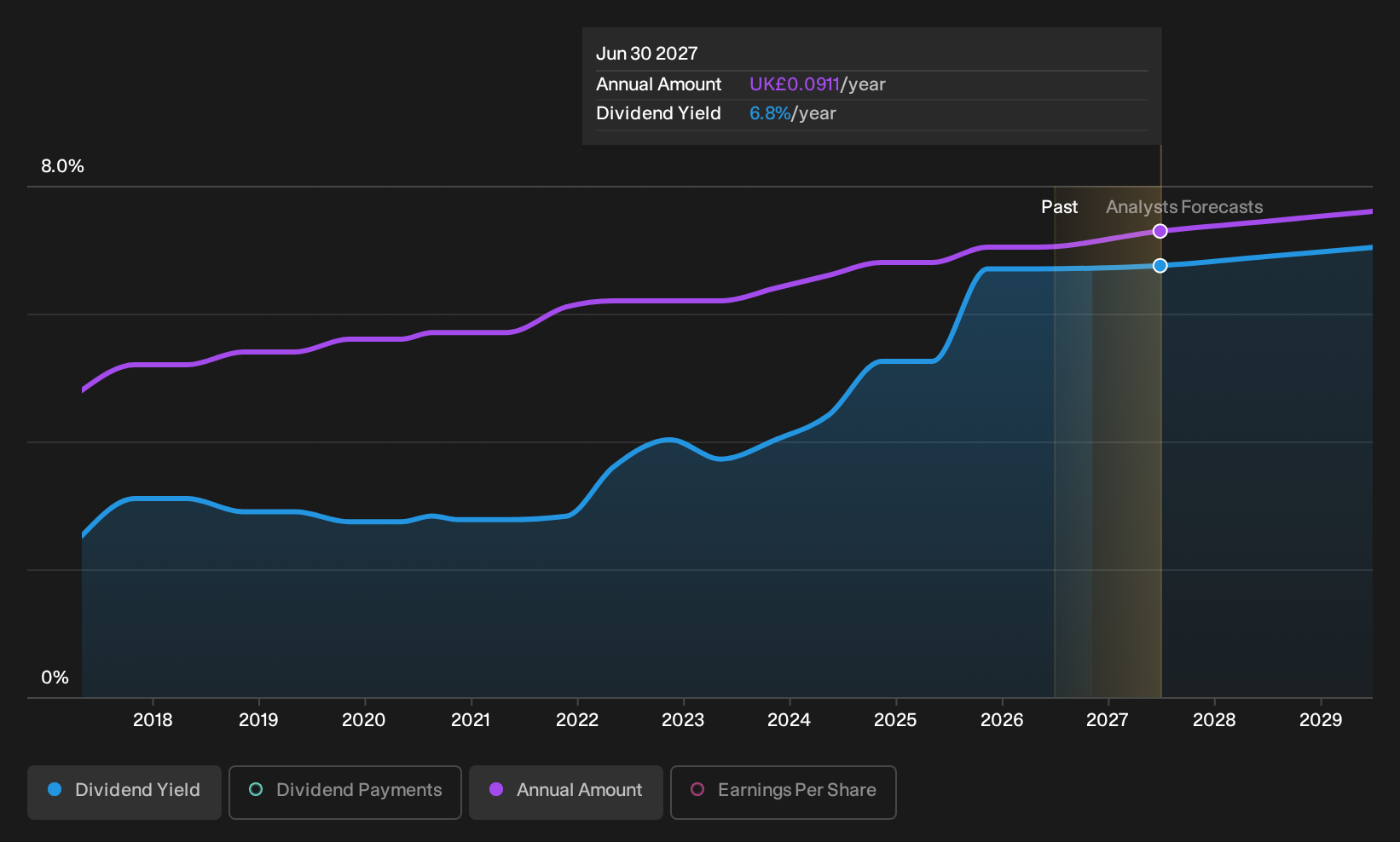
The company's next dividend payment will be UK£0.061 per share, and in the last 12 months, the company paid a total of UK£0.089 per share. Last year's total dividend payments show that James Halstead has a trailing yield of 6.6% on the current share price of UK£1.35. We love seeing companies pay a dividend, but it's also important to be sure that laying the golden eggs isn't going to kill our golden goose! We need to see whether the dividend is covered by earnings and if it's growing.
If a company pays out more in dividends than it earned, then the dividend might become unsustainable - hardly an ideal situation. James Halstead paid out 105% of its earnings, which is more than we're comfortable with, unless there are mitigating circumstances. That said, even highly profitable companies sometimes might not generate enough cash to pay the dividend, which is why we should always check if the dividend is covered by cash flow. It paid out 80% of its free cash flow as dividends, which is within usual limits but will limit the company's ability to lift the dividend if there's no growth.
It's disappointing to see that the dividend was not covered by profits, but cash is more important from a dividend sustainability perspective, and James Halstead fortunately did generate enough cash to fund its dividend. Still, if the company repeatedly paid a dividend greater than its profits, we'd be concerned. Very few companies are able to sustainably pay dividends larger than their reported earnings.
View our latest analysis for James Halstead
Click here to see the company's payout ratio, plus analyst estimates of its future dividends.
Have Earnings And Dividends Been Growing?
When earnings decline, dividend companies become much harder to analyse and own safely. If earnings decline and the company is forced to cut its dividend, investors could watch the value of their investment go up in smoke. So we're not too excited that James Halstead's earnings are down 2.3% a year over the past five years.
Many investors will assess a company's dividend performance by evaluating how much the dividend payments have changed over time. James Halstead has delivered an average of 5.0% per year annual increase in its dividend, based on the past 10 years of dividend payments. That's intriguing, but the combination of growing dividends despite declining earnings can typically only be achieved by paying out a larger percentage of profits. James Halstead is already paying out a high percentage of its income, so without earnings growth, we're doubtful of whether this dividend will grow much in the future.
The Bottom Line
Is James Halstead an attractive dividend stock, or better left on the shelf? It's never fun to see a company's earnings per share in retreat. Additionally, James Halstead is paying out quite a high percentage of its earnings, and more than half its cash flow, so it's hard to evaluate whether the company is reinvesting enough in its business to improve its situation. With the way things are shaping up from a dividend perspective, we'd be inclined to steer clear of James Halstead.
Although, if you're still interested in James Halstead and want to know more, you'll find it very useful to know what risks this stock faces. For example, we've found 1 warning sign for James Halstead that we recommend you consider before investing in the business.
If you're in the market for strong dividend payers, we recommend checking our selection of top dividend stocks.
Have feedback on this article? Concerned about the content? Get in touch with us directly. Alternatively, email editorial-team (at) simplywallst.com.