


EN
We Wouldn't Be Too Quick To Buy Aperam S.A. (AMS:APAM) Before It Goes Ex-Dividend
Aperam S.A. (AMS:APAM) is about to trade ex-dividend in the next 3 days. The ex-dividend date is two business days before a company's record date in most cases, which is the date on which the company determines which shareholders are entitled to receive a dividend. The ex-dividend date is important as the process of settlement involves at least two full business days. So if you miss that date, you would not show up on the company's books on the record date. Meaning, you will need to purchase Aperam's shares before the 13th of November to receive the dividend, which will be paid on the 10th of December.
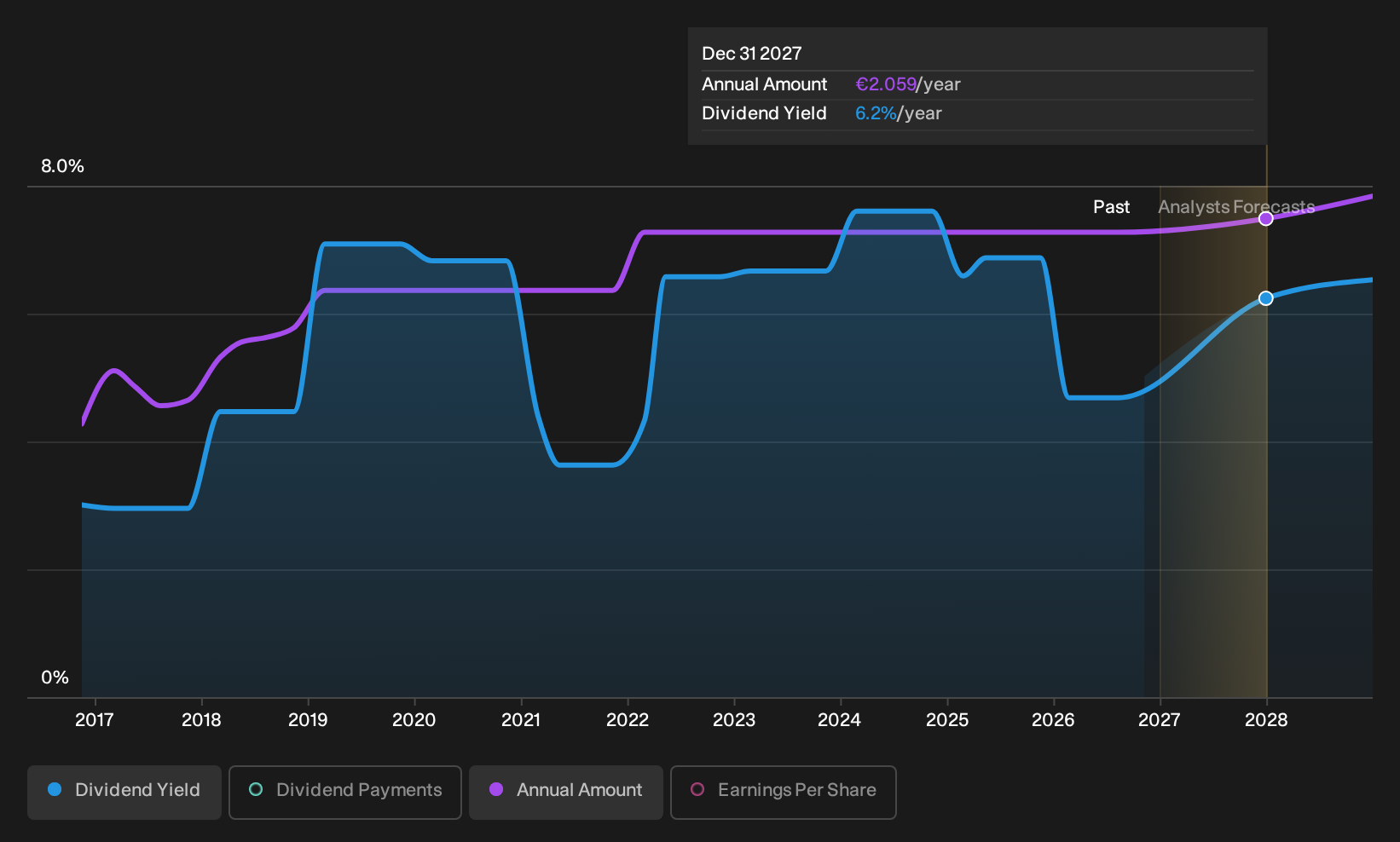
The company's next dividend payment will be €0.425 per share, and in the last 12 months, the company paid a total of €2.00 per share. Looking at the last 12 months of distributions, Aperam has a trailing yield of approximately 6.1% on its current stock price of €33.00. If you buy this business for its dividend, you should have an idea of whether Aperam's dividend is reliable and sustainable. That's why we should always check whether the dividend payments appear sustainable, and if the company is growing.
If a company pays out more in dividends than it earned, then the dividend might become unsustainable - hardly an ideal situation. Aperam distributed an unsustainably high 114% of its profit as dividends to shareholders last year. Without extenuating circumstances, we'd consider the dividend at risk of a cut. That said, even highly profitable companies sometimes might not generate enough cash to pay the dividend, which is why we should always check if the dividend is covered by cash flow. Over the last year it paid out 60% of its free cash flow as dividends, within the usual range for most companies.
It's good to see that while Aperam's dividends were not covered by profits, at least they are affordable from a cash perspective. If executives were to continue paying more in dividends than the company reported in profits, we'd view this as a warning sign. Extraordinarily few companies are capable of persistently paying a dividend that is greater than their profits.
View our latest analysis for Aperam
Click here to see the company's payout ratio, plus analyst estimates of its future dividends.
Have Earnings And Dividends Been Growing?
Companies that aren't growing their earnings can still be valuable, but it is even more important to assess the sustainability of the dividend if it looks like the company will struggle to grow. If business enters a downturn and the dividend is cut, the company could see its value fall precipitously. With that in mind, we're not enthused to see that Aperam's earnings per share have remained effectively flat over the past five years. It's better than seeing them drop, certainly, but over the long term, all of the best dividend stocks are able to meaningfully grow their earnings per share.
The main way most investors will assess a company's dividend prospects is by checking the historical rate of dividend growth. Aperam has delivered an average of 6.2% per year annual increase in its dividend, based on the past 10 years of dividend payments.
The Bottom Line
From a dividend perspective, should investors buy or avoid Aperam? The company has not generated any growth in earnings per share over the 10-year timeframe we measured. Plus, Aperam's paying out a high percentage of its earnings and more than half its cash flow. With the way things are shaping up from a dividend perspective, we'd be inclined to steer clear of Aperam.
With that in mind though, if the poor dividend characteristics of Aperam don't faze you, it's worth being mindful of the risks involved with this business. For example, we've found 2 warning signs for Aperam that we recommend you consider before investing in the business.
If you're in the market for strong dividend payers, we recommend checking our selection of top dividend stocks.
Have feedback on this article? Concerned about the content? Get in touch with us directly. Alternatively, email editorial-team (at) simplywallst.com.