


EN
Caught Out By SBI Cards' Slide? Here's What The Bears Saw
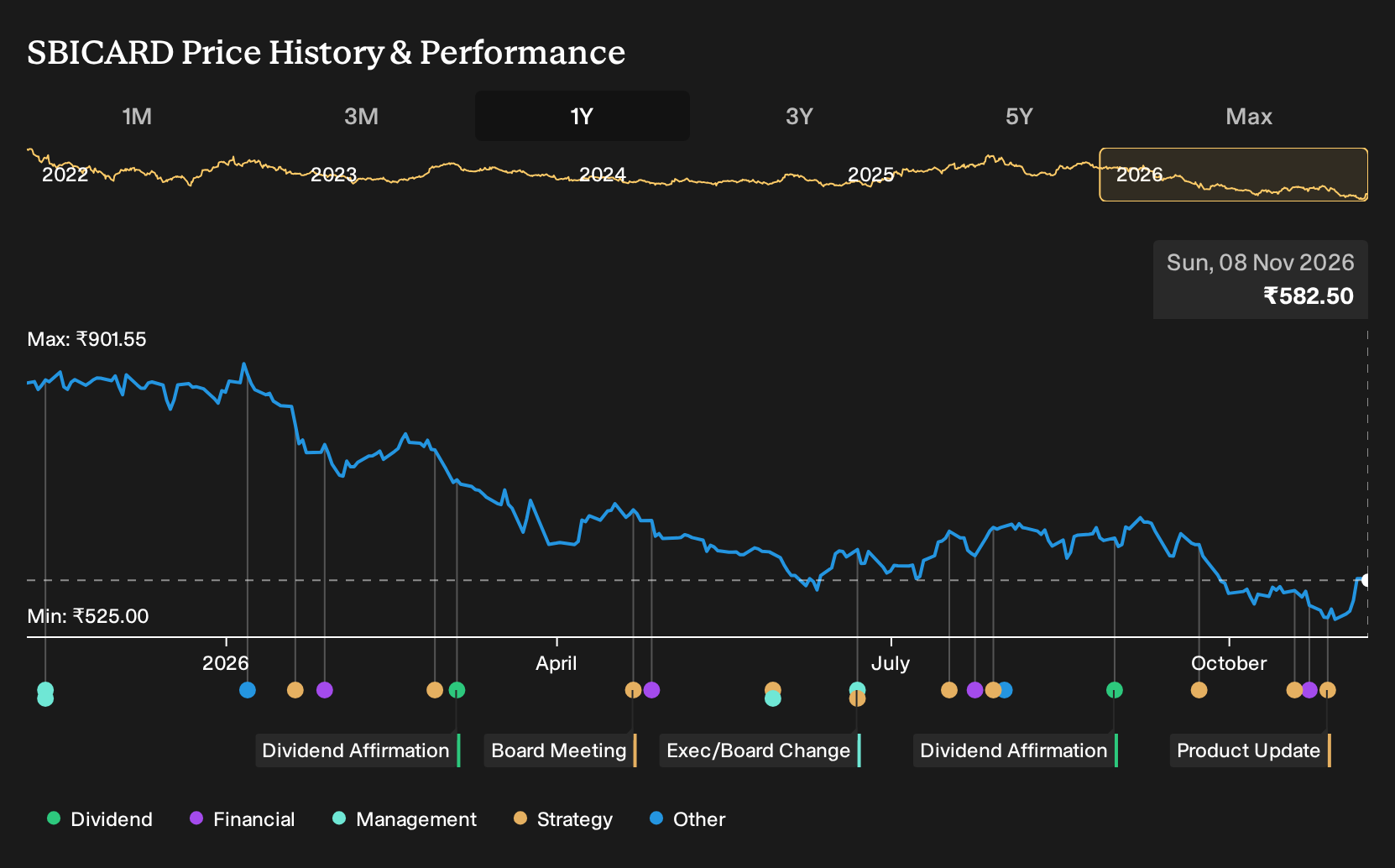
The latest headline for SBI Cards and Payment Services was upbeat. A new co-branded Visa credit card with Air India promised more rewards for frequent flyers and deeper ties to a major loyalty program. Holding SBI Cards and Payment Services over the past year would have meant a 33.0% loss, including dividends. If you had chosen to buy on 8 November 2025, how would you now weigh that outcome against the expectation that UPI-linked credit use could reshape its future economics?
The move put SBI Cards and Payment Services in the middle of this trade. Scan 16 top copper producer stocks for other companies exposed to it.
The Two Stories Investors Were Weighing On SBI Cards
The shares cost ₹872 at the start of the period, so anyone looking at SBI Cards and Payment Services then had to decide which story felt more plausible.
The bullish narrative pointed to a Fair Value of ₹1,040, an implied upside based on the idea that rising UPI-linked card payments and new co-branded products could lift transaction volumes and fee income. Supporters leaned on assumptions of 38.3% annual revenue growth and improving profit margins.
The bearish view anchored on a Fair Value of ₹675, an implied downside built around UPI and fintech competition steadily diluting credit card relevance. This camp focused on risks such as higher credit costs, pressure on margins to 17.4%, and ongoing regulatory and data security demands.
What The Results Changed For SBI Cards
The Air India co-branded Visa launch pointed toward the bullish SBI Cards and Payment Services story that hinged on premium partnerships and higher spend per customer. At the same time, Q2 2027 figures showed total revenue of ₹35,338.9m and net income of ₹7,776m, with net margin rising to 22.0%. Taken together, the evidence cut both ways but leaned toward the optimistic case on profitability.
The key lesson is simple. When a thesis depends on richer economics from new products and payment rails, it is important to track whether net margin, not just revenue, moves closer to that story in later results.
What You Would Be Paying For In SBI Cards Today
SBI Cards and Payment Services now trades at ₹582, down 33.0% over the past year. The selected Narrative’s Fair Value sits above the current price, based on its own assumptions rather than any proven truth.
The thesis focuses on UPI credit usage, tighter underwriting and EMI-driven spends. A buyer today would need to judge whether SBI Cards and Payment Services can keep credit costs and asset quality at current levels while growing receivables and digital spends.
"Key Takeaways: Bullish analysts expect SBI Cards and Payment Services to compound its position as a leading issuer by using the convergence of UPI on credit cards and high online spend shares to grow spends and earnings faster than the broader cards market over time. The main factor that has to go right is that tighter underwriting, lower gross credit cost, and improved Stage 2 and Stage 3 asset quality continue to hold, even as SBI Cards and Payment Services pursues disciplined receivables growth and high quarterly card additions."
Not everyone reads the same price the same way. → See the higher figure this Narrative lands on, and how it gets there
Another Way To Think About Credit
SBI Cards puts credit in your wallet. One step away, another specialist focuses on what that piece of plastic really represents.
Instead of just processing transactions, this business concentrates on moving trust between cardholders and merchants. Its network is engineered around the promise that both sides get what they expect.
Fraud checks, compliance systems and dispute handling are not side projects. They are the core machinery that keeps those promises usable at scale.
When that machinery is questioned by regulators, the issue is bigger than any fine. You are really asking how expensive trust could become for a payments brand built on it.
The case is on the record, with the assumptions it rests on. → See the Narrative that values this company 38% above its price
Have feedback on this article? Concerned about the content? Get in touch with us directly. Alternatively, email editorial-team@simplywallst.com