


EN
Credit Acceptance (CACC) Is Drawing Fresh Attention, But What Is Behind It?
Credit Acceptance (CACC) is under pressure after third quarter 2026 results showed a swing to a net loss and a reduced outlook for future collections, which has prompted a shareholder investigation by Bronstein, Gewirtz & Grossman.
Recent price action has been choppy. Credit Acceptance has a 7 day share price return of 13.91%, while the 90 day share price return is down 8.89%. This hints at fading momentum, even though the 1 year total shareholder return of 25.38% still reflects a stronger longer term outcome.
Spot potential alternatives to Credit Acceptance under pressure by scanning our hand picked 31 resilient stocks with low risk scores, which may offer more resilient profiles when earnings and outlooks come under scrutiny.The recent rebound in Credit Acceptance after a sharp post earnings drop leaves a key tension. Has the share price already absorbed most of the recovery story, or is the current valuation still leaving meaningful upside on the table?
Most Popular Narrative: 5% Undervalued
Against the last close at $529.56, the most followed narrative pegs Credit Acceptance at a fair value of $556.67, which frames the recent share price volatility as a modest discount rather than a collapse in conviction.
Recent moves to embed AI across pricing, underwriting, servicing, collections and sales workflows, including a roughly 5x quarter on quarter increase in AI call center volumes and new AI driven dealer tools, create room for better credit decisions and operating efficiency that can support net margins and earnings.
See why 5 investors see Credit Acceptance as 5% undervalued.
Result: Fair Value of $556.67 (UNDERVALUED)
Still, the recent multistate settlements and ongoing legal scrutiny around Credit Acceptance, along with concerns over writedowns and earnings quality, could quickly change this situation in which the stock appears 5% undervalued.
Find out about the key risks to this Credit Acceptance narrative.
Another View: What Multiples Say About Credit Acceptance
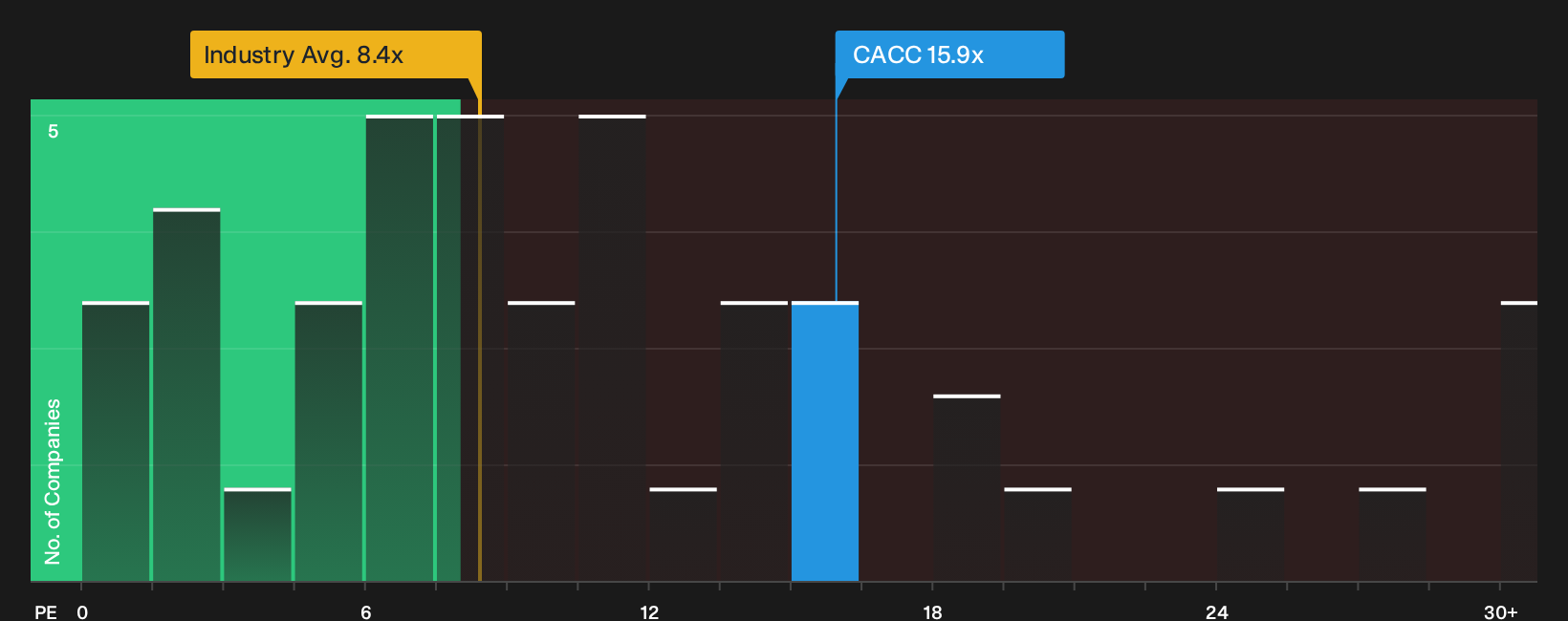
The first narrative paints Credit Acceptance as about 5% undervalued. The P/E lens tells a different story. At 15.9x, the stock trades richer than the US Consumer Finance industry on 8.4x, its peer average on 15.7x, and the 10x fair ratio that the market could eventually move toward.
That gap points to valuation risk rather than a clear bargain, since any move toward the lower industry, peer, or fair ratio levels would pull the share price down rather than up. The real question is whether you think Credit Acceptance has enough long term earning power to keep that premium intact.
See what the numbers say about this price — find out in our valuation breakdown.
Next Steps
Mixed messages on valuation and fundamentals can create noise, so move quickly, review the numbers yourself, and then weigh the 2 key rewards and 2 important warning signs.
Looking for more investment ideas beyond Credit Acceptance?
If Credit Acceptance has you thinking more carefully about risk and reward, now is the moment to broaden your watchlist before the next move passes you by.
- Pinpoint potential mispricing by scanning a curated 38 high quality undervalued stocks that filters for quality alongside attractive valuations.
- Target staying power in tougher conditions by reviewing a focused list of solid balance sheet and fundamentals (25 results) that highlights companies with sturdier financial footing.
- Spot lesser known opportunities early by checking a hand picked 19 high quality undiscovered gems built around businesses with stronger fundamentals.
Have feedback on this article? Concerned about the content? Get in touch with us directly. Alternatively, email editorial-team@simplywallst.com