


EN
Does Softer Oil Prices Change The Bull Case For Oceaneering Stock
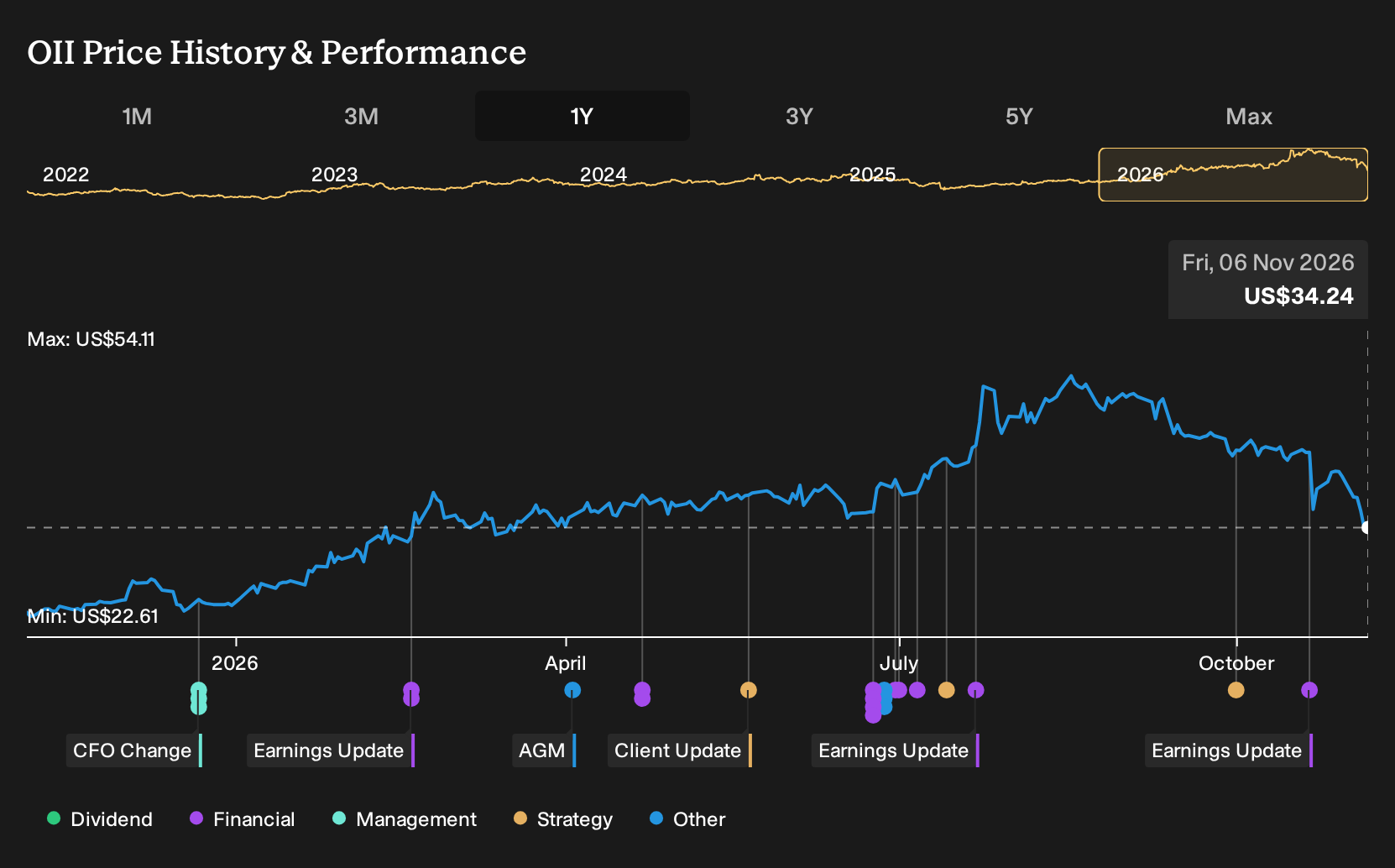
- Oceaneering International recently faced softer demand expectations for offshore services as easing conflict risk in the Middle East coincided with lower oil prices and a sector-wide pullback in energy producers and contractors.
- The same macro backdrop that pressured oilfield activity also sharpened focus on how resilient Oceaneering International’s broader service mix is beyond traditional offshore projects.
- We will now look at how easing geopolitical risk and softer oil prices could reshape Oceaneering International's broader investment narrative.
Scan how easing conflict risk and shifting oil prices are rippling through the sector using a curated set of peers via 41 power grid technology and infrastructure stocks as you assess where Oceaneering International fits in.
Oceaneering International Investment Narrative Recap
To own Oceaneering International, you need to believe the mix of offshore energy work, subsea robotics, and aerospace and defense contracts can stay busy enough through cycles to support steady cash generation. The sharp share pullback on easing conflict risk and softer oil prices mainly affects shorter term psychology around offshore spending rather than the core multi segment operating story.
The key near term swing factor is how project awards and vessel or ROV utilization hold up if clients slow offshore commitments on weaker pricing. The biggest risk is that lower commodity prices feed through to reduced deepwater capital spending at the same time earnings are already forecast to decline, which would pressure both backlog and margins.
The most relevant recent development around this move is the cluster of analyst model updates adjusting fair value estimates after prior results. Those revisions reflect very different views on how much offshore exposure, subsea robotics strength, and aerospace and defense work can offset a softer oil and gas cycle.
For you, the practical takeaway is more about execution thresholds than price targets. Watch whether Oceaneering International keeps winning long duration contracts in energy and ADTech, maintains utilization on its subsea fleet, and protects margins if day rates or offshore project volumes soften further after this pullback in oil prices and conflict risk premiums.
Oceaneering International is modeled to reach revenues of US$3.5b and earnings of US$60.6 million by 2029, based on analyst estimates that call for 6.5% yearly revenue growth and an earnings decline of roughly US$270.8 million from current earnings of US$331.4 million.
Discover why Oceaneering International's fair value suggests a 20% potential upside to its current price before other investors respond to that opportunity.
Exploring Other Perspectives
One alternate view says the real risk for Oceaneering International is future government budget cuts in Aerospace and Defense Technologies. On that pre news view, the lowest analysts already expected revenues of about US$3.4b and earnings of US$92.5 million by 2029, yet still saw the stock as overvalued. Your takeaway is that opinions can diverge widely, and this latest pullback in energy stocks might eventually push some of those forecasts higher or lower. Exploring both the consensus and these more cautious scenarios can help you decide which story feels closer to your own expectations.
Explore 3 other Oceaneering International fair value estimates, including one that suggests it could be worth just $37.50.
Decide For Yourself
Don't just follow the ticker. Dig into the data and build a conviction that's truly your own.
- A great starting point for your Oceaneering International research is our analysis highlighting 2 key rewards and 1 important warning sign that could impact your investment decision.
- See our latest analysis for Oceaneering International. The report includes a comprehensive fundamental analysis summarized in a single visual, the Snowflake, making it easy to evaluate Oceaneering International's overall financial health at a glance.
Looking for more Oceaneering International style investment ideas?
If the Oceaneering International story has you thinking about portfolio gaps, use the Simply Wall St Screener to spot other businesses that fit the type of risk, balance sheet strength, or income profile you want to focus on next.
- For investors who care most about financial resilience and clean balance sheets, start with a list of solid balance sheet and fundamentals (25 results). This can help you anchor the more volatile parts of your holdings.
- If your priority is cushioning market swings with income, scan a curated 7 dividend fortresses and see which payers line up with your return goals and risk tolerance.
- Readers hunting for underfollowed opportunities can turn to a 19 high quality undiscovered gems and see which quieter stories meet your quality and fundamentals checklist.
Have feedback on this article? Concerned about the content? Get in touch with us directly. Alternatively, email editorial-team@simplywallst.com