


EN
What AB Volvo Shareholders Got Right
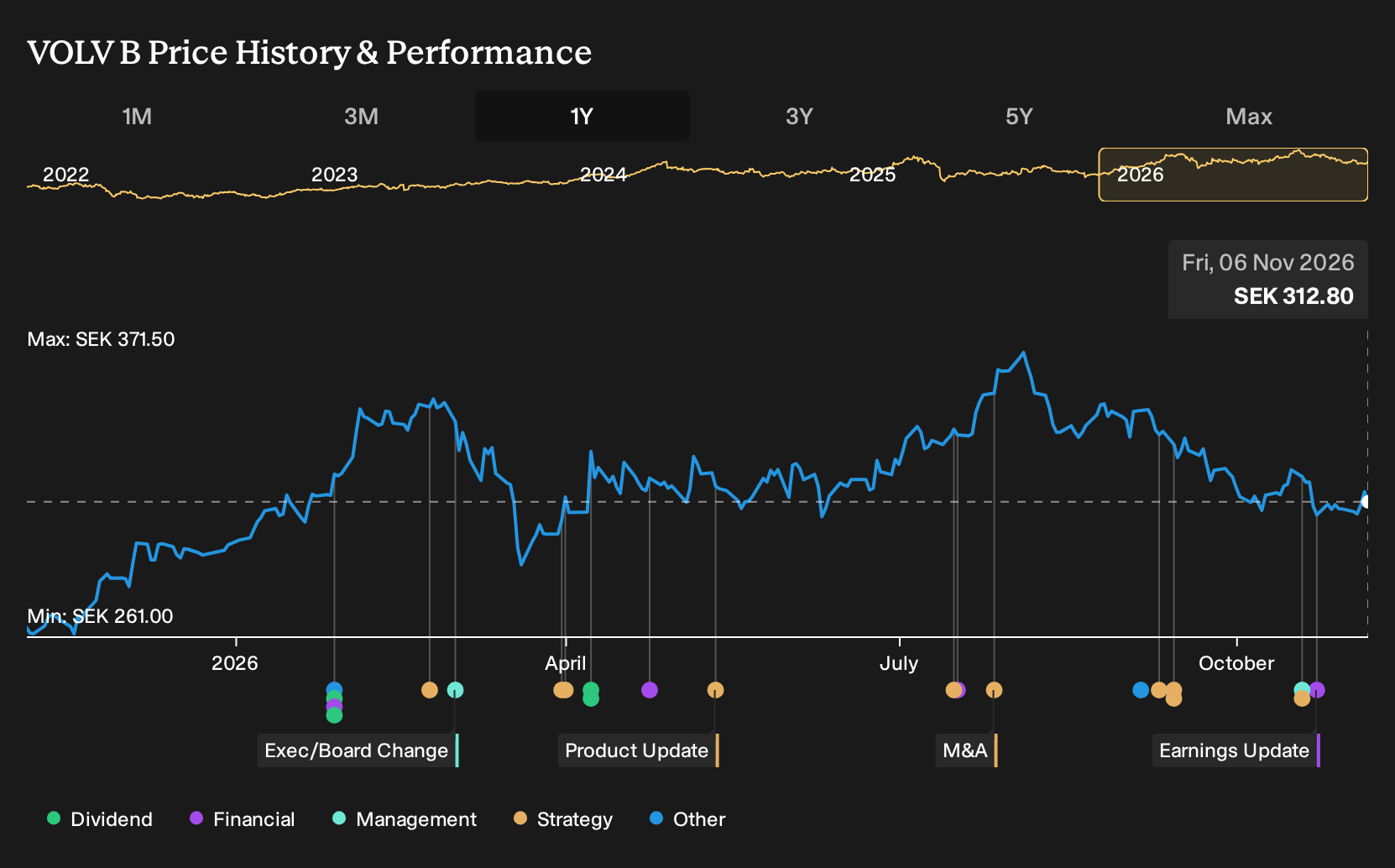
AB Volvo spent the past year caught between electrification setbacks, tariff worries and slower truck markets, yet the shareholder outcome looked very different from that mix of concerns. Investors who held AB Volvo over the past year are up 24.7%, including dividends. If you had bought on 6 November 2025, when analysts were split between upside potential and margin pressure, what exactly in the early evidence justified sitting tight through that kind of uncertainty?
A Narrative on Simply Wall St is one investor's written case for a company, with its growth, margin and multiple assumptions spelled out. Those assumptions imply an estimated Fair Value.
If the move has made AB Volvo harder to judge, start where the gap is still open and scan 225 high quality undervalued stocks.
The Two Stories AB Volvo Investors Were Really Betting On
The shares cost SEK261 at the start of the period, and anyone looking at AB Volvo then had to choose between two very different but reasonable stories.
The bullish narrative put Fair Value at SEK300, or 15% above the start price, assuming electrification, digitalization and partnerships would support margin expansion as higher margin services and aftermarket activity grew.
The bearish view saw Fair Value at SEK240, or 8% below the start price, stressing that rising tariffs and carbon regulation on internal combustion engines could compress profitability despite ongoing electrification spending.
What The Results Changed For The AB Volvo Story
The standout fact was AB Volvo’s Q3 2026 report, with revenue of SEK119,525m and net income of SEK10,767m, compared with SEK110,692m and SEK7,540m a year earlier. Net margin moved from 6.8% to 9.0%, which supported the bullish case that higher margin services and newer products could lift profitability, although tariff and regulatory risks were not resolved.
The lesson is simple. When an investment pitch leans on better profitability, track net income and margin in later reports and see if they actually move toward the story you were asked to believe.
What AB Volvo's Current Price Already Assumes
AB Volvo trades at SEK313 today, and this Narrative’s Fair Value sits below that level based on its own assumptions, not a universal truth about the shares.
The Narrative turns on whether service, autonomous and focused-segment earnings can hold margins while input and freight costs stay heavy. A buyer now effectively assumes that present profitability endures. How does the risk of under recovered electrification and capacity spending test that belief?
"Key Takeaways: Bearish analysts expect inflation in materials and freight, slow battery electric truck adoption, and ongoing regulatory and cost pressures to keep AB Volvo working hard just to hold current profitability rather than expand it. The main requirement is that AB Volvo converts its growth in higher margin services, autonomous transport, and focused segments such as mining, defense, and data centers into durable earnings that offset input cost pressure and the slow shift to new energy trucks."
The price and this Narrative do not agree. → Uncover what this Narrative says AB Volvo is actually worth
Which Company Could Surprise You Next?
What if your next investment idea came before the headlines? Go straight to the companies whose prices and our estimates still disagree. Three places to start, with the names waiting behind the link.
- Company 1 - 33% below our estimate - sells cloud and AI services that merge subscription seats with usage based pricing.
- Company 2 - 40% below our estimate - benefits as gaming and video collaboration peripherals recover after a sharp supply chain disruption.
- Company 3 - 41% below our estimate - wins shorter cycle subsea projects through integrated iEPCI contracts and Subsea 2.0 equipment.
Three companies from the same screener. Open every one of the 192 solid balance sheet companies →
Have feedback on this article? Concerned about the content? Get in touch with us directly. Alternatively, email editorial-team@simplywallst.com