


EN
As Meta Platforms Buys Conductor, Here’s How to Play META Stock
Intense competition among hyperscalers to capture software engineering workflows is driving rapid consolidation across developer-facing AI tools. By acquiring specialized multi-agent orchestrators, major tech platforms aim to lock in developer ecosystems, streamline complex software development lifecycles, and enhance the training feedback loops of their underlying foundation models.
Strengthening its developer tooling ecosystem, Meta Platforms (META) recently reached an agreement to acquire AI coding startup Conductor.
About Meta Platforms
Meta Platforms operates Facebook, Instagram, WhatsApp, and Messenger, connecting billions of users worldwide. Led by Mark Zuckerberg, the company generates most of its revenue through digital advertising while expanding into artificial intelligence (AI), generative AI models, smart glasses, and virtual reality through its Reality Labs division.
META Stock Performance
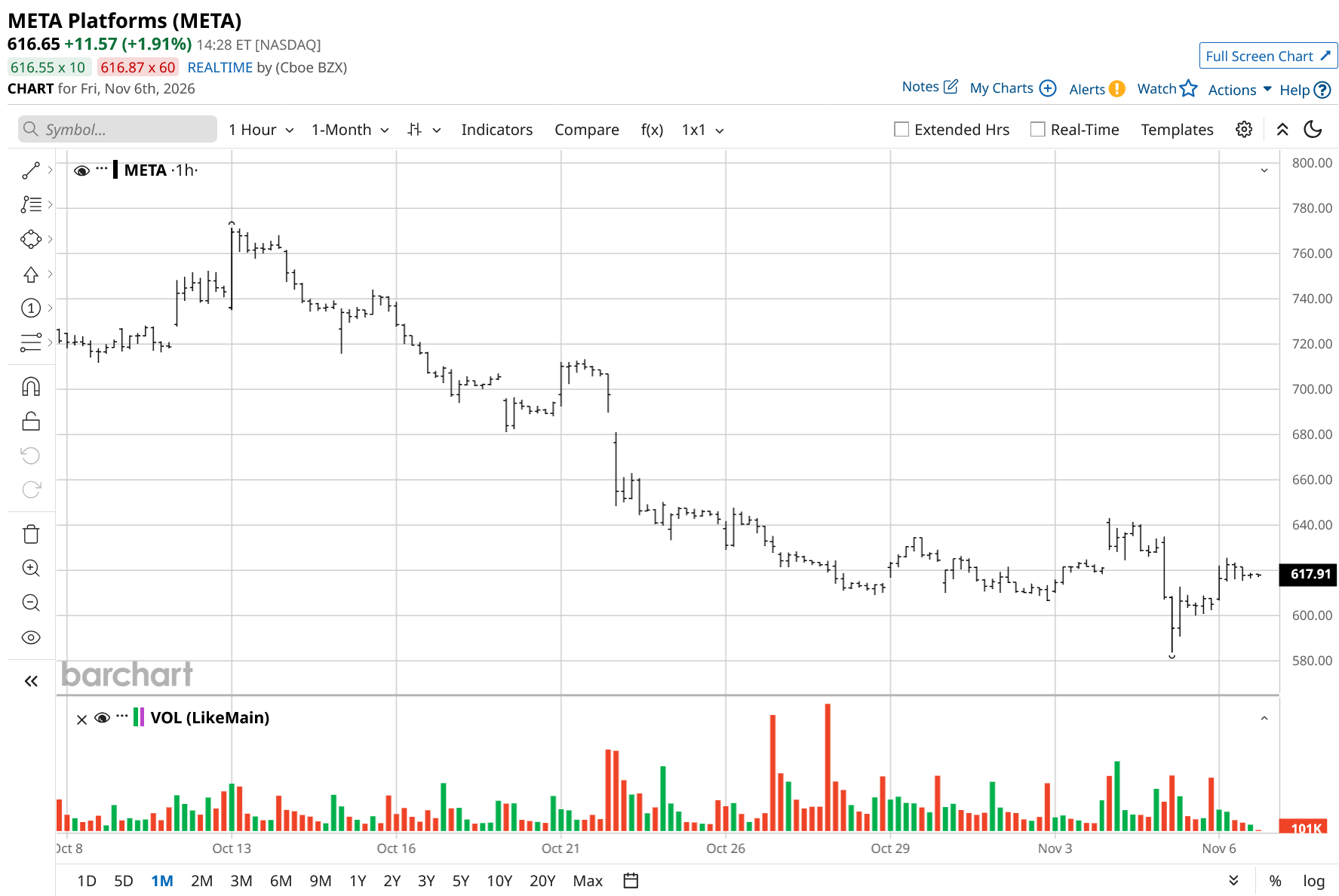
Meta's stock has experienced a volatile trading environment in 2026 as investors weigh strong advertising growth against rising AI infrastructure expenses. Shares closed at $630 on Nov. 4, giving the company a year-to-date (YTD) return of approximately 4.3% through that session. The stock remains below its 52-week high of $779.82, reflecting pressure from concerns about capital expenditure, profitability, and the timeline for monetizing AI investments.
Results Beat Estimates
Meta reported third-quarter 2026 revenue of $64.60 billion, up 26% year-over-year (YoY) and above Wall Street's estimate of $63.34 billion. Reported diluted earnings per share came in at $3.83, compared with the analyst consensus of $6.54. However, earnings included a one-time $9.89 billion legal charge related to an agreement with 52 U.S. state attorneys general. Excluding this expense, diluted EPS would have been approximately $7.40, indicating stronger underlying earnings performance.
The company's operating metrics reflected continued strength in its advertising business. Advertising revenue climbed to $63.06 billion, while ad impressions increased 10% YoY, and the average price per advertisement rose 14%. Family daily active people reached 3.64 billion, up 3% from the previous year. However, total costs and expenses surged 68% to $51.61 billion, reducing operating margin to 20% from 40% a year earlier. Capital expenditures reached $34.91 billion, while free cash flow turned negative at $2.12 billion. Meta ended September with $82.45 billion in cash, cash equivalents, and marketable securities.
Looking ahead, management expects Q4 2026 revenue of $73 billion to $76 billion, supported by continued momentum in digital advertising and AI-driven improvements. The company raised its full-year 2026 expense outlook to $175 billion–$179 billion, including the legal settlement charge, and projects capital expenditures of $135 billion–$145 billion as it expands AI infrastructure and data center capacity. Management also expects Reality Labs losses to decline to $18 billion–$19 billion in 2026 and approximately $15 billion in 2027. The company's ability to convert substantial AI investments into sustainable revenue growth will remain a key focus for investors.
Meta Acquires AI Coding Startup Conductor to Strengthen AI Capabilities
Meta Platforms is reportedly expanding its artificial intelligence ambitions through the acquisition of Conductor, an AI coding startup, according to an Axios report published Nov. 4, 2026. Founded in 2024, Conductor develops technology that enables software engineers to coordinate and manage multiple AI coding agents simultaneously, potentially helping developers automate complex programming tasks and improve productivity. Financial terms of the acquisition have not been disclosed. Conductor is led by CEO Charlie Holtz and CTO Jackson de Campos, who are both expected to join Meta following the deal. The reported acquisition highlights Meta's growing focus on AI-powered software development tools as it strengthens its artificial intelligence infrastructure, developer capabilities, and competitive position in the rapidly evolving generative AI market.
Should You Buy META Stock?
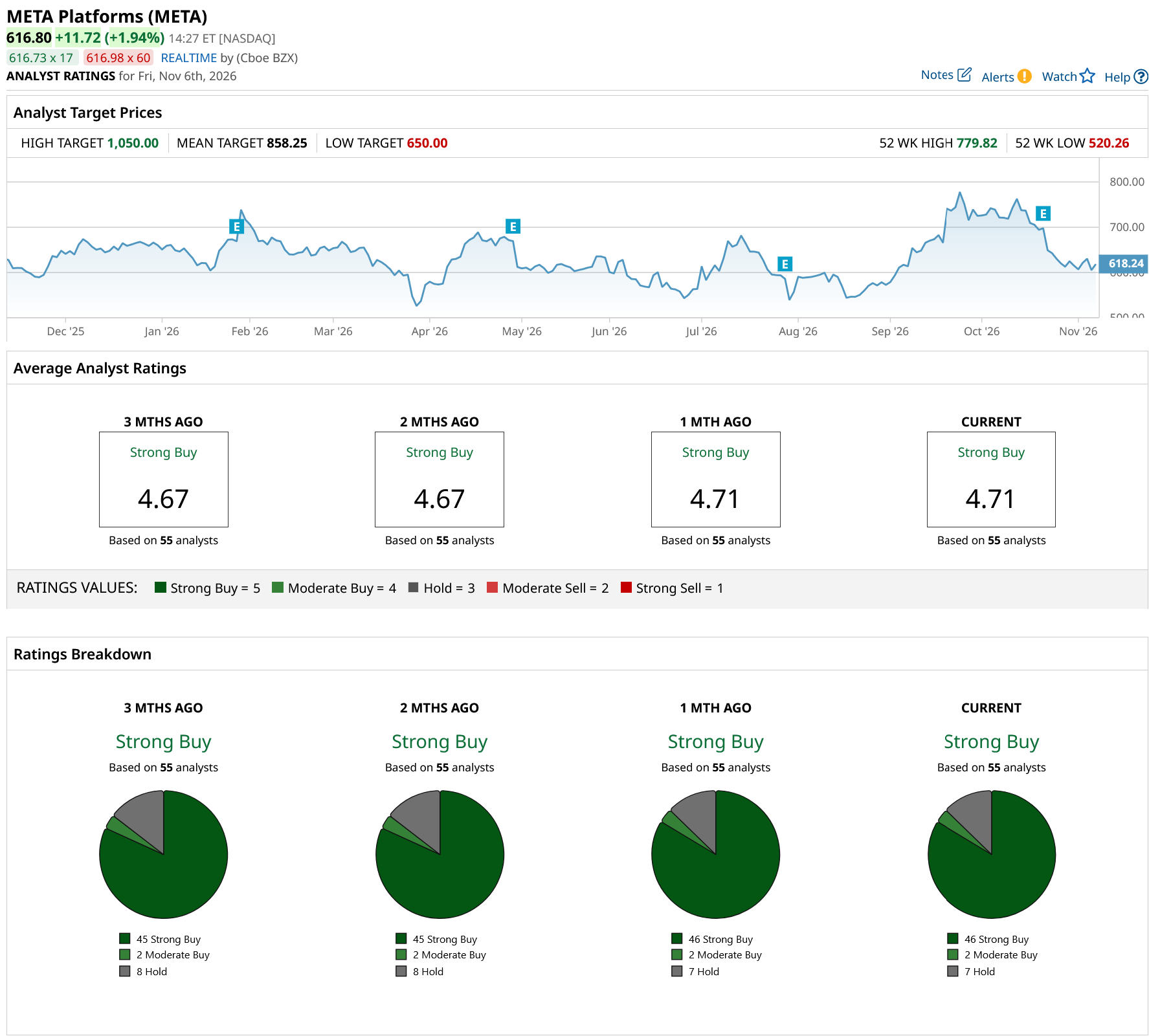
Meta's reported acquisition of AI coding startup Conductor reinforces its commitment to expanding AI capabilities and strengthening its position in the generative AI market. The deal could enhance developer productivity and support Meta's broader AI ecosystem as competition intensifies. Wall Street remains bullish on META stock, with a “Strong Buy” consensus and a mean price target of $858.25, indicating 39% potential upside from its current market price. Of 55 analyst ratings, 46 are “Strong Buy,” two are “Moderate Buy,” and seven are “Hold,” reflecting strong confidence in Meta's growth prospects.
On the date of publication, Ruchi Gupta did not directly have a position in any of the securities mentioned in this article. All information and data in this article is solely for informational purposes. For more information please view the Barchart Disclosure Policy here.