


EN
What Willis Towers Watson Stock Earnings Results Mean For Shareholders
- Willis Towers Watson reported third quarter 2026 sales of US$2,460 million and net income of US$303 million, with earnings per share from continuing operations broadly similar to the prior year.
- The mix of higher sales and relatively stable earnings suggests operating pressures on profitability, which investors may compare closely with Willis Towers Watson's long term margin ambitions.
- We will now look at how Willis Towers Watson's investment narrative could be influenced by rising sales alongside largely flat quarterly earnings.
Willis Towers Watson Investment Narrative Recap
To own Willis Towers Watson, you need to believe steady top line progress can eventually convert into cleaner margin improvement. The latest quarter, with sales of US$2,460 million and net income of US$303 million, keeps that debate alive. In the short term, the key catalyst remains execution on cost efficiency and AI driven productivity. The main near term risk is that softer insurance pricing and fee pressure keep profit growth muted.
The third quarter numbers alone do not materially change that setup. Revenue for the first nine months was US$7,338 million, with net income of US$829 million, which points to solid scale but only modest movement in earnings per share. For now, the story still hinges on whether management can pull more profit through from existing revenue while managing debt and retaining key client facing talent.
The most relevant development in this context is the planned transition in the principal accounting officer role. Willis Towers Watson has appointed Steven Alcock to succeed Joseph Kurpis as Principal Accounting Officer and Controller from April 1, 2027. Alcock currently serves as Head of Finance, International and Chief Financial Officer of Willis Limited, and has been with the group since 1997.
For you as a shareholder, this matters around execution risk and reporting quality rather than headline growth. A long tenured finance leader stepping into the controller role can support consistency in how Propel AI savings, margin initiatives and any restructuring charges are measured and communicated. It also places more responsibility on the finance function to track profitability in segments where pricing, competition and debt servicing costs already leave limited room for error.
Willis Towers Watson's current earnings are US$1.6b, and analysts expect earnings to reach US$2.0b by 2029, which implies an earnings increase of about US$400m. This outlook is based on forecast yearly revenue growth of 5.8% and a consensus view that revenues could reach about US$11.9b with earnings of US$2.0b in 2029.
Uncover why Willis Towers Watson's fair value indicates a 13% potential upside to its current price, a discount that could narrow as expectations adjust.
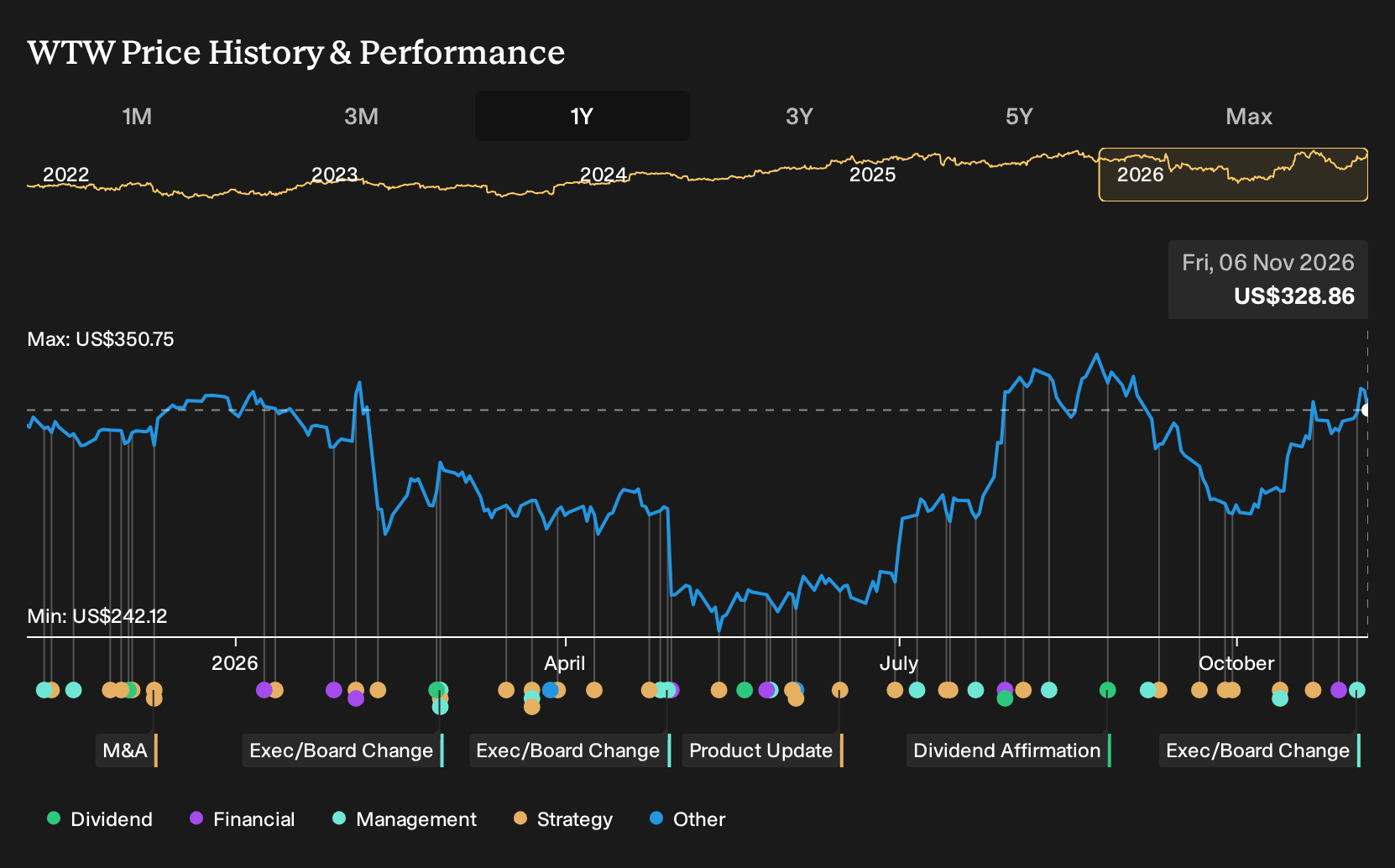
Exploring Other Perspectives
Three fair value views from the Simply Wall St Community cluster between about US$371 and US$477 per share, so retail opinions on Willis Towers Watson already span a wide gap. You can set those figures against risks around fee pressure and talent retention, which could shape how comfortably the business converts AI savings into lasting profitability.
Explore 2 other Willis Towers Watson fair value estimates, including one that suggests as much as 45% upside from the current price.
Decide For Yourself
Don't just follow the ticker; dig into the data and build a conviction that's truly your own.
- A great starting point for your Willis Towers Watson research is our analysis highlighting 2 key rewards and 1 important warning sign that could impact your investment decision.
- See our latest analysis for Willis Towers Watson. The report includes a comprehensive fundamental analysis summarized in a single visual, the Snowflake, making it easy to evaluate Willis Towers Watson's overall financial health at a glance.
Looking for more investment ideas beyond Willis Towers Watson?
Once you have formed a view on Willis Towers Watson, it can help to compare it with other companies that match your risk profile, income needs or balance sheet preferences. The Simply Wall St Screener lets you filter for those traits directly so you can build a shortlist that fits the way you invest.
- Prefer resilience and capital preservation as a starting point for research? Then consider running a screen of 31 resilient stocks with low risk scores that may better align with a cautious approach.
- If strong finances and cleaner balance sheets matter most to you, build a watchlist from our list of solid balance sheet and fundamentals (25 results) and see which businesses fit your quality checklist.
- Looking for potential mispricing rather than momentum? Set up a search focused on value with the 38 high quality undervalued stocks and compare those candidates to Willis Towers Watson.
Have feedback on this article? Concerned about the content? Get in touch with us directly. Alternatively, email editorial-team@simplywallst.com