


EN
Oracle Just Walked Away From a $7 Billion Tencent Deal. Here’s What It Means for ORCL Stock.
Wall Street is having a tough sell-off moment. And not a good one. The tech-heavy Nasdaq index dropped by almost 5.5% Thursday after a significant sell-off that coincided with worries over U.S. midterm election outcomes. It officially fell into correction mode, reversed its post-election rally, and erased a record $2.5 trillion in market value.
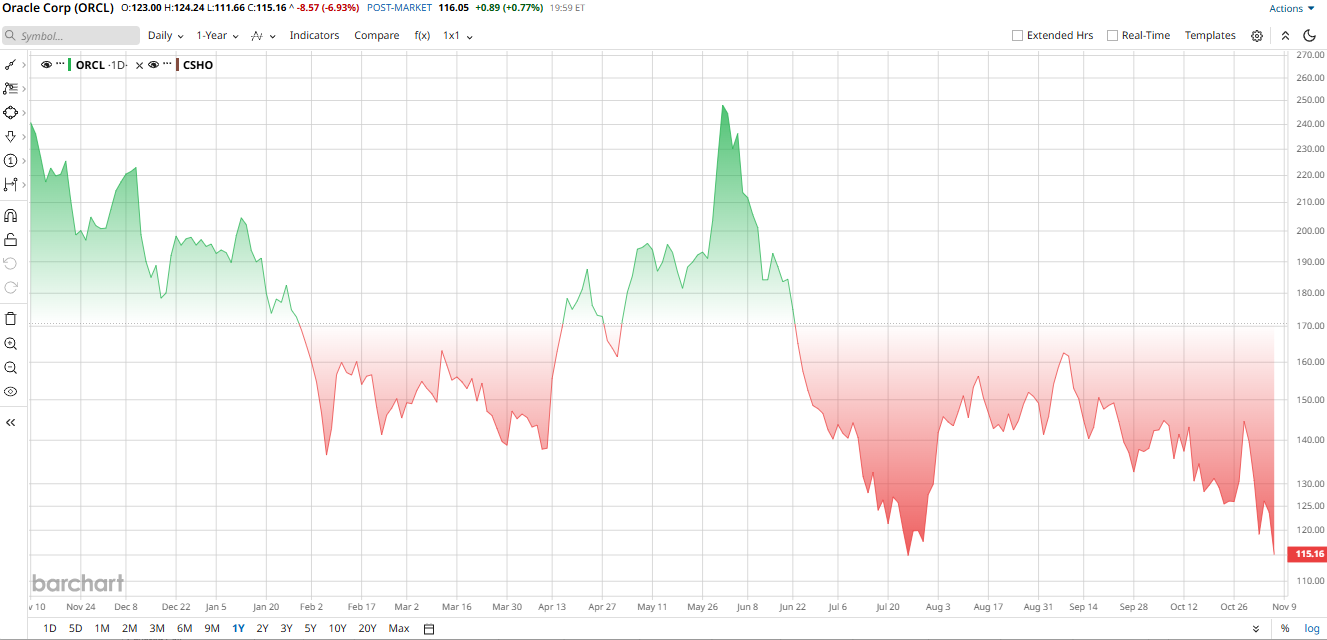
Along with that, Oracle (ORCL) has been absolutely hammered this year. Shares of ORCL are down 40% year-to-date (YTD). That is a brutal stretch for a company that was supposed to be one of the biggest winners of the AI boom.
But here is where things get interesting. Oracle just walked away from a $7 billion chip leasing deal with Tencent (TCEHY). And that might actually be a blessing in disguise.
The Crash Nobody Saw Coming
Let’s talk about the pain first. ORCL hit a 52-week low of $111.6 on Thursday.
The reasons are many. Broader market sell-off; immense capital expenditure costs are being seen in terms of AI data centers. People are too ticked off about their debt. The Tencent cancellation now brings additional uncertainty to the nervous market.
But there's this in the headlines: Oracle isn't resting on its laurels, and that's not an understatement. The company is taking a very controversial step that may change the course of its future.
So What Happened with Tencent?
Earlier this year, Oracle inked a five-year agreement with Tencent involving the deployment of approximately 100,000 chips of state-of-the-art AI at data centers in the Southeast Asian region. The estimated value was $7 billion. Tencent decided to pay about 30% in advance.
Then, Washington got involved. US authorities were concerned. Oracle listened. The company walked-off.
So does this negatively impact Oracle? Honestly, not much. The deal was not on the official list of Oracle's products. The rest of Oracle’s engagements for performance are a whopping $664 billion. A gap of $7 billion seems a trifle, if nothing more. When Tencent loses money, it's more than the “fundamentals.”
The Quarter That Shut Everyone Up
Oracle reported fiscal first-quarter 2027 results on September 10. And the numbers were spectacular. Revenue topped $19.3 billion, a record high. This is an increase of 30% from the previous year. Net income grew to $4.7 billion, above the level at the same time last year by 60%. Adjusted earnings per share stood at $1.92, up 30%. It also had record operating cash flow of $23 billion. Oracle continued to invest in infrastructure used for AI, and that caused free cash flow to be negative $5 billion. Cash and cash equivalents as of the end of FY 2026 were approximately $31.3 billion.
Co-CEO Clay Magouyrk did not hold back on the earnings call. "We are delivering data center and GPU capacity at a pace that would have seemed impossible only a year ago," he said.
Looking ahead, management guided second-quarter revenue growth of 30% to 34%. For the full fiscal year, Oracle expects at least $90 billion in revenue and $8.10 in adjusted EPS. Analysts project $90.42 billion in revenue and $8.14 in EPS.
What the Analysts are Saying About OCRL Stock
Analysts are generally positive on Oracle stock. Morgan Stanley's Sanjit Singh keeps a Hold rating and a $210 price target. He wants proof before turning more positive. "Simply put, we need to see execution," Singh noted.
UBS analyst Karl Keirstead, however, is more bullish with a $250.00 target price. He believes that the fear factor around AI's use is mistaken.
On the negative side, Goldman Sachs lowered its target to $206 from $240 but still maintained a Buy rating on the stock.
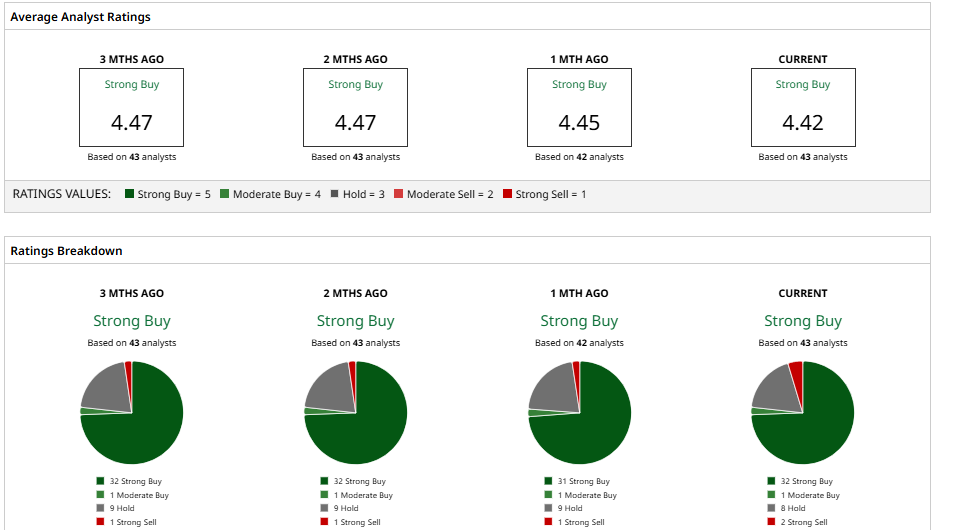
Overall, Wall Street maintains a “Strong Buy” consensus rating on ORCL, with an average price target of $242.75. That implies roughly 93% upside from current levels.
In my opinion, Oracle is not broken. The Tencent deal is over. That stings. However, the backlog is enormous, revenue is accelerating, and all the clouds are on fire. Shares of the stock are priced at only 13 times forward earnings. Patient investors might get rich rewards if management succeeds in turning around conversions from AI demand into real cash flow.
The panic may not be over. However, it truly is an offer. And this is why this stock is so darn interesting right now.
On the date of publication, Nauman Khan did not directly have a position in any of the securities mentioned in this article. All information and data in this article is solely for informational purposes. For more information please view the Barchart Disclosure Policy here.