


EN
What Yamaha Motor Shareholders Got Right
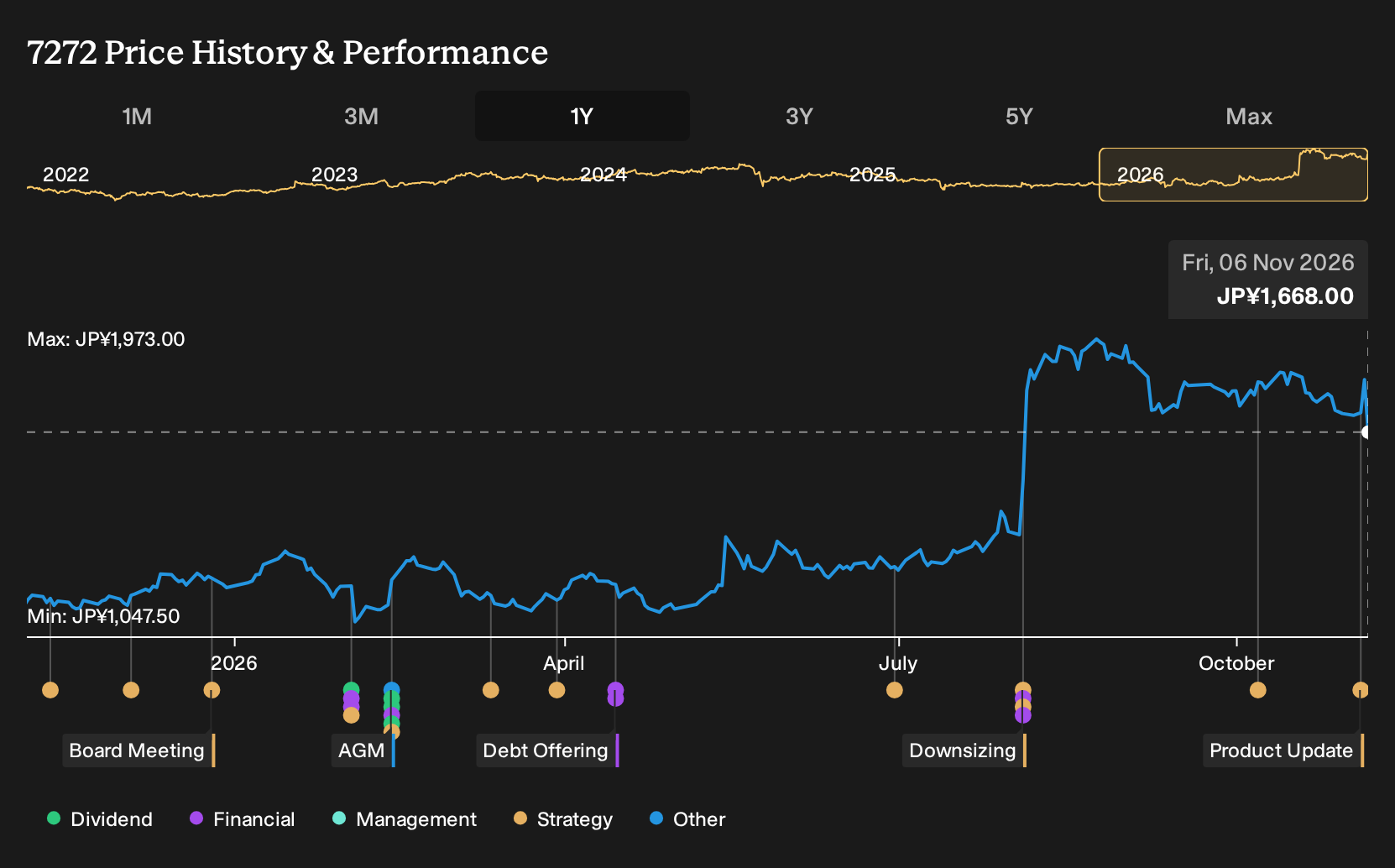
If Yamaha Motor was on your watchlist rather than in your portfolio, the return may sting. For Yamaha Motor shareholders, the return over the past year was 51.3%, including dividends. That kind of outcome invites a tougher question. Back on 6 November 2025, when analysts were split between a premiumization-led upswing and pressure from electrification and regulation, what clue in Yamaha’s reliance on higher value motorcycles and marine products could have helped you spot the potential before it showed up in the numbers?
The move put Yamaha Motor in the middle of this trade. Scan 90 robotics and automation stocks for other companies exposed to it.
The Two Yamaha Motor Stories Investors Had To Weigh
The shares cost ¥1,122 at the start of the period, and investors in Yamaha Motor had to choose between two very different stories about where the business might be heading.
The bullish view pointed to a Fair Value of ¥1,300, which is the price implied if its optimistic assumptions played out, built on premium motorcycles, digital services, and marine investments supporting higher margins and more diversified cash flows.
The bearish narrative anchored on a Fair Value of ¥1,000 and focused on slow electrification, regulatory pressure on internal combustion engines, and the risk that shared mobility and tougher competition would erode motorcycle volumes and pricing power.
What The Results Changed For Yamaha Motor
Yamaha Motor’s Q3 2026 report gave the premiumization story real backing. Total revenue was ¥717,211m and net income was ¥59,495m, compared with a loss of ¥9,720m a year earlier. Net margin shifted from a negative 1.5% to 8.3%. That tilt toward profitable growth supported the optimistic case more than the cautious one.
For any other stock, treat this as a checklist item. When a thesis hangs on higher value products and better mix, track net margin alongside sales, then see if both actually move in the direction the story promised.
What Yamaha Motor's Price Now Asks You To Believe
Yamaha Motor now trades at ¥1,668, up 51.3% over the past year. The selected Narrative’s Fair Value sits below that level, reflecting concern that recent strength already prices in a lot of good news.
The Narrative highlights heavy exposure to internal combustion products, tariff drag, and robotics cyclicality. A buyer today is effectively assuming restructuring, cost cuts, and e-mobility losses all resolve cleanly, so how does that square with the specific tariff and demand risks the Narrative spells out?
"Key Takeaways: Bearish analysts expect Yamaha Motor to remain heavily exposed to internal combustion motorcycles and marine products, with tariff pressure and higher R&D and SG&A costs keeping group profitability under strain despite recent record results. The main thing that has to go right for Yamaha Motor is that cost structure reforms, OLV restructuring, and loss reduction in SPV and e-mobility meaningfully offset large U.S. tariff headwinds and higher development spend by 2027 and 2028."
That disagreement has a full argument behind it. → Uncover the lower Fair Value this Narrative argues for
One Step Beyond Yamaha Motor
Yamaha Motor leans on higher value machines that move people and goods. You could look one rung further up that ambition ladder.
Behind every shift toward cleaner transport sits a tougher problem. Energy has to be stored, managed, and pushed into those vehicles efficiently.
Another business is working on that, not with bikes or boats, but with electric drivetrains and large battery systems.
Its focus is turning electricity into motion and back again, selling the software and hardware around that loop. If that loop keeps widening, where else could your watchlist stretch?
The case is on the record, with the assumptions it rests on. → See the Narrative that values this company 86% above its price
Have feedback on this article? Concerned about the content? Get in touch with us directly. Alternatively, email editorial-team@simplywallst.com