


EN
Viasat Stock In Focus After Defense Growth And Satellite Partnership Update
- Viasat reported Q2 2027 revenue of US$1.18b and reaffirmed its fiscal 2027 outlook for mid single digit total revenue growth despite a wider net loss.
- Strong momentum in Defense and Advanced Technologies, together with new Equatys infrastructure partnerships, points to a business mix tilting further toward government and mobility connectivity contracts.
- We will now see how Viasat's reaffirmed mid single digit revenue growth guidance could reshape its investment narrative and risk profile.
Scan how Viasat's reaffirmed guidance compares with peers by reviewing 53 AI infrastructure stocks, which is shaping the next wave of satellite and connectivity infrastructure.
Viasat Investment Narrative Recap
To own Viasat, you essentially need to believe the heavy satellite and infrastructure spend turns into steadier cash generation from government, mobility and direct to device contracts. The reaffirmed mid single digit revenue outlook signals management still sees enough demand to support that thesis, even as Q2 losses widened and Communication Services remains under pressure.
The key near term catalyst is execution in Defense and Advanced Technologies, where management is pointing to strong momentum and sizable awards. The biggest risk is that high capex and ongoing losses keep leverage elevated and delay any improvement in free cash flow. The latest guidance confirmation does not meaningfully change that risk balance.
The most relevant update here is Viasat reaffirming fiscal 2027 guidance for mid single digit total revenue growth, alongside expectations for roughly flat adjusted EBITDA. That mix matters because it points to growth largely coming from Defense and Advanced Technologies, while commercial aviation and U.S. fixed broadband face headwinds and potential declines ahead.
For you as an investor, the question becomes whether that defense and mobility engine, plus new Equatys infrastructure partnerships, can offset weaker legacy Communication Services and still support the free cash flow goals management has laid out. Execution on awards, regulatory constraints on spectrum and capital discipline remain the core swing factors around that story.
Viasat's current analyst narrative points to revenues of US$5.5b and earnings of US$521.5 million by 2029. This outlook is based on 6.2% yearly revenue growth and an earnings swing of about US$551 million from earnings today of a US$29.4 million loss.
Uncover how Viasat's fair value indicates a 63% potential upside to its current price that could close sooner than investors expect.
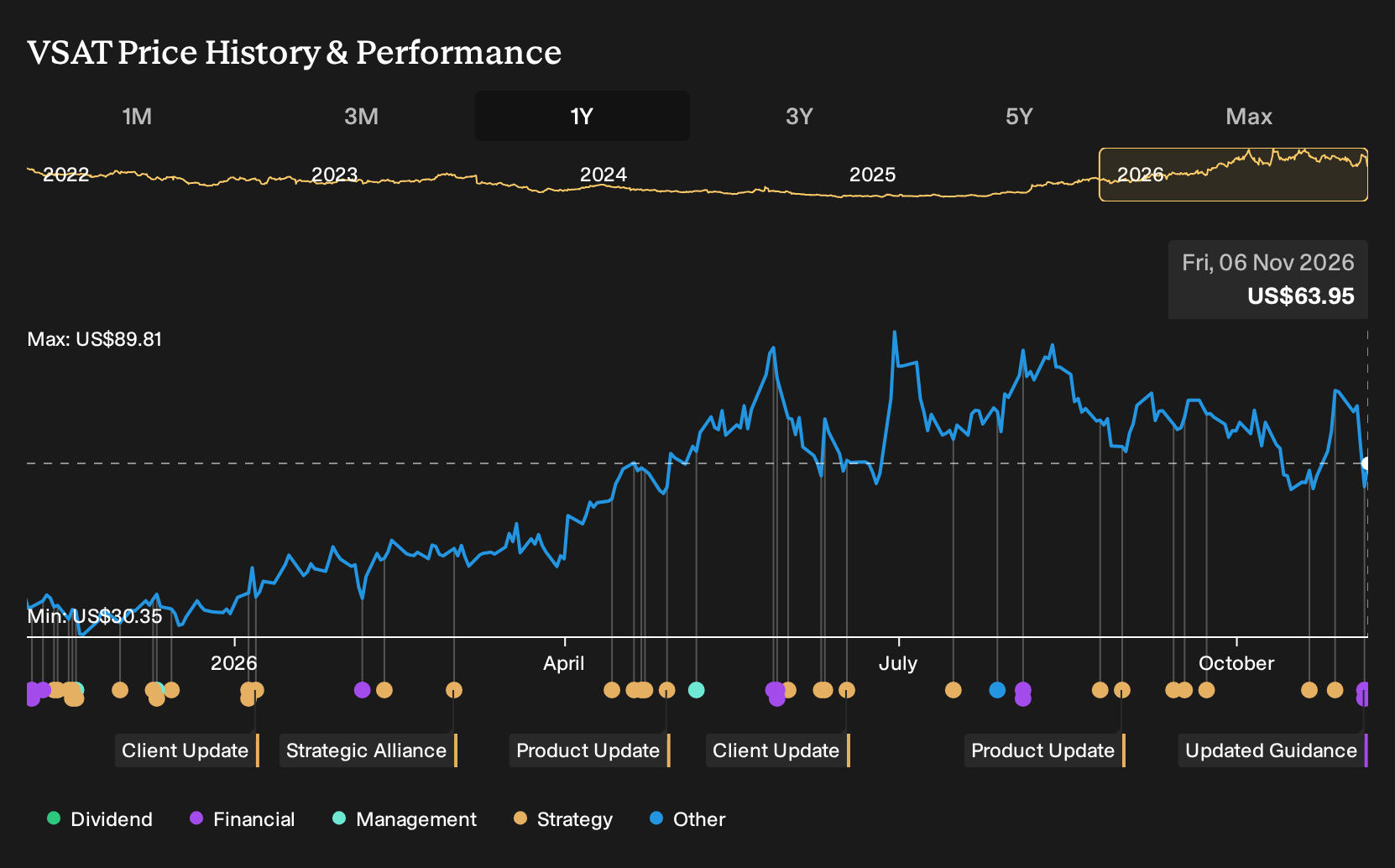
Exploring Other Perspectives
Some of the most optimistic analysts focus on Viasat’s Equatys and direct to device opportunity instead of capex risk. Before this guidance confirmation, the bullish cohort was using about 9.6% annual revenue growth and earnings of roughly US$60.6 million by 2029. Your view might land anywhere between those projections and far more cautious forecasts. It therefore makes sense to weigh several different narratives before reacting to this update.
Explore 6 other Viasat fair value estimates, including one that suggests as much as 119% upside from the current price.
Decide For Yourself
Disagree with existing narratives? Extraordinary investment returns rarely come from following the herd, so trust your own independent judgment.
- A great starting point for your Viasat research is our analysis highlighting 2 important warning signs that could be relevant to your investment decision.
- See our latest analysis for Viasat. The report includes a comprehensive fundamental analysis summarized in a single visual, the Snowflake, which allows you to review Viasat's overall financial position at a glance.
Looking for more Viasat investment ideas?
If this Viasat update has sharpened your view on satellite and connectivity, it can help to compare it with other companies that fit different risk and return profiles using the Simply Wall St Screener.
- For investors who want income to feel more predictable, review a curated set of higher yield opportunities via 7 dividend fortresses.
- If capital preservation sits near the top of your checklist, scan companies that pair resilience with measured risk scores through the 31 resilient stocks with low risk scores.
- When you are hunting for potential up and coming opportunities with stronger fundamentals, broaden your watchlist using the 19 high quality undiscovered gems.
Have feedback on this article? Concerned about the content? Get in touch with us directly. Alternatively, email editorial-team@simplywallst.com