


EN
Springfield Properties Plc (LON:SPR) Pays A UK£0.03 Dividend In Just Three Days
Springfield Properties Plc (LON:SPR) is about to trade ex-dividend in the next three days. Typically, the ex-dividend date is two business days before the record date, which is the date on which a company determines the shareholders eligible to receive a dividend. The ex-dividend date is important as the process of settlement involves at least two full business days. So if you miss that date, you would not show up on the company's books on the record date. Thus, you can purchase Springfield Properties' shares before the 12th of November in order to receive the dividend, which the company will pay on the 17th of December.
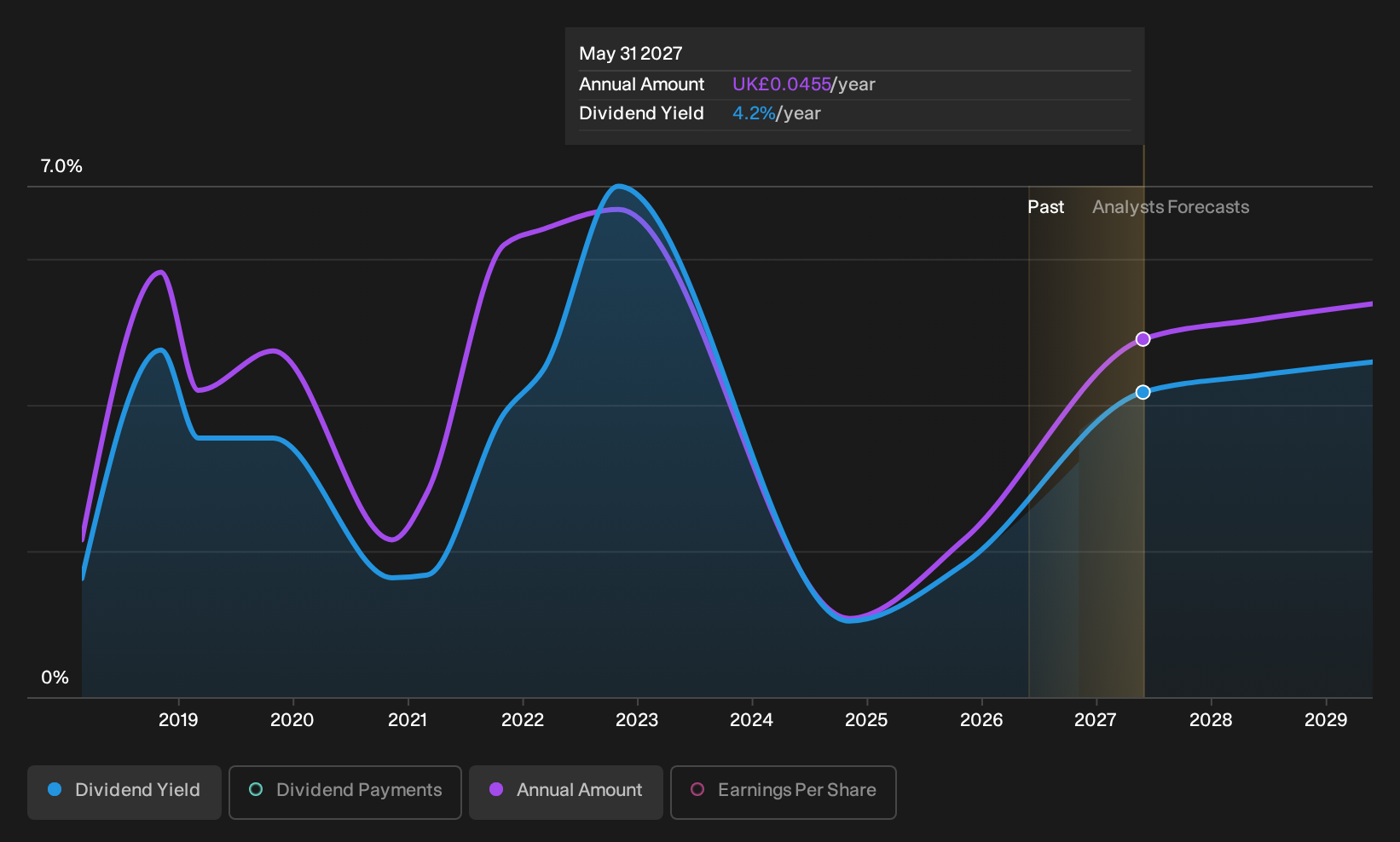
The company's next dividend payment will be UK£0.03 per share. Last year, in total, the company distributed UK£0.03 to shareholders. Last year's total dividend payments show that Springfield Properties has a trailing yield of 2.8% on the current share price of UK£1.09. Dividends are a major contributor to investment returns for long term holders, but only if the dividend continues to be paid. As a result, readers should always check whether Springfield Properties has been able to grow its dividends, or if the dividend might be cut.
If a company pays out more in dividends than it earned, then the dividend might become unsustainable - hardly an ideal situation. That's why it's good to see Springfield Properties paying out a modest 38% of its earnings. That said, even highly profitable companies sometimes might not generate enough cash to pay the dividend, which is why we should always check if the dividend is covered by cash flow. What's good is that dividends were well covered by free cash flow, with the company paying out 7.7% of its cash flow last year.
It's encouraging to see that the dividend is covered by both profit and cash flow. This generally suggests the dividend is sustainable, as long as earnings don't drop precipitously.
See our latest analysis for Springfield Properties
Click here to see the company's payout ratio, plus analyst estimates of its future dividends.
Have Earnings And Dividends Been Growing?
Businesses with shrinking earnings are tricky from a dividend perspective. If earnings decline and the company is forced to cut its dividend, investors could watch the value of their investment go up in smoke. Springfield Properties's earnings per share have fallen at approximately 11% a year over the previous five years. When earnings per share fall, the maximum amount of dividends that can be paid also falls.
Many investors will assess a company's dividend performance by evaluating how much the dividend payments have changed over time. Springfield Properties has delivered an average of 4.6% per year annual increase in its dividend, based on the past nine years of dividend payments.
The Bottom Line
Is Springfield Properties an attractive dividend stock, or better left on the shelf? Earnings per share are down meaningfully, although at least the company is paying out a low and conservative percentage of both its earnings and cash flow. It's definitely not great to see earnings falling, but at least there may be some buffer before the dividend needs to be cut. Overall, it's not a bad combination, but we feel that there are likely more attractive dividend prospects out there.
In light of that, while Springfield Properties has an appealing dividend, it's worth knowing the risks involved with this stock. In terms of investment risks, we've identified 1 warning sign with Springfield Properties and understanding them should be part of your investment process.
If you're in the market for strong dividend payers, we recommend checking our selection of top dividend stocks.
Have feedback on this article? Concerned about the content? Get in touch with us directly. Alternatively, email editorial-team (at) simplywallst.com.