


EN
We Wouldn't Be Too Quick To Buy DXN Holdings Bhd. (KLSE:DXN) Before It Goes Ex-Dividend
It looks like DXN Holdings Bhd. (KLSE:DXN) is about to go ex-dividend in the next 3 days. Typically, the ex-dividend date is two business days before the record date, which is the date on which a company determines the shareholders eligible to receive a dividend. The ex-dividend date is important because any transaction on a stock needs to have been settled before the record date in order to be eligible for a dividend. Accordingly, DXN Holdings Bhd investors that purchase the stock on or after the 12th of November will not receive the dividend, which will be paid on the 27th of November.
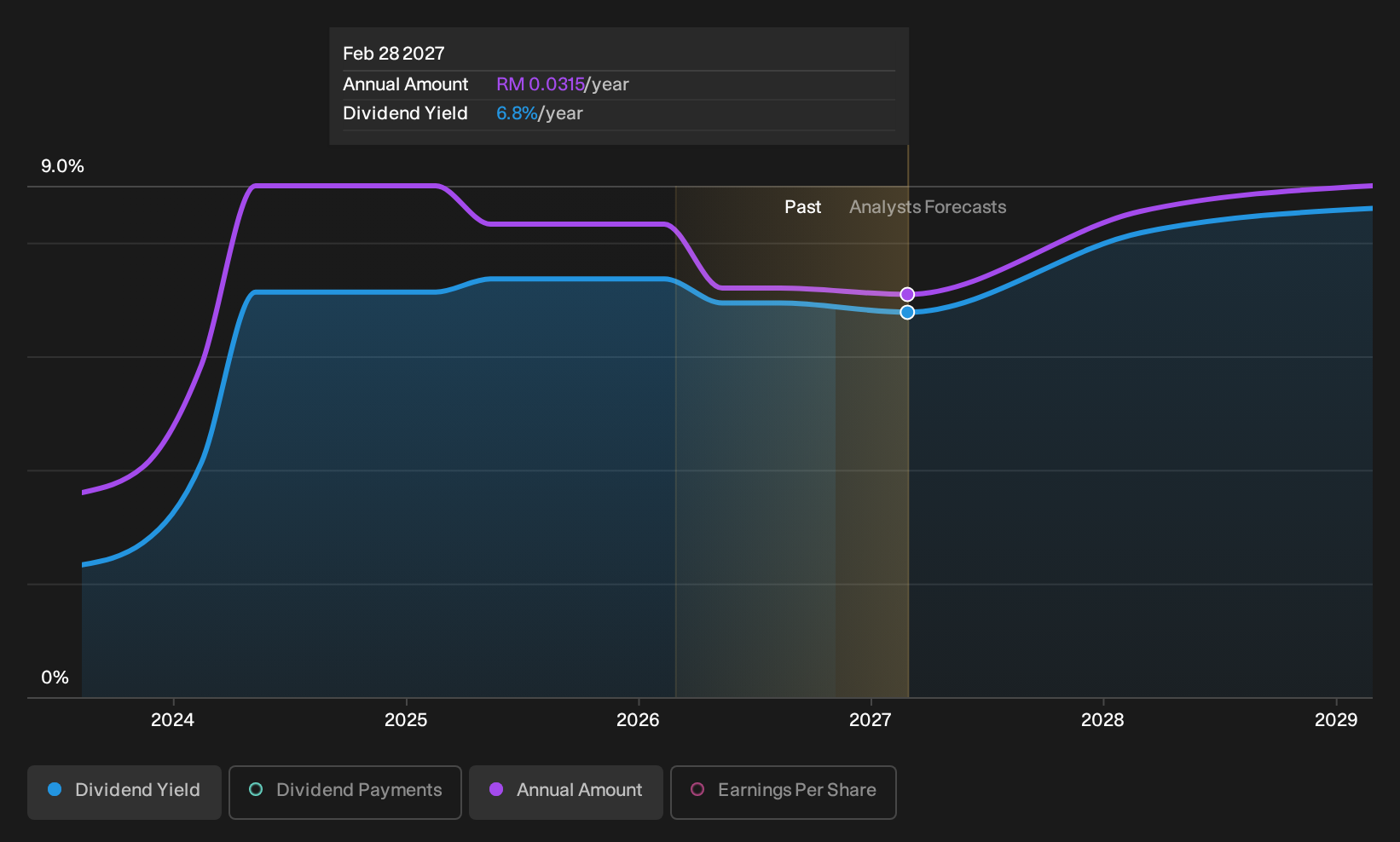
The company's next dividend payment will be RM00.01 per share, and in the last 12 months, the company paid a total of RM0.032 per share. Last year's total dividend payments show that DXN Holdings Bhd has a trailing yield of 6.9% on the current share price of RM00.465. Dividends are a major contributor to investment returns for long term holders, but only if the dividend continues to be paid. That's why we should always check whether the dividend payments appear sustainable, and if the company is growing.
Dividends are typically paid out of company income, so if a company pays out more than it earned, its dividend is usually at a higher risk of being cut. DXN Holdings Bhd is paying out an acceptable 56% of its profit, a common payout level among most companies. That said, even highly profitable companies sometimes might not generate enough cash to pay the dividend, which is why we should always check if the dividend is covered by cash flow. Over the last year it paid out 65% of its free cash flow as dividends, within the usual range for most companies.
It's positive to see that DXN Holdings Bhd's dividend is covered by both profits and cash flow, since this is generally a sign that the dividend is sustainable, and a lower payout ratio usually suggests a greater margin of safety before the dividend gets cut.
Check out our latest analysis for DXN Holdings Bhd
Click here to see the company's payout ratio, plus analyst estimates of its future dividends.
Have Earnings And Dividends Been Growing?
Companies with consistently growing earnings per share generally make the best dividend stocks, as they usually find it easier to grow dividends per share. Investors love dividends, so if earnings fall and the dividend is reduced, expect a stock to be sold off heavily at the same time. This is why it's a relief to see DXN Holdings Bhd earnings per share are up 7.3% per annum over the last five years. While earnings have been growing at a credible rate, the company is paying out a majority of its earnings to shareholders. If management lifts the payout ratio further, we'd take this as a tacit signal that the company's growth prospects are slowing.
The main way most investors will assess a company's dividend prospects is by checking the historical rate of dividend growth. In the last three years, DXN Holdings Bhd has lifted its dividend by approximately 26% a year on average. It's encouraging to see the company lifting dividends while earnings are growing, suggesting at least some corporate interest in rewarding shareholders.
Final Takeaway
From a dividend perspective, should investors buy or avoid DXN Holdings Bhd? Earnings per share growth has been unremarkable, and while the company is paying out a majority of its earnings and cash flow in the form of dividends, the dividend payments don't appear excessive. In summary, while it has some positive characteristics, we're not inclined to race out and buy DXN Holdings Bhd today.
Ever wonder what the future holds for DXN Holdings Bhd? See what the two analysts we track are forecasting, with this visualisation of its historical and future estimated earnings and cash flow
A common investing mistake is buying the first interesting stock you see. Here you can find a full list of high-yield dividend stocks.
Have feedback on this article? Concerned about the content? Get in touch with us directly. Alternatively, email editorial-team (at) simplywallst.com.