


EN
Insmed (INSM) Raises 2026 Guidance Following Earnings, Is It Still Below Fair Value?
Insmed (INSM) drew fresh attention after its third quarter update on 29 October 2026, when the biopharma reported a sharply narrower net loss and raised full year revenue guidance for key therapies BRINSUPRI and ARIKAYCE.
Those guidance upgrades have arrived after a choppy year for Insmed, with the share price falling 35.41% year to date despite a 12.45% 1 month share price return and a very large 3 year total shareholder return of around 4x. This suggests long term believers are still well ahead even as near term momentum rebuilds around the earnings and revenue outlook shift.
Scan how Insmed's post-earnings swing compares with other high-conviction opportunities in our handpicked 19 high quality undiscovered gems.
Insmed now trades well below both its average analyst target and some intrinsic value estimates after the post earnings bounce. The gap is wide. How much of that spread still looks justified once you line up the fundamentals?
Most Popular Narrative: 41.7% Undervalued
Insmed's most followed valuation storyline pegs fair value at $196.14 per share, well above the latest close at $114.41, which leaves a sizeable gap for investors to interpret.
The planned growth of a global respiratory franchise built around shared pulmonology call points for BRINSUPRI, ARIKAYCE and TPIP, together with guidance for combined peak sales of more than $14b from these three assets, is intended to drive higher margin specialty pharma style earnings over time.
See why 22 investors see Insmed as 42% undervalued.
Result: Fair Value of $196.14 (UNDERVALUED)
Still, the Insmed story can crack if BRINSUPRI uptake in key non US markets stalls or if ARIKAYCE label expansion outcomes fall short of expectations.
Find out about the key risks to this Insmed narrative.
Another View: What Multiples Say About Insmed
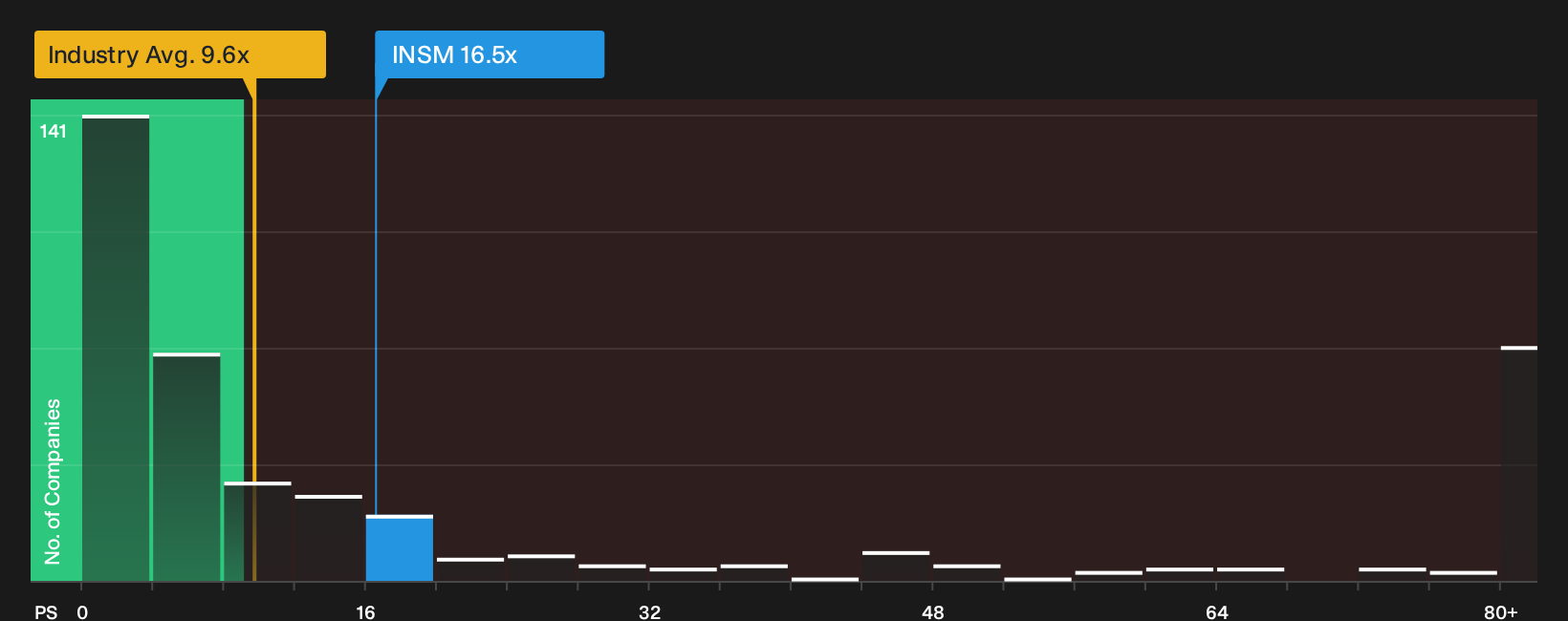
The story changes when you swap fair value models for simple market ratios. Insmed trades on a P/S of 16.5x, which is higher than both the US Biotechs industry at 9.6x and the peer average at 9.5x, and even slightly above a fair ratio of 16.4x. Does that premium reflect quality, or does it simply increase valuation risk for late entrants?
To see how this richer pricing compares with the underlying numbers, take a closer look at the valuation breakdown in our multiples view, starting with the See what the numbers say about this price — find out in our valuation breakdown.
Next Steps
The story around Insmed is clearly mixed, with excitement about potential rewards sitting right beside concerns about key risks. If you want to move fast and build your own view from the underlying data rather than the headline narrative, start by weighing the 3 key rewards and 1 important warning sign.
Looking for more investment ideas beyond Insmed?
If you only stop with Insmed, you could miss other opportunities sitting in plain sight. Use the screener to pressure test and broaden your watchlist.
- Target resilient opportunities that aim to protect your downside by focusing on 29 resilient stocks with low risk scores that score well on risk metrics and business quality.
- Hunt for potential bargains by checking the 39 high quality undervalued stocks where strong fundamentals meet pricing that still looks conservative.
- Stack potential return and resilience by filtering for a 8 dividend fortresses that pairs higher yields with balance sheets that appear built to endure.
Have feedback on this article? Concerned about the content? Get in touch with us directly. Alternatively, email editorial-team@simplywallst.com