


EN
Is PG&E (PCG) Undervalued After Its Hydrogen Push And Wildfire Liability Debate?
Why PG&E’s Hydrogen Push and Wildfire Policy Debate Matter for Investors
PG&E (PCG) is under fresh scrutiny as California regulators and policymakers weigh wildfire liability limits while the utility ramps up hydrogen ready grid projects backed by a large capital program through 2030.
Recent headlines around hydrogen pilots and wildfire liability talks are landing against a weak tape for PG&E. The share price is down 25.7% over the past 90 days and the 1-year total shareholder return is lower by 20.4%. This suggests investors are still recalibrating risk even as grid investment plans and funding choices take shape.
Compare PG&E’s risk and capital story with other regulated utilities by scanning our hand picked 42 power grid technology and infrastructure stocks aligned with grid upgrades and energy transition spending.
For PG&E, a drop of more than 20% over the past year could signal deep concern about wildfire risk and funding choices, or simply reflect exhausted patience with a complex story. Determining which of these forces is influencing the current price is the task that valuation analysis now has to address.
Most Popular Narrative: 26% Undervalued
PG&E’s most followed valuation storyline pegs fair value at $17.56, meaning the last close of $12.97 sits well below that anchor. This puts wildfire policy risk and hydrogen ready grid spending under a valuation spotlight.
Expanding opportunities for capital investment in grid modernization, wildfire mitigation, and resilience remain in focus, with PG&E reiterating a US$73b capital plan through 2030 and advancing large undergrounding programs and grid-edge sensing deployments. This supports future regulated earnings and rate base growth even after the announced US$2b reduction to 2027 capital spending.
See why 31 investors see PG&E as 26% undervalued.
Result: Fair Value of $17.56 (UNDERVALUED)
Still, PG&E’s story can shift quickly if wildfire liability reforms stall or if pressure to keep California bills affordable starts to cap grid cost recovery.
Find out about the key risks to this PG&E narrative.
Another View: PG&E Looks Rich On Cash Flows
The first story around PG&E leans on analyst targets and earnings based ratios that point to undervaluation. A second lens, the Simply Wall St DCF model, values the stock at $9.38 per share, which sits below the recent $12.97 price and frames PG&E as overvalued on projected cash flows. Which lens do you trust more when a business has heavy capital needs and wildfire risk baked into its future cash generation?
For readers who want to see how this cash flow based approach is built step by step, Look into how the SWS DCF model arrives at its fair value.
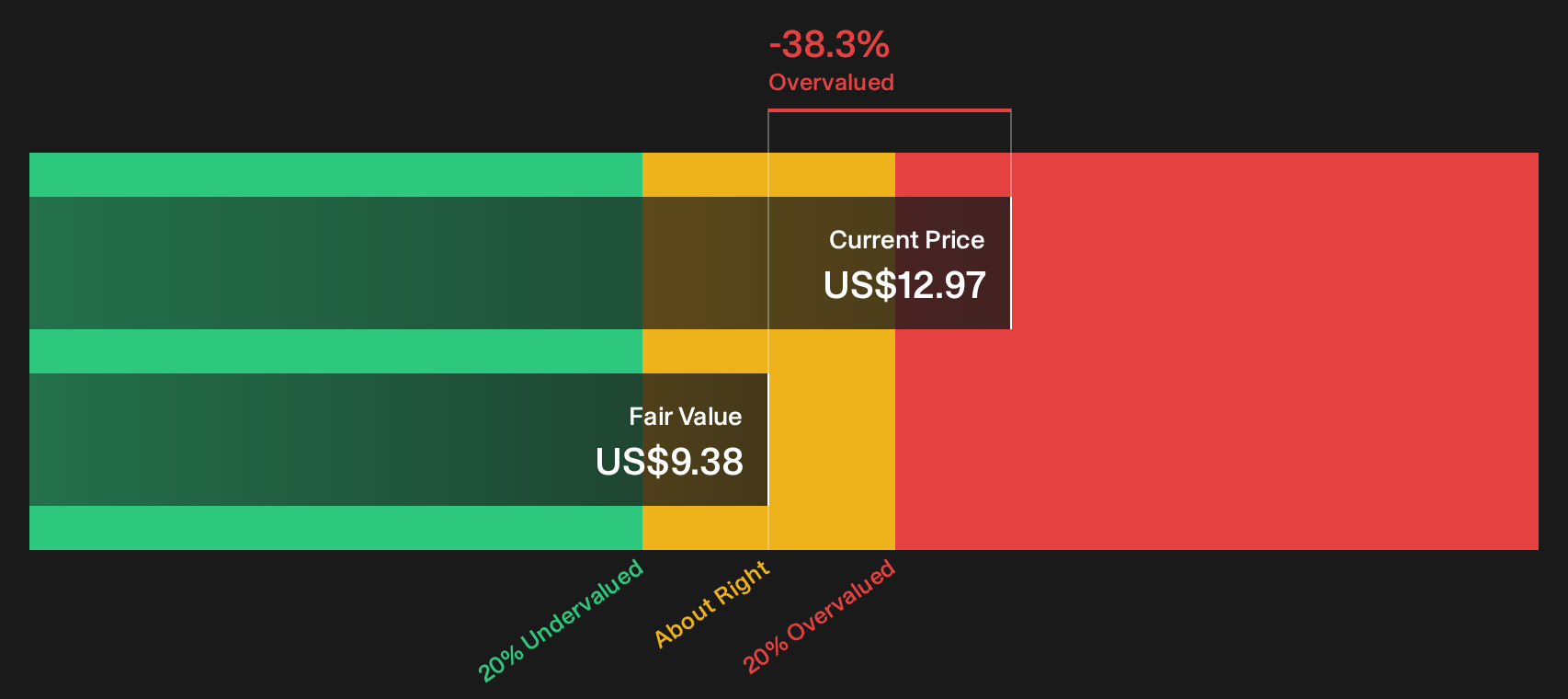
Simply Wall St performs a discounted cash flow (DCF) on every stock in the world every day (check out PG&E for example). We show the entire calculation in full. You can track the result in your watchlist or portfolio and be alerted when this changes, or use our stock screener to discover 39 high quality undervalued stocks. If you save a screener we even alert you when new companies match - so you never miss a potential opportunity.
Next Steps
Conflicted about whether PG&E looks like a problem child or a recovery bet? Treat this like a live case study, stress test the data yourself, and then weigh both sides through the 4 key rewards and 2 important warning signs.
Looking for more PG&E sized investment ideas?
If you stop with PG&E, you risk missing other opportunities entirely. Put a few minutes into hunting for fresh ideas using the Simply Wall St screener.
- Target quality at a discount by scanning a 39 high quality undervalued stocks that combine solid fundamentals with prices the market has marked down.
- Lock in income potential by focusing on a 8 dividend fortresses that aim to pair high yields with resilient cash generation.
- Dial down portfolio stress by filtering for a 29 resilient stocks with low risk scores that score well on financial strength and business stability.
Have feedback on this article? Concerned about the content? Get in touch with us directly. Alternatively, email editorial-team@simplywallst.com