


EN
Two Different Stocks, One Strategy: Combining Stock Ownership and Option Income
Introduction
One important lesson from my research into stock ownership and dual-option income is that attractive candidates don't necessarily share the same technical characteristics. Some stocks demonstrate strong upward momentum, while others are beginning to recover from extended weakness. Both can offer opportunities when technical conditions, option premiums, and downside risks support the trade.
The strategy combines three positions: ownership of 100 shares, selling an out-of-the-money covered call, and selling an out-of-the-money cash-secured put. My approach typically places the put approximately 1.5% below the stock price and the call 3%–5% above it, with approximately four weeks remaining until expiration.
The objective is to generate option income while participating in potential stock appreciation. However, the covered call limits upside, while the short put increases downside exposure. Two stocks on my watch list show how different technical profiles can support the same strategy.
TEVA: An Established Upward Trend
Teva Pharmaceutical Industries (TEVA) has demonstrated considerable strength, advancing from approximately $30 in July to $42.74. The stock has maintained a pattern of higher highs and higher lows, supported by rising moving averages. After reaching $43.34, TEVA consolidated near its highs while maintaining technical support around $40–$41. The established uptrend provides a favorable foundation for stock ownership, while option premiums offer an additional income source.
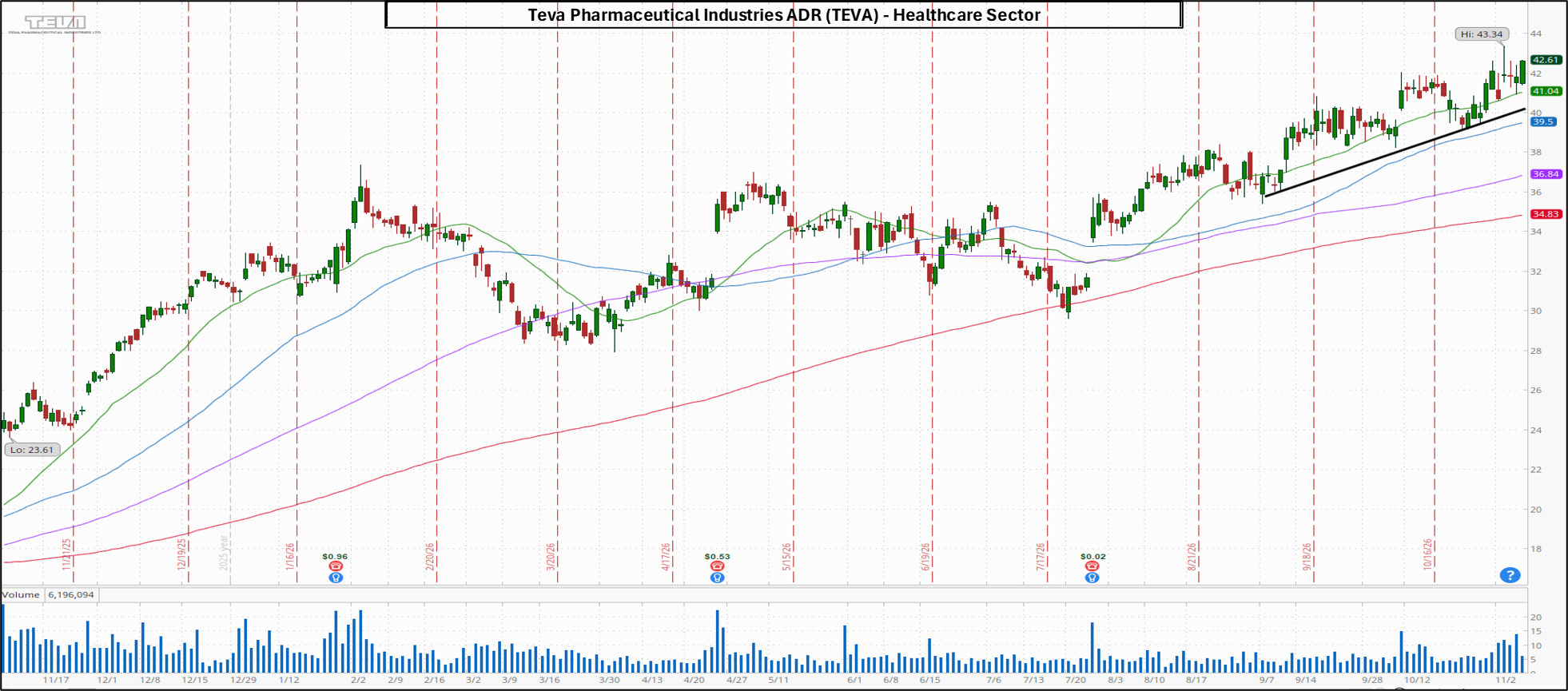
TEVA — Proposed Stock and Option Position
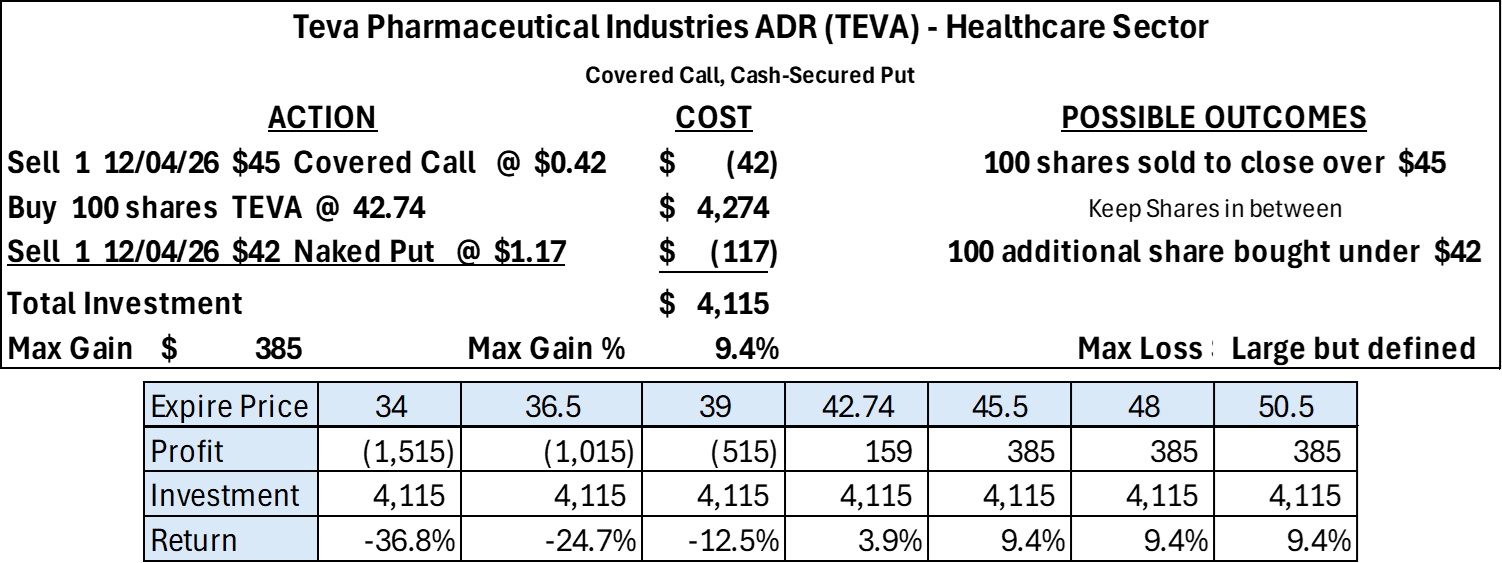
If TEVA remains near its current price, the option premiums generate a positive return. Above $45, the maximum expiration profit reaches approximately $385, or 4.5%. The attraction is the combination of established momentum and option income. However, a significant stock decline would produce losses exceeding the premiums collected.
ALB: An Emerging Recovery Opportunity
Albemarle Corporation (ALB) presents a different technical picture. After reaching approximately $220 in May, ALB declined steadily through the summer and fall. More recently, the stock established support near $90 and began showing signs of stabilization.
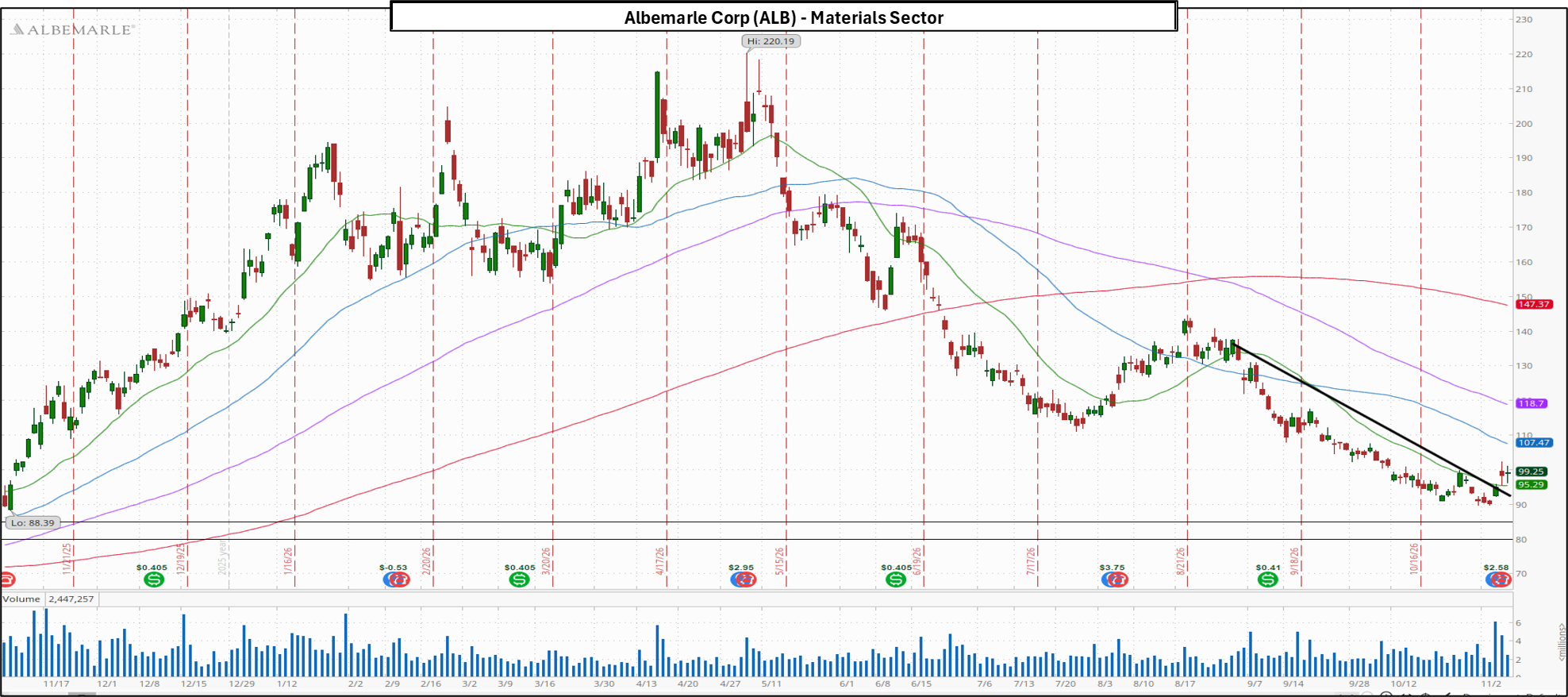
A rebound lifted ALB to approximately $99.25, breaking above its descending trendline and reclaiming its short-term moving average. Although the longer-term trend remains negative, improving momentum suggests a possible recovery. Unlike TEVA, ALB's opportunity depends on a potential trend change rather than the continuation of an established advance.
ALB — Proposed Stock and Option Position
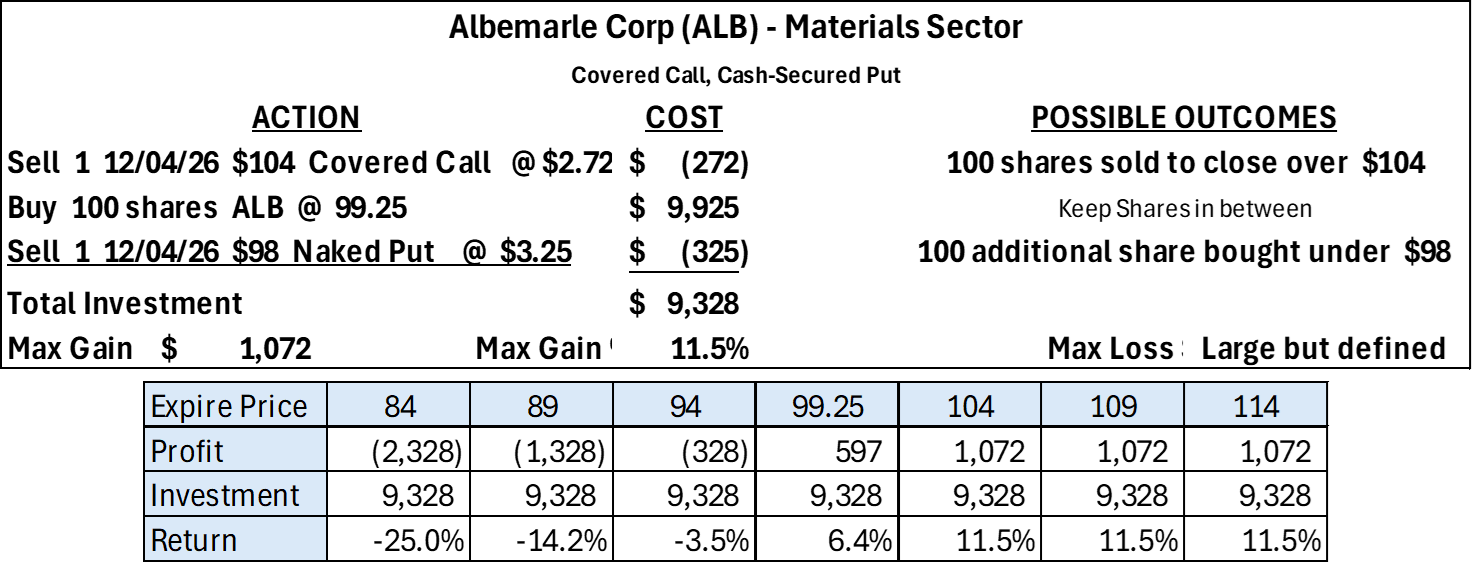
ALB's combined option premium generates $715 per 100-share position. If the stock remains near $99.25, the position earns approximately 3.6%. Above $104, maximum expiration profit reaches $1,190, or 6.0%. The larger premium provides a greater initial cushion against a modest decline, but the stock's longer-term downtrend remains a meaningful risk.
Different Stocks, Consistent Strategy
TEVA and ALB demonstrate that attractive stock-and-option income candidates can emerge from different technical circumstances. TEVA offers an established uptrend, while ALB presents the possibility of an emerging recovery: neither guarantees success, but both warrant consideration when supported by favorable option premiums and disciplined risk management. The expiration scenarios also illustrate an important feature of the strategy: positive returns are possible without substantial stock appreciation.
However, option premiums provide only partial downside protection. Below the put strike, losses accelerate because both stock ownership and the short put reduce position value. Portfolio construction is equally important. TEVA represents Healthcare, while ALB belongs to Materials, providing exposure to different sectors.
My strategy uses a four-week ladder, establishing new positions weekly while existing trades approach expiration. This provides opportunities to diversify entry timing, sectors, and individual stock exposure. The objective is not to identify one perfect stock profile or simply collect the highest premiums. It is to apply a consistent selection process across a diverse universe of candidates.
Successful stock-and-option income trading begins with finding stocks worth owning, not simply options worth selling.
About the Bull Strangle
The Bull Strangle Newsletter combines screened stock ownership with call-and-put selling in a four-week ladder. Learn more at www.BullStrangle.com.
Want to build a more complete trading toolkit?
The Bull Strangle Newsletter focuses on stocks and options, combining stock ownership with disciplined option-selling techniques designed to generate consistent income while managing risk.
The Smart Spreads Newsletter focuses on seasonal commodity spreads, a historically proven approach that seeks opportunities across agricultural, energy, metal, and financial futures markets.
Each strategy is designed to stand on its own, but together they provide a diversified approach that can perform across a wide range of market environments. For traders looking to deepen their education, The Bull Strangle Strategy and Trading Commodity Spreads are both available on Amazon.
Visit BullStrangle.com to subscribe for just $1 for the first month.
For a video overview of the Bull Strangle Newsletter
For a video overview of the Smart Spreads Newsletter
Darren Carlat
Dual Edge Research
(214) 636-3133
DualEdgeResearch@gmail.com
Disclaimer
This information is for informational purposes only and should not be considered investment advice. Past performance is not indicative of future results, and all investments carry inherent risk. Consult with a financial advisor before making any investment decisions.