


EN
Interactive Brokers Stock and 2 Financials Built for Heavy Market Volatility
Volatility just ripped back into focus. A brutal sell-off in AI and semiconductor leaders, a Nasdaq correction, and heavy post-election repositioning have pushed trading volumes and hedging activity into overdrive, creating fresh winners and losers beneath the headline pain. This article walks through three U.S.-listed stocks closely tied to that surge in activity, explaining how the same storm that hit Nvidia and its peers could quietly reshape their outlook for investors watching from the sidelines.
The three stocks covered below are only a first sample of this volatility and trading-activity theme. The full screen surfaces 18 more U.S.-listed firms whose stories also tie directly to surging volumes and hedging demand. To see the wider opportunity set, head straight into the U.S.-Listed Volatility and Trading-Activity Beneficiaries screener to filter, analyze, and identify the highest-conviction ideas for your own watchlist.
S&P Global (SPGI)
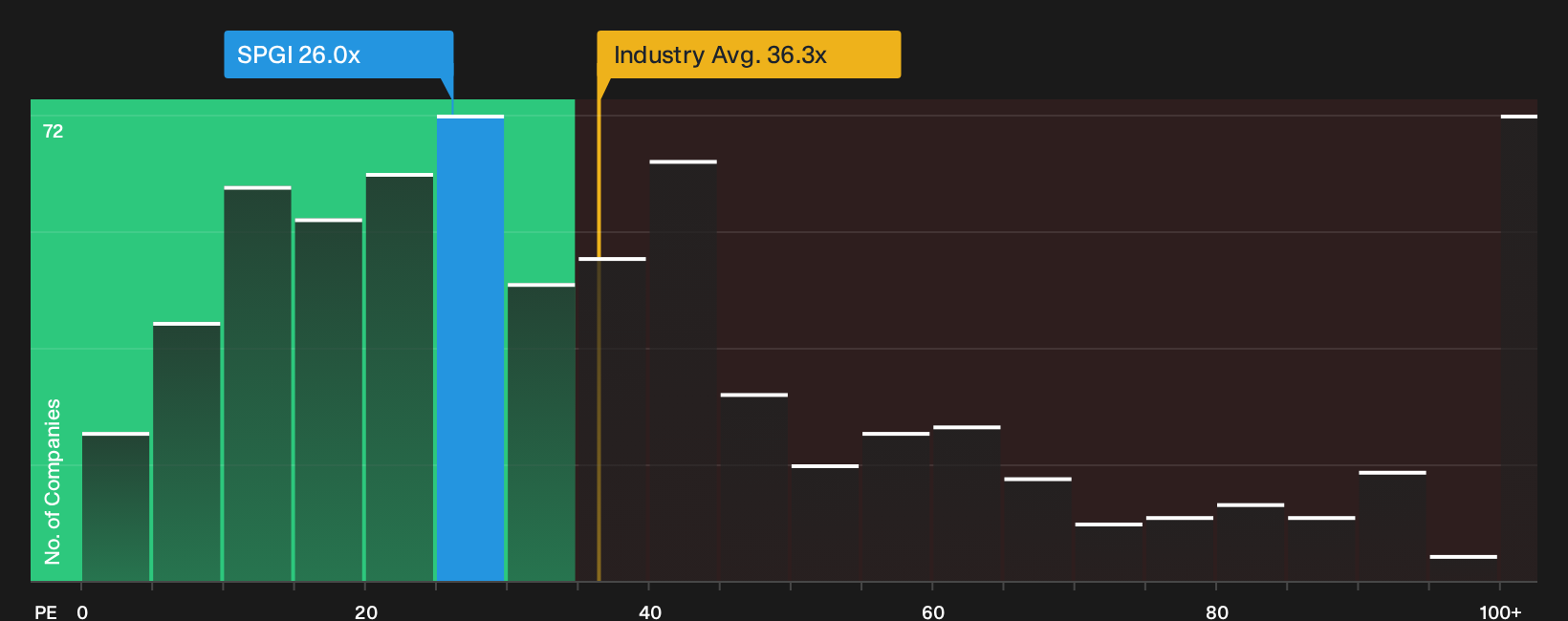
Overview: S&P Global provides indices, credit ratings, pricing, and data tools that investors, lenders, and traders use to assess markets and manage risk.
Operations: Most revenue comes from Market Intelligence at US$5.2b and Ratings at US$5.1b, with the United States contributing about US$10.0b.
Market Cap: US$137.0b
When volatility spikes and investors reshuffle portfolios, S&P Global often sits in the slipstream. It supplies the indices, ratings, and datasets that traders lean on to price risk and build hedges.
"At the same time, there is a structural concern weighing on sentiment: the potential impact of AI on S&P Global’s data and analytics franchises."
What happens to S&P Global’s earnings power depends on how one quiet shift in how clients use paid data services plays out.
That quiet shift is exactly where the story gets interesting, and the full narrative for S&P Global maps how AI risk, pricing power, and index demand could be decoupling beneath the surface.
Interactive Brokers Group (IBKR)
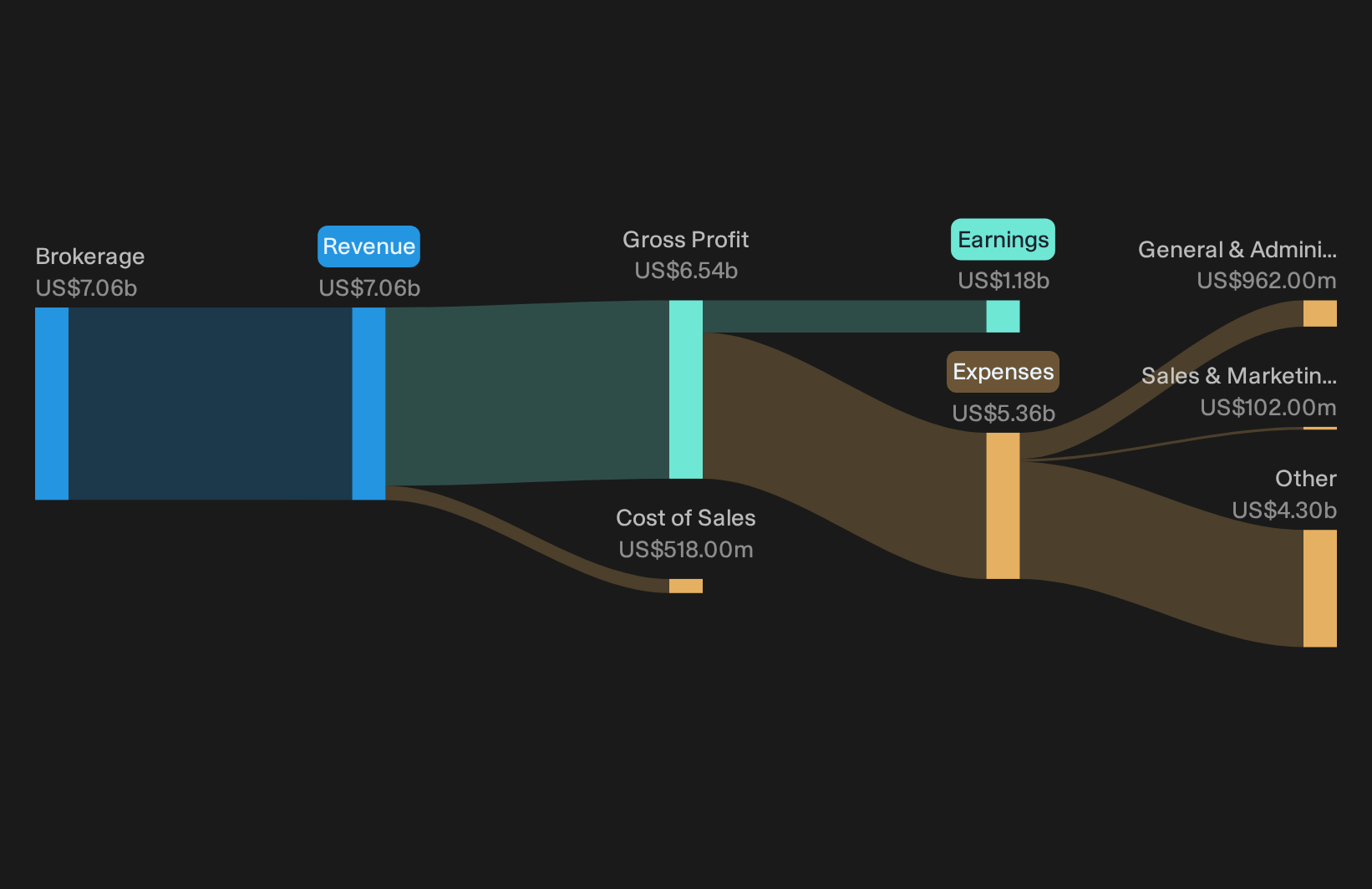
Overview: Interactive Brokers Group runs a low cost, automated trading platform where active investors and institutions trade global stocks, options, futures, forex, bonds, and more during volatile markets.
Operations: Nearly all revenue comes from its Brokerage segment, which generated US$7.1b as clients traded and borrowed across its electronic platform.
Market Cap: US$123.7b
Interactive Brokers Group sits squarely in the crosshairs of this volatility theme, since every spike in trading and hedging activity pushes more orders, more margin usage, and more complex strategies through its global platform.
"Record client equity of about $930b and uninvested cash balances of about $182b, combined with higher margin lending and securities lending activity, create a larger base of client funds that can be monetised through interest and lending spreads, which can support future net interest income and earnings."
What happens if a single assumption about how actively those balances are deployed changes could end up meaningfully shifting profitability through the cycle.
If that shift in activity is the real swing factor, read the full narrative for Interactive Brokers Group to see how Interactive Brokers Group’s earnings profile could be quietly decoupling.
Blackstone (BX)
Overview: Blackstone is a global alternative asset manager that pools investor money into private equity, real estate, credit, hedge fund solutions, and multi asset funds.
Operations: The group earns most of its revenue from Private Equity at about US$6.0b, Real Estate at roughly US$3.9b and Credit & Insurance at around US$3.3b.
Market Cap: US$149.0b
Blackstone fits this volatility and trading-activity theme as a large, liquid asset manager. Its hedge fund and credit platforms can lean into dislocated markets even while its main private vehicles stay focused on longer holding periods.
"Blackstone continues to gather large inflows into its funds, with AUM at US$1.35b and nearly US$70b of quarterly inflows."
What happens if one pressure point inside that growing fee base shifts direction could have a sharp impact on how resilient earnings feel.
When that pressure point matters most, the full narrative for Blackstone explains how Blackstone’s fee engine, fundraising momentum, and payout profile could be quietly decoupling from headline market swings.

Curious About Alternative Stock Opportunities?
Fresh ideas move first. New themes can pick up momentum fast while the crowd is still caught reacting to yesterday’s headlines. Scan these under the radar pools now and get in early.
- Target cash generative underdogs that still trade at compressed valuations by running the 39 high quality undervalued stocks before the gap between quality and price closes.
- Ride real-world AI momentum instead of headlines by scanning the 52 AI infrastructure stocks while infrastructure suppliers remain under the radar for now.
- Lock in income ideas that aim to keep paying even when markets are swinging by reviewing the 8 dividend fortresses while yields stay compelling.
Have feedback on this article? Concerned about the content? Get in touch with us directly. Alternatively, email editorial-team@simplywallst.com