


EN
3 US AI Infrastructure Stocks Tied To The Data Center Power Crunch
AI infrastructure is quickly turning into the steel and concrete story of this cycle, as strong October labor data and above-consensus GDP growth collide with an AI-driven capex wave that already touches a large slice of US investment. Investors watching this buildout risk sitting on the sidelines while data centers, power equipment, and construction groups shape a new spending priority. This article walks through three US AI Infrastructure and Data Center Builders stocks that appear most exposed to these catalysts and explains how those ties could help or hurt portfolios as policy questions and sector job shifts play out.
The three stocks covered next are just a sample set. The broader screen surfaced 45 more U.S. AI infrastructure and data center builders with equally compelling stories that are not unpacked here.
If you want to identify, compare, and analyze the most compelling ideas in this space, head straight to the US AI Infrastructure and Data Center Builders screener.
ERock (EROC)
Overview: ERock designs, builds, and runs modular natural gas based power systems that keep data centers and other heavy users supplied with dependable electricity.
Operations: ERock generates about $162 million in revenue from electric equipment sold entirely to customers in the United States.
Market Cap: US$1.8 billion
ERock sits at the point where the AI data center boom meets a hard limit, when power grids struggle to keep up with new compute demand.
"AI driven load growth and grid constraints are increasing demand for rapid, on site generation, and ERock's 1.7b contracted backlog and production capacity sold out through 2027 and into 2028 create visibility that can support future revenue and EBITDA as projects convert."
What may matter next is how one quiet pressure on future project economics affects margins and long term returns.
Those margin pressures are exactly what the full narrative for ERock unpacks, showing how ERock's contracted backlog, capital needs, and project risks could be pulling in different directions.

Everpure (P)
Overview: Everpure provides all flash storage hardware, software and cloud data services that support data intensive AI workloads and modern data centers.
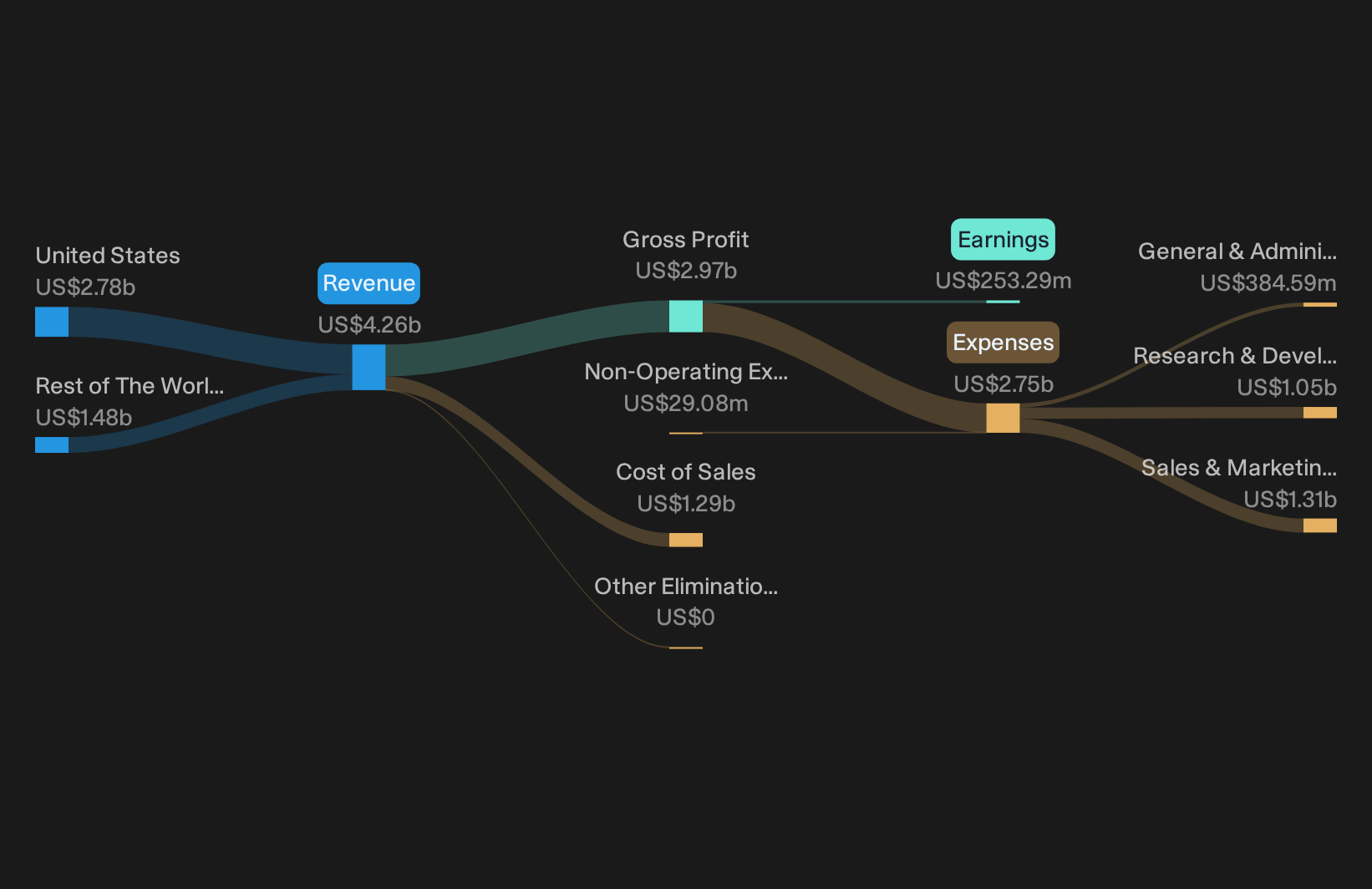
Operations: Everpure generates about US$4.3 billion from computer storage devices, with roughly US$2.8 billion from the United States and US$1.5 billion internationally.
Market Cap: US$31.1 billion
Everpure matters in this screen because its flash arrays and data services sit directly in the data center stacks feeding AI compute, where storage speed, efficiency and scalability shape how effectively those large capital projects turn into usable capacity.
"The hyperscale design win. Everpure secured its first EXA-scale hyperscale customer in FY2026."
What happens if a single hyperscale relationship quietly reshapes unit economics for storage, GPU efficiency and long term contract mix?
That kind of shift in storage economics is exactly what the full narrative for Everpure unpacks, showing where Everpure’s AI exposure could be accelerating or quietly stalling.
Jabil (JBL)
Overview: Jabil designs and manufactures complex hardware and systems, including cloud data center server platforms and AI ready infrastructure, for global clients.
Operations: Jabil generates about US$12.7b from Regulated Industries, US$17.9b from Intelligent Infrastructure and US$5.4b from Connected Living and Digital Commerce, with revenue spread across the U.S., Mexico, China, Malaysia and other regions.
Market Cap: US$24.3b
Jabil matters in this screen because it is one of the companies actually building and integrating the server racks, power gear and data center hardware that sit behind the AI capex boom investors keep hearing about.
"AI related infrastructure programs, with AI revenue guided from about US$9b in fiscal 2025 to roughly US$14.4b in fiscal 2026 and US$22.1b in fiscal 2027 along with an expanded set of hyperscale customers above US$1b each, point to a growing mix of higher value Intelligent Infrastructure work that can lift revenue and core operating margins."
The real swing factor is how pressure on capital intensity and program mix affects what Jabil ultimately earns on this AI buildout.
That capital intensity question is exactly what the full narrative for Jabil tackles, showing where Jabil's AI programs could be accelerating, stalling, or quietly masking better quality earnings.

Seeking Alternatives Before The Crowd?
Fresh themes can gain momentum early while older stories may lose attention as interest drops. Scan curated ideas that are under the radar for now and consider getting in at an early stage.
- Target steady cash generators by focusing on a curated list of solid balance sheet and fundamentals (24 results) that can keep funding operations when weaker peers struggle.
- Explore structural demand for resources by reviewing a hand picked pool of 16 top copper producer stocks tied to electrification, power grids and long dated infrastructure projects.
- Look for early AI leaders by narrowing your focus to 41 profitable AI stocks that aren't just burning cash that already convert revenue into earnings instead of primarily burning cash.
Have feedback on this article? Concerned about the content? Get in touch with us directly. Alternatively, email editorial-team@simplywallst.com