


EN
What Tapestry Holders Saw Early
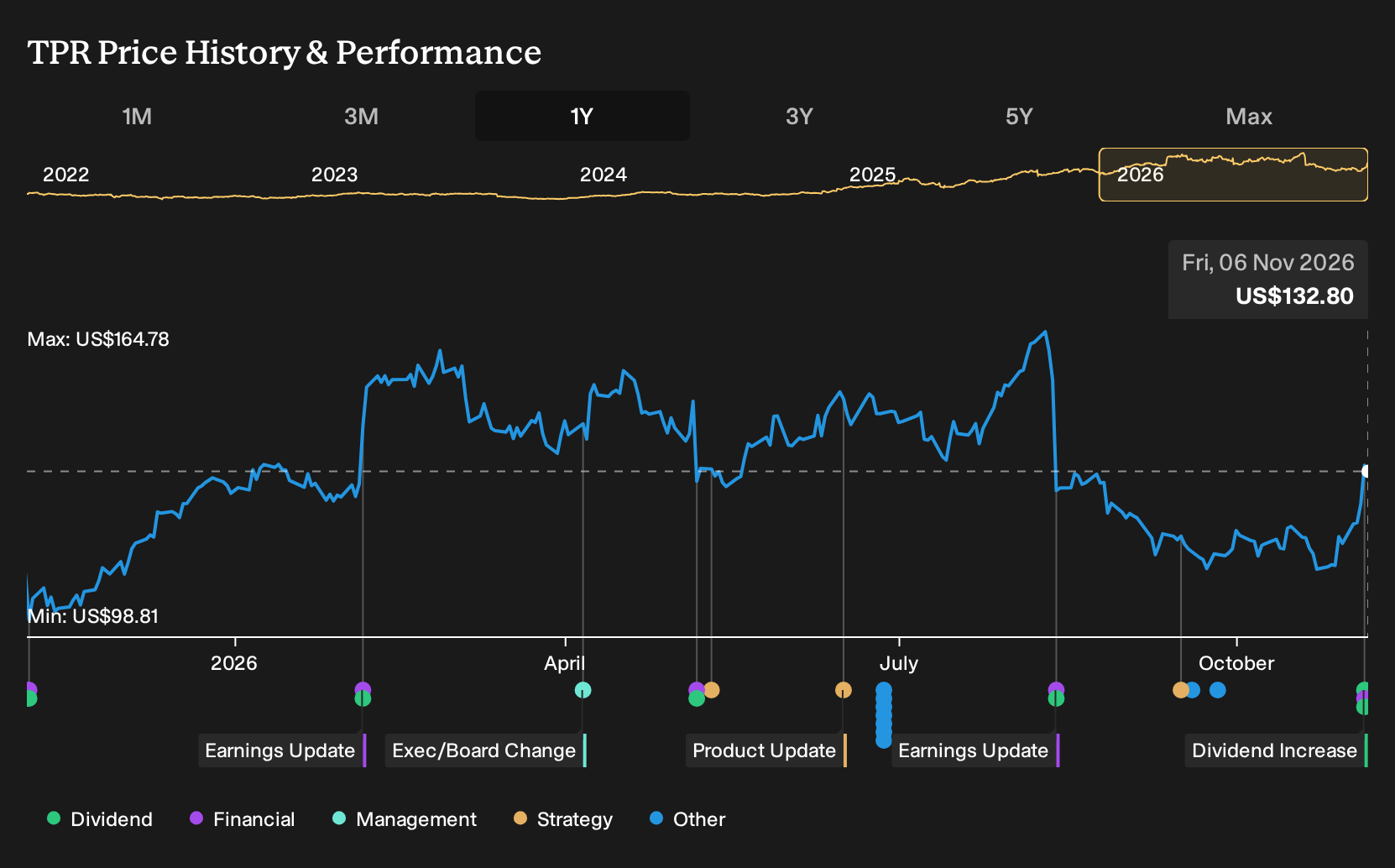
If you only skimmed the headlines on Tapestry this year, the story looked messy. Kate Spade’s struggles, tariff worries and talk of overvaluation sat beside upbeat reports on Coach’s momentum and international expansion. Holding Tapestry over the past year would have returned 29.7%, including dividends. If you had bought at the start of that stretch, what exactly in the early evidence justified sitting through those conflicting signals?
The easy part of this move is behind Tapestry. Zero in on 39 high quality undervalued stocks for companies trading below our estimates.
The Two Tapestry Stories Investors Had To Weigh
The shares cost US$98.81 at the start of the period, so any view on Tapestry hinged on which story about the next few years felt more convincing.
On the optimistic side, the bullish narrative pointed to a Fair Value of US$116, a price level implied by expectations that were built on assumptions of 3.9% revenue growth and a 17.4% profit margin, supported by buybacks and rising dividends over 3 years.
The bearish view anchored on a Fair Value of US$64, a lower implied price tied to concerns that rising tariffs and changing tastes could erode pricing power, even if margins eventually reached 17.7%.
What The Results Changed For The Tapestry Case
The clearest development came from Tapestry’s Q1 2027 report. Revenue moved from US$1,704.6m in Q1 2026 to US$1,894m, while net income rose from US$274.8m to US$360m and net margin lifted from 16.1% to 19.0%. That pattern backed the optimistic scenario of higher profitability, although Kate Spade’s ongoing issues left some brand diversification worries intact, so the evidence cut both ways.
The real hinge here was profit quality. When you see a thesis framed around margin expansion and capital returns, focus on whether net margin and absolute earnings both step up in the filings, rather than only checking whether revenue or the share price moved.
What Today's Tapestry Price Already Bakes In
Tapestry now trades at US$133. The selected Narrative’s Fair Value sits above that level, built on a view that direct-to-consumer channels, data tools and international markets can keep supporting margins.
For anyone studying Tapestry at this price, the key question is whether Coach and Kate Spade together can sustain those margin assumptions.
"The current valuation suggests the market is discounting Tapestry's ability to sustain high margins, execute its capital return plans, and convert its AI and direct-to-consumer investments into durable value for the share price."
That disagreement has a full argument behind it. → Uncover the higher Fair Value this Narrative argues for
Looking Past Tapestry's Storefront
Tapestry asks you to look beyond the window displays and consider brand power. Pricing strength sits at the center of that story.
Step away from handbags and accessories, and another company faces similar questions. It sells performance footwear and clothing to committed, active customers.
Its model leans on premium price points and direct relationships. Management is pushing into its own stores and higher margin apparel.
The aim is to keep price discipline even as promotions rise elsewhere. Both companies circle the same tension between full price selling, growth and loyalty.
That argument has a Narrative and a number behind it. → See the company one Narrative values 69% above its price
Have feedback on this article? Concerned about the content? Get in touch with us directly. Alternatively, email editorial-team@simplywallst.com