


EN
Did Capacity Deal Changes Just Shift Microsoft (MSFT) Stock Narrative?
- Microsoft is reworking its AI infrastructure model, winding down several neocloud capacity deals with partners such as Nscale, Oracle and IREN, while leaning more on in house, flexible data centers, alongside reporting strong Azure and AI driven results for the September quarter.
- This shift in how Microsoft sources GPU and data center capacity, combined with heavy bond financed capex and large contracted cloud obligations, places greater execution risk on converting AI demand into sustained revenue and cash flow that comfortably cover infrastructure spending.
- We will examine how Microsoft’s reworked AI infrastructure partnerships shape the existing investment narrative around its cloud and AI buildout.
Scan opportunities alongside Microsoft in the AI buildout story by reviewing the 52 AI infrastructure stocks that are already geared toward data center, networking, and accelerator demand.
Microsoft Investment Narrative Recap
Owning Microsoft today largely means believing that heavy AI and cloud spending can keep translating into higher usage across Azure, Copilot and the wider software stack. The short term swing factor is still execution on that AI infrastructure shift, including the move away from some neocloud contracts and toward in house capacity, without letting service performance or enterprise adoption slip.
The biggest risk remains simple. Capital expenditure and off balance sheet commitments are huge, so any moderation in cloud or AI intensity versus that build could pressure free cash flow and margins. The recent bond funded spending plans and data center protests do not yet look thesis breaking, but they keep funding costs, regulation and social license firmly on the risk radar.
Among the recent updates, Microsoft’s US$25b investment grade bond sale is the clearest operational link to its evolving AI infrastructure story. Tapping debt markets after nine years, with multiple tranches of fixed and floating rate notes out to 2066, underlines how management is aligning long lived financing with equally long lived data center and chip spending.
For you as a shareholder, that raises a practical question. Can Azure, Copilot and related AI services keep generating enough incremental cash to comfortably service this larger debt stack while funding US$175b to US$190b of planned 2026 capex? The answer will show up in free cash flow, interest coverage and how quickly those new Maia and Cobalt powered facilities are filled with paying workloads.
Microsoft's current analyst narrative points to revenues of US$601.4b and earnings of US$221.5b by 2029, based on assumed yearly top line expansion of 20.2% and an earnings increase of about US$78.9b from US$142.6b today.
Discover why Microsoft's fair value indicates a 19% potential upside to its current price that may not last much longer.
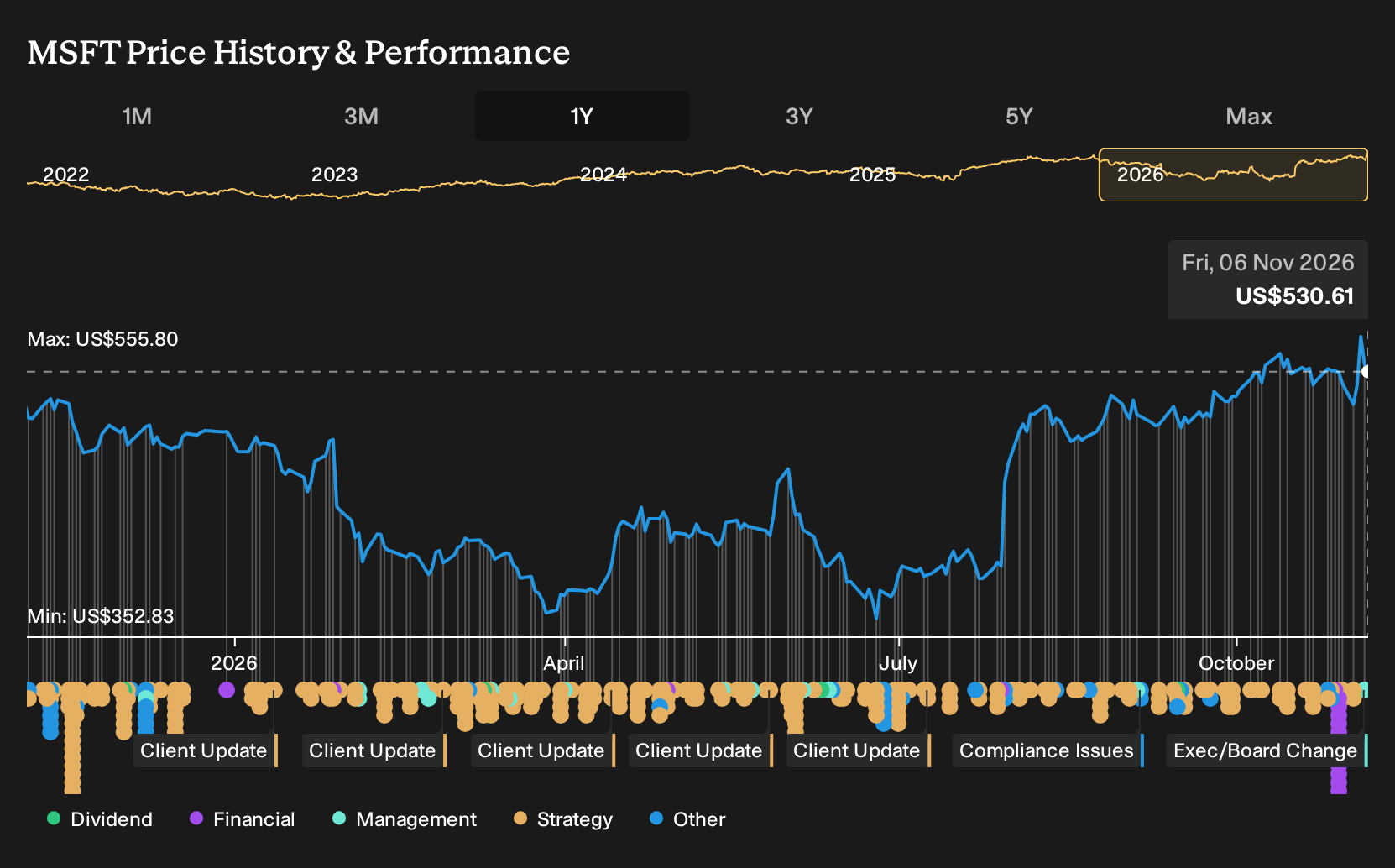
Exploring Other Perspectives
One alternate view treats the fresh Microsoft partnerships with Lumen, Estée Lauder and others as the real catalyst. The most optimistic analysts were already pencilling in revenue of US$679.2b and earnings of US$251.4b by 2029 before this news. That is a far brighter outlook than consensus, so treat it as one of several perspectives to explore; it is not a script you must accept.
Explore 63 other Microsoft fair value estimates, including one that suggests as much as 41% upside from the current price!
Reach Your Own Conclusion
Don't just follow the ticker; dig into the data and build a conviction that's truly your own.
- A great starting point for your Microsoft research is our analysis highlighting 3 key rewards and 1 important warning sign that could impact your investment decision.
- See our latest analysis for Microsoft. The report includes a comprehensive fundamental analysis summarized in a single visual, the Snowflake, making it easy to evaluate Microsoft's overall financial health at a glance.
Looking For More Ideas Beyond Microsoft?
If you want to stress test your thesis on Microsoft or spread your AI and cloud exposure across other opportunities, the Simply Wall St Screener lets you filter for companies with the specific balance sheets, income profiles and risk levels that match your own playbook.
- For investors who care most about steady income, consider screening for potential yield opportunities using the 8 dividend fortresses that already pass a high bar for payout strength and consistency.
- If your priority is resilience through different market conditions, focus on sturdier businesses by running a search across the 29 resilient stocks with low risk scores that screen well on financial health and risk scoring.
- For those hunting for less crowded opportunities, widen the funnel with the 19 high quality undiscovered gems that combine strong fundamentals with lower current attention.
Have feedback on this article? Concerned about the content? Get in touch with us directly. Alternatively, email editorial-team@simplywallst.com