


EN
How Stronger Cash Flow Expectations Will Impact Dollar Tree Stock Investors
- Dollar Tree has recently been highlighted for solid earnings, stronger profit expectations, and active share repurchases that together support a healthier cash flow profile.
- The focus on discounted cash flow suggests Dollar Tree's current valuation is framed heavily around the durability of those future cash streams rather than short term trading moves.
- We will now look at how this stronger cash flow outlook at Dollar Tree could reshape the existing investment narrative for the business.
Scan how Dollar Tree's cash flow story compares with other potential opportunities by reviewing a curated list of 39 high quality undervalued stocks that may also warrant a closer look.
Dollar Tree Investment Narrative Recap
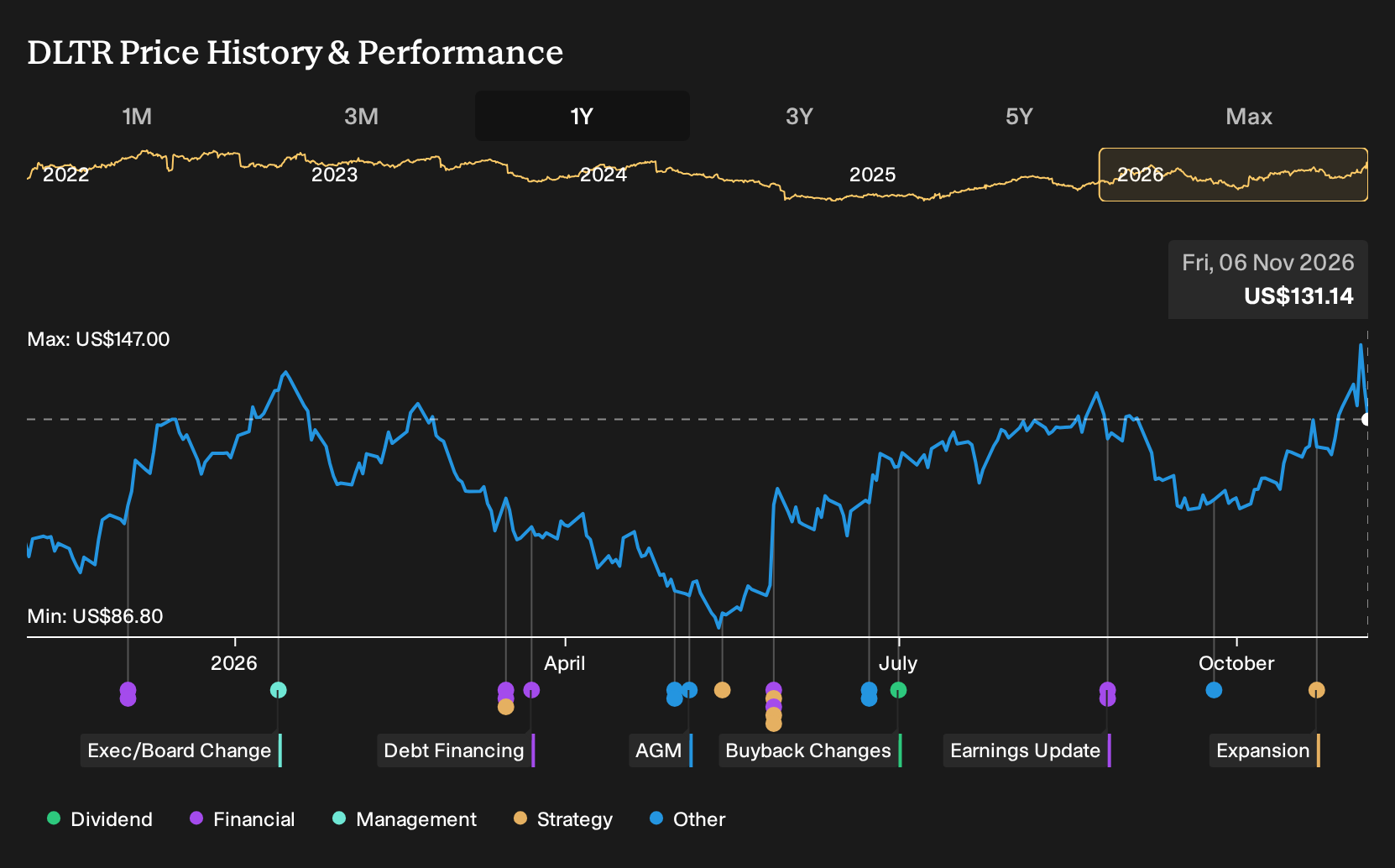
To own Dollar Tree, you need to believe its value focused model can keep drawing steady traffic, while multi price assortments and store upgrades support cash generation. The recent earnings strength and 30.5% share price gain put more focus on execution quality rather than changing the story. The key near term catalyst remains cleaner stores and better shrink control feeding into margins.
The biggest current risk sits in costs, not demand. Higher tariffs, fuel, freight and third party delivery fees could erode the margin gains supporting Dollar Tree's cash flow profile. If these pressures intensify and efficiency gains stall, the cash characteristics that underpin the discounted cash flow case become harder to sustain.
The most relevant development for this news is management's use of share repurchases. Dollar Tree has reduced its share count by about 8% over 12 months, backed by a US$2.5b authorization with no expiry. That decision links the headline share price move more directly to per share cash generation rather than just sentiment.
Buybacks amplify both execution and risk. If the retailer continues improving store standards, shrink and assortment, while funding repurchases from operations, each share represents a larger claim on future cash flows. If tariffs, transport costs or e commerce delivery expenses rise more than expected, the same leverage can work against holders, since more capital has already been returned.
What The Current Assumptions Mean For Dollar Tree
Analysts sketch a very specific cash flow path for Dollar Tree that you can test against your own expectations. Revenue is assumed to rise at 5.9% a year over the next few years, while profit margins move the other way, slipping from 8.1% today to 6.5% in 3 years. That combination points to higher sales volume but thinner profitability on each dollar of goods sold.
Earnings today are estimated at US$1.6b. Consensus forecasts point to earnings of US$1.5b by 2029, with the most cautious analysts modeling as low as US$1.1b. That is a US$0.1b decline from current earnings at the headline consensus level, which matters if you are thinking in terms of per share cash claims rather than just total profit.
Dollar Tree's narrative projects US$23.8b revenue and US$1.5b earnings by 2029. This implies 5.9% yearly revenue growth and a US$0.1b earnings decrease from US$1.6b today.
Share count is expected to shrink by 5.64% per year over the next 3 years. That planned reduction links directly back to the active repurchase program already in motion. If those buybacks are funded from internal cash generation, per share earnings can hold up or even improve, even if total profit drifts lower, because each remaining share is tied to a bigger slice of the earnings pool.
Valuation assumptions tighten the frame. To line up with the analyst case, you would need to be comfortable with Dollar Tree trading on a 17.1x P/E multiple of the 2029 earnings estimate, compared with 14.1x today and against an industry level flagged at 17.8x. The consensus price target of US$135.38 sits 10.1% above the recent US$121.76 share price, while the range of US$98 to US$170 shows how differently analysts weigh margin risk, tariff exposure, and the impact of future buybacks.
Uncover why Dollar Tree's fair value indicates a 3% potential upside to its current price. This represents a discount that could close faster than many investors expect.
Exploring Other Perspectives
One alternate view treats helium supply risk as the big swing factor for Dollar Tree rather than tariffs or freight. The most cautious analysts were already modeling revenue of about US$23.4b and earnings near US$1.1b by 2029 before this news. That much lower earnings path shows how sharply opinions can diverge, so it makes sense to explore several scenarios and decide which assumptions feel realistic to you.
Explore 3 other Dollar Tree fair value estimates, including one that suggests it could be worth just $134.96.
Reach Your Own Conclusion
Don't just follow the ticker; dig into the data and build a conviction that's truly your own.
- A great starting point for your Dollar Tree research is our analysis highlighting 3 key rewards and 3 important warning signs that could impact your investment decision.
- See our latest analysis for Dollar Tree. The report includes a comprehensive fundamental analysis summarized in a single visual, the Snowflake, making it easy to evaluate Dollar Tree's overall financial health at a glance.
Looking For More Investment Ideas Beyond Dollar Tree?
Once you have a view on Dollar Tree, it can help to widen the lens and compare its setup with other businesses that fit different risk and income profiles using the Simply Wall St Screener.
- For investors focused on stability, check out a 29 resilient stocks with low risk scores that may offer fewer surprises when markets turn choppy.
- If balance sheet strength is a priority, review a list of solid balance sheet and fundamentals (24 results) that pairs financial resilience with consistent fundamentals.
- Income seekers can scan a 8 dividend fortresses that aim to combine higher yields with businesses built to support ongoing payouts.
Have feedback on this article? Concerned about the content? Get in touch with us directly. Alternatively, email editorial-team@simplywallst.com